
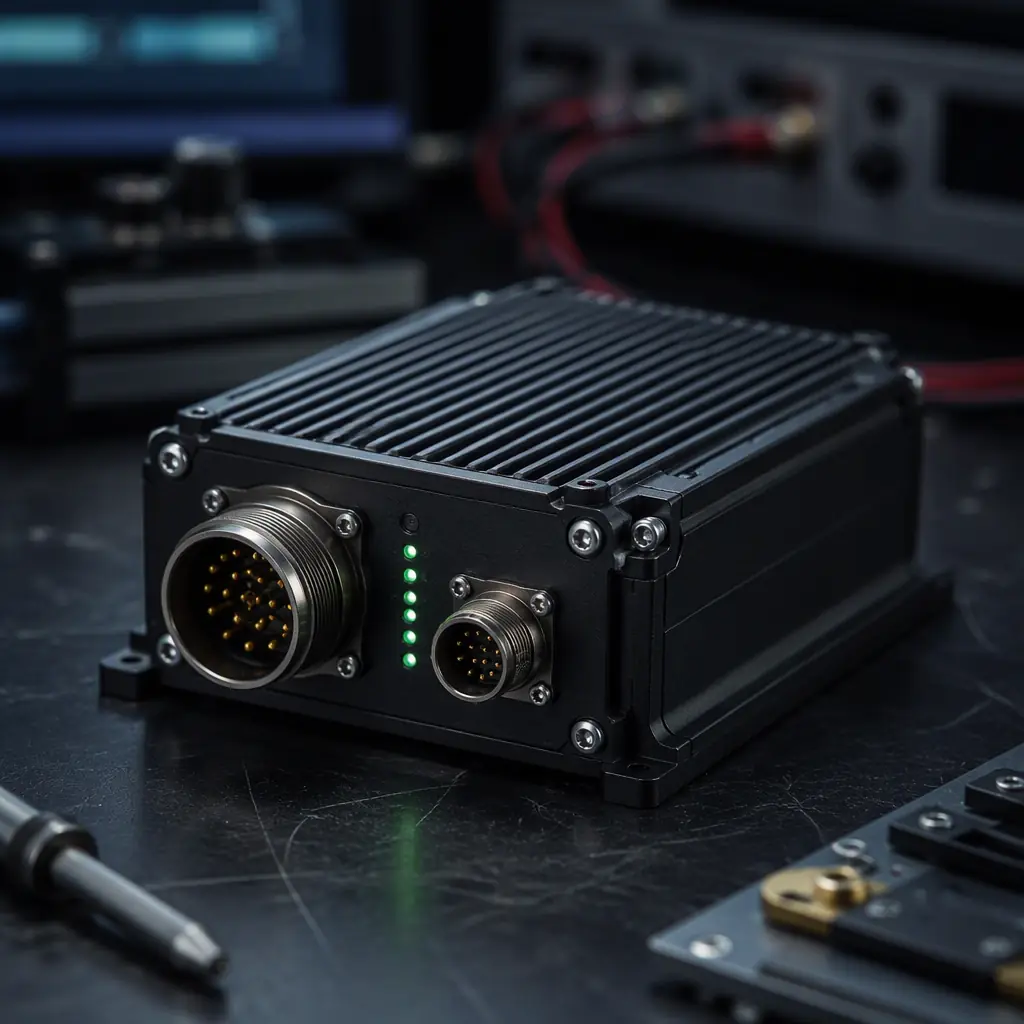
A flight data recorder is the difference between an incident and a lesson. The same crash costs the same money either way; the recorder decides whether the fleet learns the root cause or repeats it. For procurement teams, the question is not whether the aircraft logs data: every flight controller logs something. But whether the log is complete enough, robust enough and accessible enough to survive the exact event that matters most. That is a component specification problem, and it starts with deciding what to record.
What a flight data recorder must capture
The useful recorder is not a single data stream. It is the intersection of several, each answering a different question after the event:
| Data class | What it answers | Typical rate |
|---|---|---|
| IMU (gyro + accelerometer + mag) | Was the aircraft attitude-stable before the event? Did a sensor fail or saturate? | 100-400 Hz raw, 50-100 Hz logged |
| GNSS position, velocity, fix quality | Where and how fast? Did the fix degrade or drop before the event? | 5-10 Hz |
| ESC telemetry (current, rpm, temperature) | Did a motor or ESC fail, overheat or lose sync? | 50-100 Hz per ESC |
| RC / control inputs | Was the pilot commanding the behavior, or was the aircraft doing something else? | 50 Hz |
| Flight mode, failsafe and arming events | What state was the autopilot in, and when did it change? | Event-logged with timestamps |
| Battery voltage and current per pack | Did power drop below the safe threshold at the wrong moment? | 10-50 Hz |
| Payload and peripheral events | Did the gimbal, drop mechanism or sensor trigger or fail? | 10-50 Hz |
The PID tuning guide shows why the IMU and motor logs matter in normal operation. They are the same signals that reveal an oscillation building toward a loss of control. A recorder that captures the full set at these rates makes the post-incident analysis a data exercise instead of a guess.
Crash survivability: storage media and power-loss protection
Survivability is a stack of decisions, and the weakest link decides the outcome. The layers, in order of importance:
- Write durability. The recorder must finish writing what it has when power dies. Consumer SD cards lose the last write when power is cut mid-operation; industrial-grade cards with power-loss protection (PLP) capacitors complete the in-flight write, and filesystems designed for interrupted writes (with journaling or log-structured layouts) avoid corrupting the whole partition. The onboard computing guide covers the companion-computer storage choices that interact with this decision.
- Media robustness. Industrial SD, eMMC and SLC flash tolerate vibration and temperature far better than consumer media. For the highest-survivability tier, a dedicated recorder with a sealed flash module (or FRAM for the last-critical-seconds buffer) survives impacts that destroy a socketed card.
- Physical protection. The recorder's enclosure and mounting matter as much as the media. A foam-damped, lanyard- or strap-secured module in the center of the airframe survives a crash that separates the tail or crushes the nose. Some operators specify a bright-colored, labeled module so recovery crews find it first.
- Independent power. A recorder powered from the same bus as the flight controller dies with the same fault that killed the aircraft. A small supercapacitor or dedicated cell keeps the recorder alive for the last seconds: often the most informative seconds, and lets it flush its buffers cleanly.
- Redundant capture. The professional pattern is dual recording: the flight controller logs internally, and a separate recorder taps the same bus (CAN, UART, or the FC's telemetry output). If one medium fails, the other survives. The redundant navigation guide applies the same logic to sensing; recording deserves the same redundancy budget.
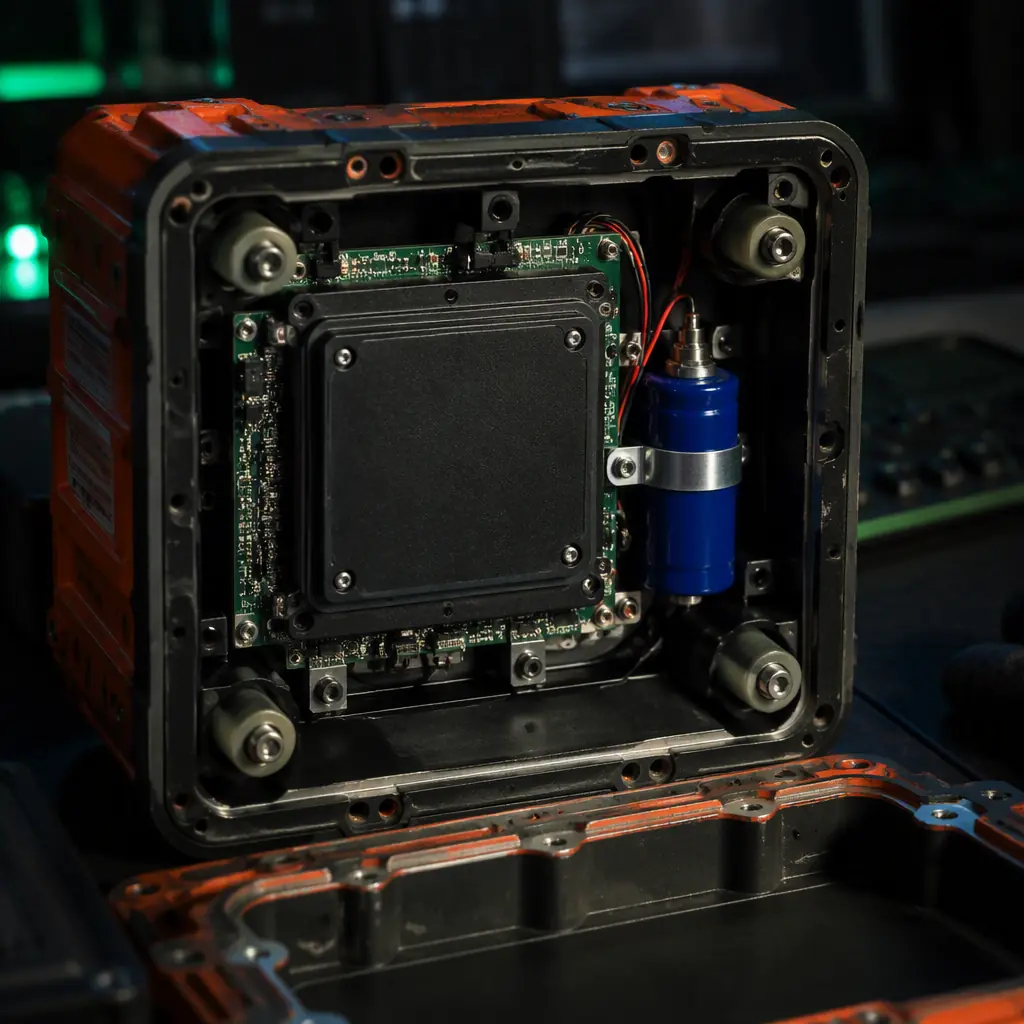 Crash-survivable storage
Data integrity and tamper evidence
A log that can be edited is evidence that can be argued. For fleet operators, insurers and regulators, the recorder's integrity features are as important as its storage capacity:
- Checksums and sequence numbers. Every log entry carries a checksum and a monotonic sequence number, so gaps, reordering and corruption are detectable. The analyst knows when the log is complete and when it is not.
- Signed logs. A cryptographic signature (HMAC or asymmetric) over the log file lets the operator verify that the log has not been altered since it was written. This matters most in contested incidents, pilot error disputes, insurance claims, regulatory inquiries.
- Write-once behavior. The recorder should append, never rewrite. A log that can be overwritten in the field is a log that will be overwritten in the field.
- Time base. All events need a common clock. The recorder should sync to GNSS time when available and log its own clock drift, so the FC log, the recorder log and the ground station video can be aligned in post-processing. The ground control station guide covers the ground-side time-sync and data management that completes the picture.
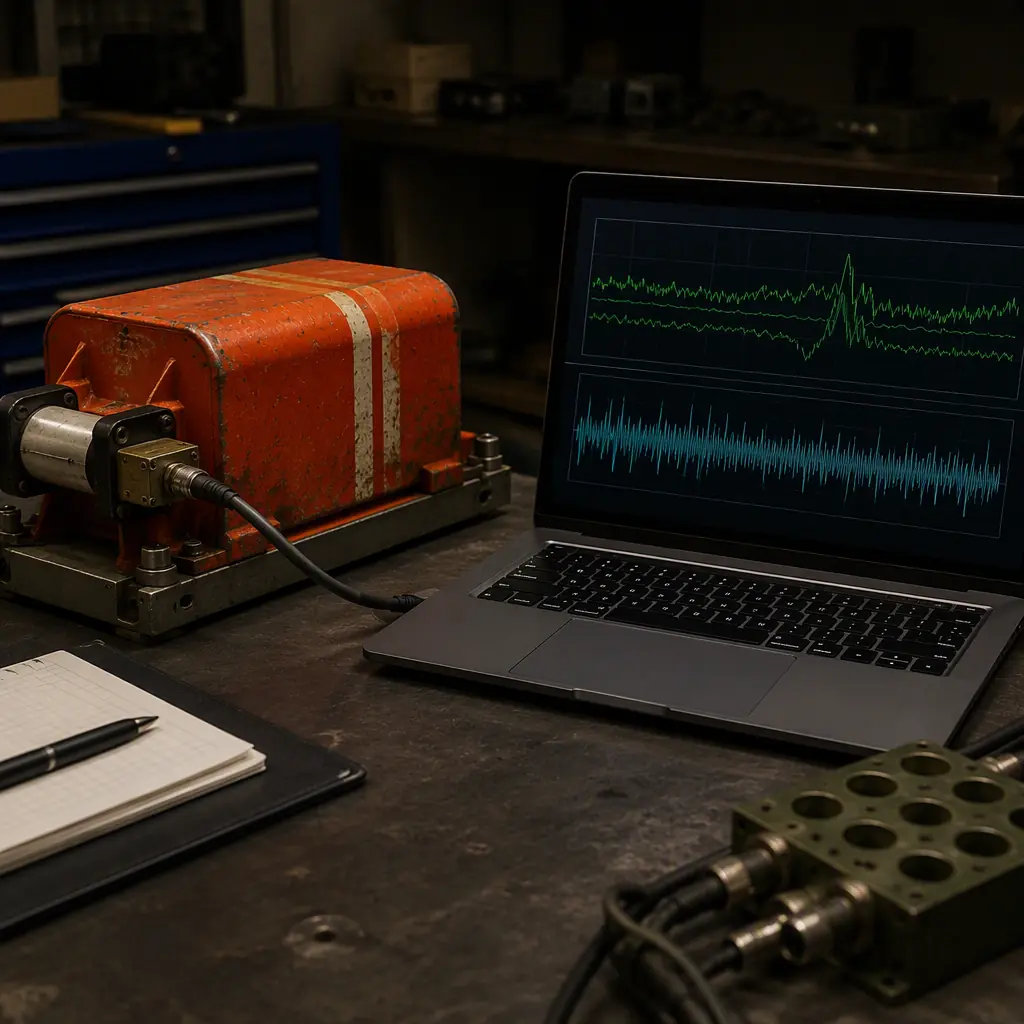 Log analysis workflow
Standalone recorder vs flight controller logging
The two architectures are complementary, not competing:
| Flight controller internal log | Standalone recorder | |
|---|---|---|
| Data source | Everything the FC sees, at native rates | What it taps on the bus (CAN/UART), plus its own sensors (GPS, IMU, current) |
| Survivability | Dies with the FC; media is often consumer-grade | Independent power, rugged media, damped mounting |
| Integrity | Depends on the FC firmware; usually unsigned | Signed, checksummed, write-once by design |
| Independence | Shares the fault chain with the aircraft's brain | Independent of the FC, records even when the FC fails or resets |
| Cost | Included | US$200-2,000 depending on ruggedness tier |
For fleets where incidents are rare but expensive, inspection, logistics, defense, the standalone recorder is the standard addition. It also records what the FC cannot: the moment the FC resets or browns out, which is exactly when the internal log stops. A well-integrated standalone recorder adds roughly 50-150 g and one power tap to the airframe, and in exchange it makes every flight a recoverable dataset. The HIL testing guide shows how the same bus-level logging used for lab validation carries over to the flight recorder specification.
The post-incident workflow: from log to root cause
A recorder without a defined analysis process is an expensive paperweight. The workflow that turns data into a decision: every step depends on the logging decisions made at procurement time, a recorder that logged the wrong signals, or stopped writing the moment power dropped, produces a workflow that stalls at the first replay.
- Preserve. On any incident, recover the recorder first, image the media read-only (write-protect the card, hash the image), and preserve the ground station logs and video. The fleet management guide covers the logging and maintenance-tracking infrastructure that makes preservation routine.
- Reconstruct. Align the FC log, recorder log, telemetry and video on a common time base. Replay the attitude, inputs and mode changes against the video. Most root causes are visible in the first replay.
- Analyze. Look for the signature patterns: oscillation growth (tuning), sudden current or rpm loss (propulsion), fix degradation (GNSS), voltage collapse (power), control input divergence (pilot or actuator). The propulsion testing guide covers the bench data that lets you compare the crash log against known-good behavior.
- Act. A root cause is only useful if it changes the fleet: a firmware update, a component replacement, a maintenance interval, or a checklist change. The fix should be written into the RFP and acceptance criteria for the next procurement round.
Procurement checklist for a flight data recorder
- Coverage. IMU at 50-100 Hz, GNSS at 5-10 Hz, per-ESC telemetry, RC inputs, mode/failsafe events, battery current and voltage, payload events.
- Survivability. Power-loss protection (capacitor or independent cell), industrial-grade media, damped enclosure, mounting in the crash-protected zone of the airframe.
- Independence. Bus-level tap that records through FC reset, with its own time base synced to GNSS.
- Integrity. Checksums, sequence numbers, cryptographic signing, write-once behavior.
- Capacity. Enough for the longest planned mission at full rates. A 2-hour flight at 100 Hz across 20 channels is roughly 1-2 GB uncompressed; specify for the worst case, not the demo.
- Recovery. The analysis software and the preservation procedure must be part of the deliverable, not a separate purchase.
The bottom line: every UAV crash produces a root cause. The question is whether the data survives to reveal it. Specify a recorder that captures the full signal set at rates that matter, survives the impact through independent power and rugged media, proves its own integrity with checksums and signatures, and comes with an analysis workflow that turns the log into a fleet decision. EMS Drone specifies and integrates flight data recorder packages, bus-tap logging modules, crash-survivable storage, signed log formats and the analysis workflow to match. Send your airframe, flight stack and incident-history profile, and we will respond with the recorder specification and integration plan.
Explore Flight Control Back to Blog
Continue Reading
HIL Testing
The lab rig that generates the same logs a recorder must survive.
PID Tuning
How to read the IMU and motor logs that reveal instability.
Sensor Fusion & Redundancy
The same redundancy logic applied to sensing applies to recording.
Ground Control Station
Time sync, telemetry logging and the ground-side data chain.
Fleet Management
Flight-hour tracking and maintenance logging across the fleet.