
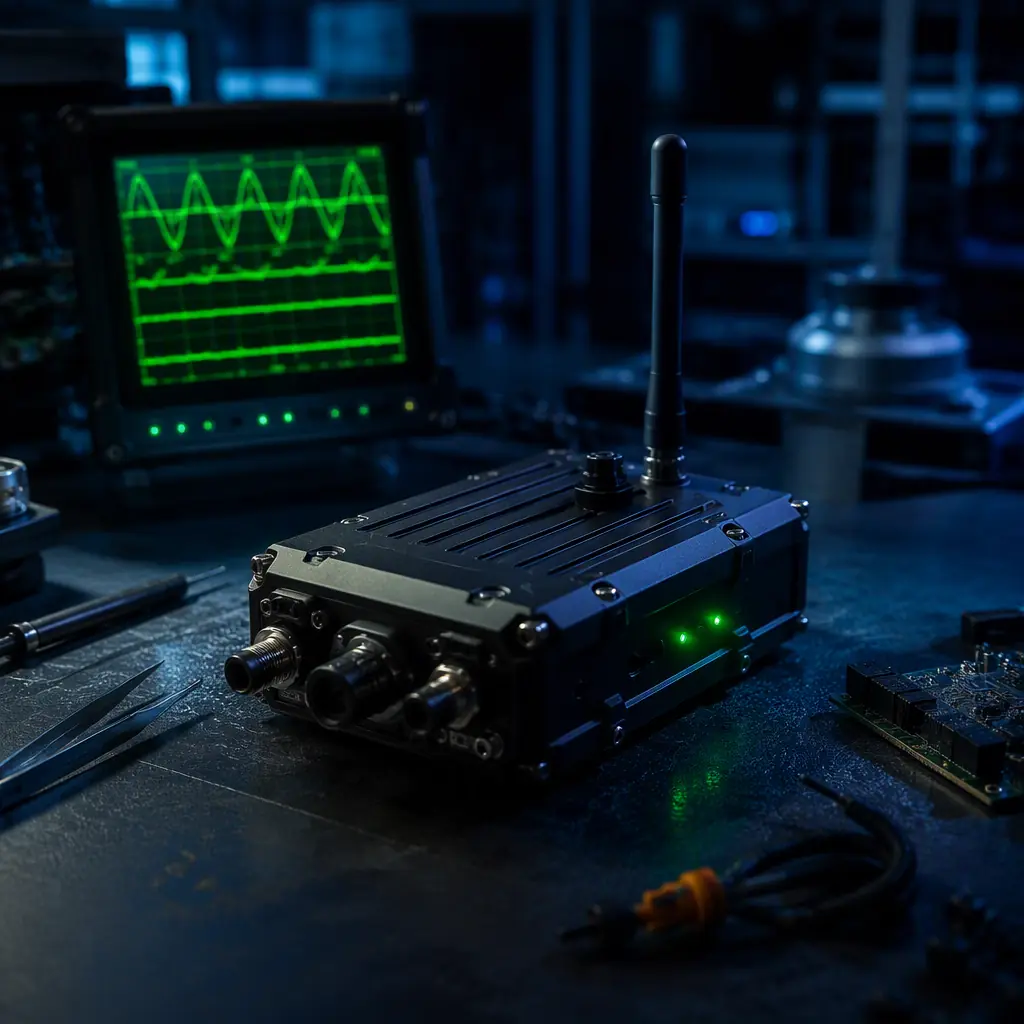
Choosing a control link starts with the RF communication systems guide, which covers the four bands from a range-versus-bandwidth perspective. This article sits one layer above it: not which band to choose, but what the regulator allows you to do with it, and what hardware features make that possible. The antenna selection guide closes the physical layer; here the subject is the legal layer, because an antenna cannot transmit a watt that the spectrum authority has not authorized.
Why spectrum is a component decision, not a paperwork decision
Spectrum regulation is enforced at the transmitter. A UAV radio module is a complete intentional radiator: the frequency it tunes, the bandwidth it occupies, the EIRP it radiates and the modulation it uses are all baked into the hardware and firmware at manufacturing time. That is why a radio is either legal or illegal in a country before it ever leaves the warehouse. The regulator does not care about your operating procedures, only about what the transmitter does when it is switched on.
The procurement consequence: every radio in the fleet must be specified against the spectrum rules of every country it will fly in. The practical questions are:
- Which bands are license-free for UAV control in the target country, and what EIRP limit applies?
- Which bands require an operator license, and does the radio support them at all?
- Does the module have DFS and transmit power control for the 5 GHz band, where radar protection is mandatory?
- What type-approval certificates (FCC ID, CE/RED, national certifications) ship with the module?
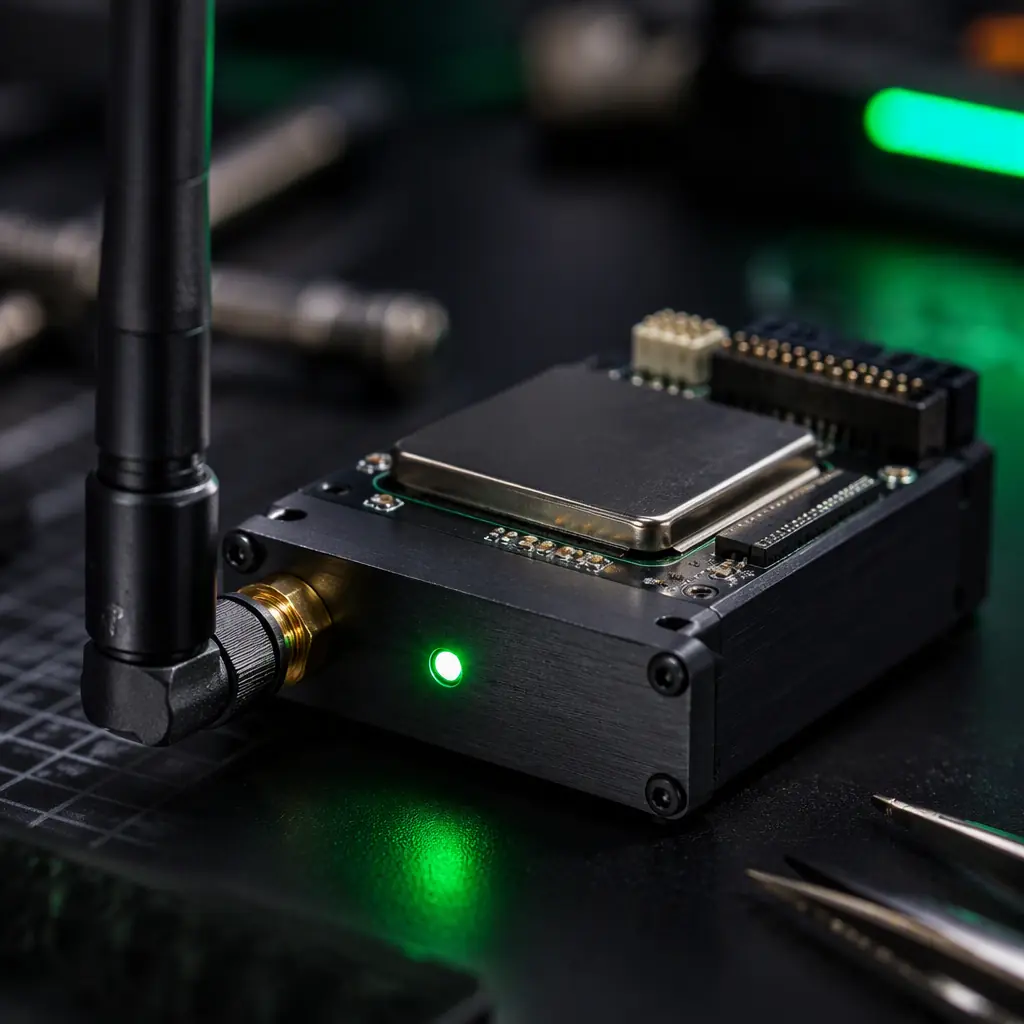 Spectrum-ready radio hardware
The regulatory map: ITU regions and national authorities
The International Telecommunication Union divides the world into three regions, and the same frequency can be allocated differently in each:
| ITU Region | Coverage | Typical UAV control bands |
|---|---|---|
| Region 1 | Europe, Africa, Middle East, Russia | 433 MHz, 868 MHz, 2.4 GHz, 5.8 GHz |
| Region 2 | Americas, Greenland | 433 MHz (restricted), 915 MHz, 2.4 GHz, 5.8 GHz |
| Region 3 | Asia-Pacific, Australia, New Zealand | 433 MHz, 915 MHz (limited), 2.4 GHz, 5.8 GHz |
The ITU sets the framework, but the authority that actually licenses and enforces is national: the FCC in the United States, Ofcom in the UK, BNetzA in Germany, ANFR in France, ACMA in Australia, MIC in Japan. Each publishes its own frequency allocation table, and each treats the UAV control link slightly differently. The certification and compliance guide covers the CE and FCC marking systems that prove a transmitter type meets these national rules; this article covers what the rules themselves say about frequency use.
Licensed versus unlicensed: what the status of a band actually means
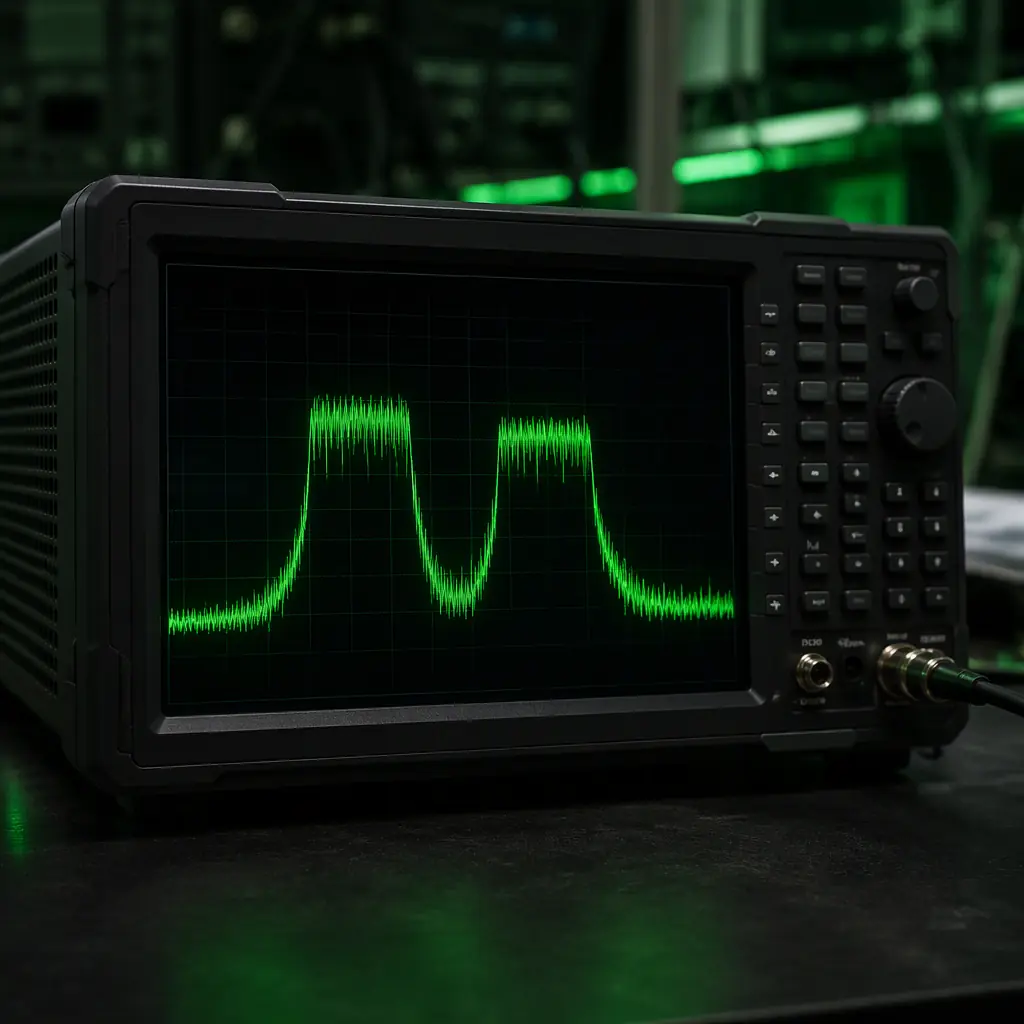
Every band a UAV uses is either unlicensed (license-free, shared with other users, subject to power limits) or licensed (authorized to specific users through a license or coordination process). The practical difference for a fleet operator:
- Unlicensed bands (typically 2.4 GHz and parts of 5.8 GHz): no per-operator license, but hard EIRP caps, including typically 100 mW to 1 W depending on country and band, and mandatory coexistence behavior such as listen-before-talk in Europe and DFS in 5 GHz. Anyone can transmit, which means anyone can interfere.
- Licensed bands (for example the 400 MHz aeronautical allocations used by some national regulators for UAS C2, or licensed point-to-point bands): protected from interference, higher power allowed, but you must apply, wait for the authorization and sometimes coordinate with incumbent users. The Remote ID and BVLOS guide shows how licensed pathways connect to beyond-visual-line-of-sight approvals.
Most short-range UAV operations live in the unlicensed world. The moment an operation needs guaranteed link availability, longer range or BVLOS approval, the licensed world enters the picture. And the hardware must be chosen with that in mind from day one, because you cannot add a licensed band to a radio that does not have the frequency synthesizer for it.
 Licensed vs unlicensed occupancy
United States: FCC Part 15 versus Part 87
The U.S. has two distinct legal pathways for UAV radios, and they are frequently confused:
- FCC Part 15 governs unlicensed transmitters. A 2.4 GHz or 5.8 GHz control link operating under Part 15 needs no license and no coordination, but is limited to specific EIRP values and must accept any interference it receives. This is the pathway for most consumer and light-commercial UAV links.
- FCC Part 87 is the aviation services part, and it includes a UAS radio service that licenses control links in designated bands: for example portions of the 5030-5091 MHz band allocated by the FCC for UAS C2 in 2020. A Part 87 license grants interference protection and higher power, and is the serious pathway for BVLOS and safety-critical operations. The license is held by the operator or the service provider, and the radio must be type-accepted for the specific Part 87 band.
Specifying for the U.S.: ask the supplier for the FCC ID, confirm whether the transmitter is Part 15 certified, Part 87 type-accepted, or both, and confirm which bands the type acceptance actually covers. A module certified for Part 15 operation in 2.4 GHz is not automatically authorized to transmit in a Part 87 band.
Europe: ETSI harmonized standards and national variations
Europe operates through ETSI harmonized standards adopted into national law. The two that matter for UAV radios:
- EN 300 328 covers wideband transmitters in the 2.4 GHz band: including the listen-before-talk (LBT) and adaptive-frequency-agility requirements that prevent collisions with Wi-Fi and other users. A module without compliant LBT behavior cannot be legally sold or used in most of Europe.
- EN 300 440 covers the 863-868 MHz and 915-921 MHz short-range device allocations used by many telemetry links. With duty-cycle limits (commonly 1% or 10% depending on sub-band) that constrain how much a continuous telemetry stream can actually transmit.
National variations matter more than most suppliers admit: some CEPT countries restrict 433 MHz, others impose additional power limits at 868 MHz, and the 5.8 GHz band in Europe is governed by the same DFS rules as the U.S. (see below). The EMC/EMI design guide covers the emissions and immunity side of these same standards, the test side of the same certificate.
 On-site frequency coordination
5 GHz DFS: radar protection that decides the hardware
The 5.8 GHz band is attractive for UAV video downlinks because it offers wide channels, but much of it is shared with weather and military radar, and regulators protect radar as the incumbent. That protection is implemented as dynamic frequency selection (DFS):
- DFS detection. The transmitter must monitor the channel for radar pulses and vacate it within a defined time (typically 10 seconds) when radar is detected.
- Non-occupancy. After a radar detection, the channel must stay unused for a quiet period (typically 30 minutes in most regimes).
- Transmit power control (TPC). In Europe, TPC is mandatory above certain power levels. The radio must automatically reduce its EIRP by at least 3 dB unless it can prove the channel is clear.
A UAV video link without working DFS is a legal liability in any country that enforces it. And it will also fail in practice near radar installations. Specify DFS as a firmware feature with evidence, not as a marketing word: ask for the DFS certification report, the detection-test results, and the behavior when a radar signal appears mid-flight. The FPV and video downlink guide covers what DFS means for the video link budget in practice.
 Radar coexistence
Frequency coordination as a process: from application to authorization
Licensed spectrum is obtained through a process, and the process has a timeline that procurement must respect:
- Identify the band and service. Confirm the national allocation for the operation type (C2, telemetry, video) and whether the regulator maintains a UAS-specific service.
- Check incumbent users. Most licensed bands have existing occupants, broadcast, satellite, fixed links, military. Coordination means demonstrating that the UAV operation will not cause harmful interference, often through a technical study of frequencies, power and geography.
- File the application. The national authority reviews and either grants a license, assigns a specific frequency, or attaches conditions (power limits, geographic restrictions, operating hours).
- Program the hardware. The granted frequency must be programmed into the radios. Which is why frequency-agile modules with software-tunable synthesizers are worth specifying even when the operation starts in an unlicensed band.
The timeline is usually weeks to months for a first application, so spectrum is a planning input, not a launch-day activity. The UTM and detect-and-avoid guide shows how licensed spectrum, Remote ID and airspace authorization stack into a complete BVLOS approval chain. The spectrum license is one layer of that stack.
BVLOS spectrum strategy: beyond the unlicensed ceiling
Beyond visual line of sight changes the spectrum calculus in three ways. First, the link must be reliable over the whole mission. An unlicensed band shared with Wi-Fi is a statistical risk, not a design. Second, regulators increasingly expect BVLOS operations to use protected spectrum: the U.S. 5030-5091 MHz C2 band and similar national allocations exist precisely for this. Third, the network path matters: LTE-based video return rides a licensed cellular network rather than an unlicensed radio link, which is why 4G/5G appears in so many BVLOS architectures. The strategy decision is whether the aircraft's primary C2 link lives in unlicensed spectrum with a cellular backup, or in licensed aviation spectrum with everything else as backup. And that decision is made by the hardware you procure.
Specifying spectrum-ready hardware: the RFQ checklist
- Band coverage. Explicit frequency range of the synthesizer, and which regulatory bands it can actually tune (433, 868, 915, 2.4, 5.8 GHz and any licensed bands required).
- EIRP control. Software-configurable transmit power with a documented EIRP ceiling per band and country, not a fixed power amplifier stage.
- DFS and TPC. Working dynamic frequency selection with detection test evidence, non-occupancy behavior and transmit power control where required.
- Duty-cycle compliance. For 868/915 MHz links in Europe, the ability to configure the link to stay inside the applicable duty-cycle limits.
- Type-approval certificates. FCC ID (with the exact Part number), CE/RED DoC referencing the specific EN standards, and any national certifications for the countries of operation.
- Country configuration. Region-locked firmware tables that prevent accidental operation in non-approved bands, a feature for fleets crossing borders, not a restriction.
- Spectrum sensing. Where frequency agility matters, a module that can scan and select a clear channel on boot (adaptive frequency agility) rather than a fixed-frequency transmitter.
The bottom line: spectrum compliance is manufactured into the radio, so it must be specified into the radio. Match the bands and EIRP to the countries of operation, demand DFS evidence for 5 GHz links, plan the licensed pathway early for BVLOS, and make frequency agility a contract line item, not a hope. EMS Drone supplies spectrum-ready communication stacks, frequency-agile telemetry and video modules with DFS, EIRP control, region configuration and the type-approval documentation for your target markets. Send your operating countries and mission profile, and we will specify the radio package that is legal where you fly.
Explore Communications & RF Back to Blog
Continue Reading
RF Communication Systems
Band selection from a range and bandwidth perspective, the layer below spectrum law.
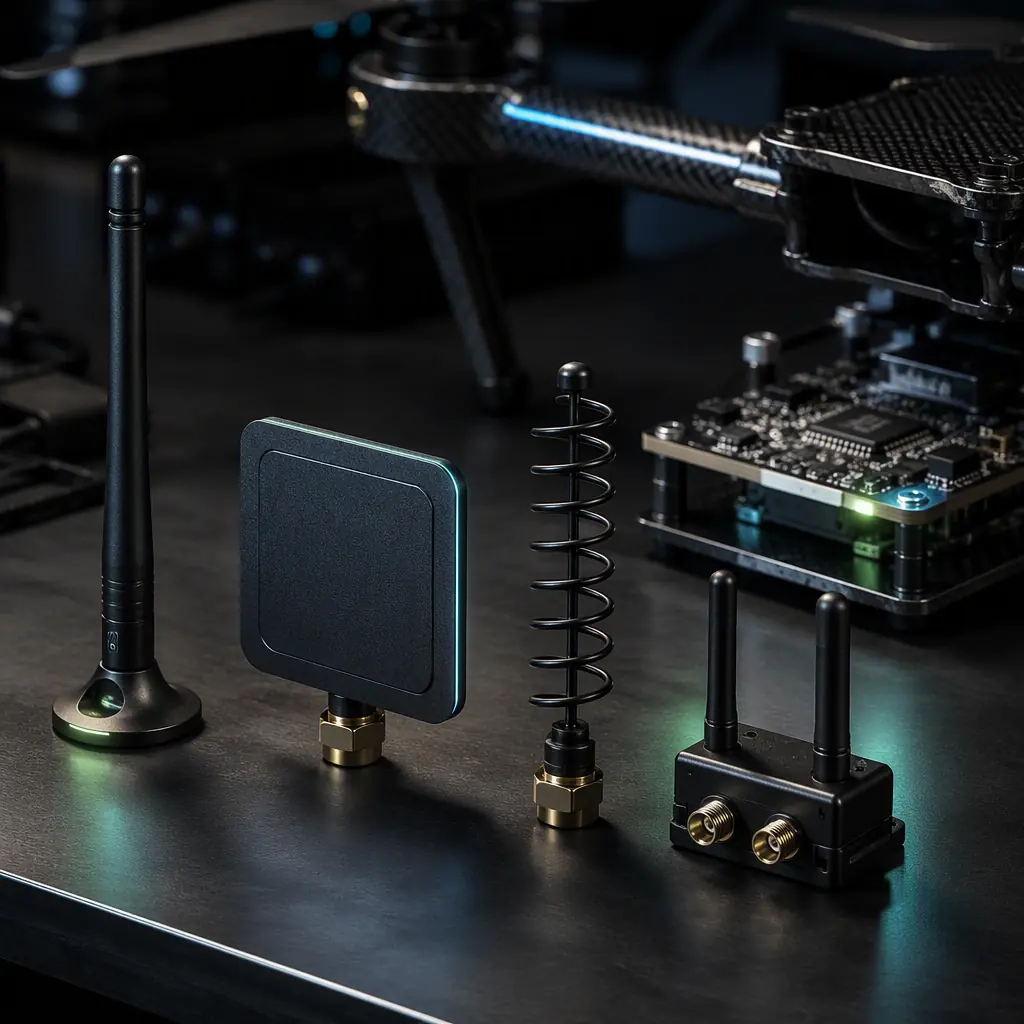
Antenna Selection
Gain, polarization and placement. The hardware that uses the spectrum you are licensed for.
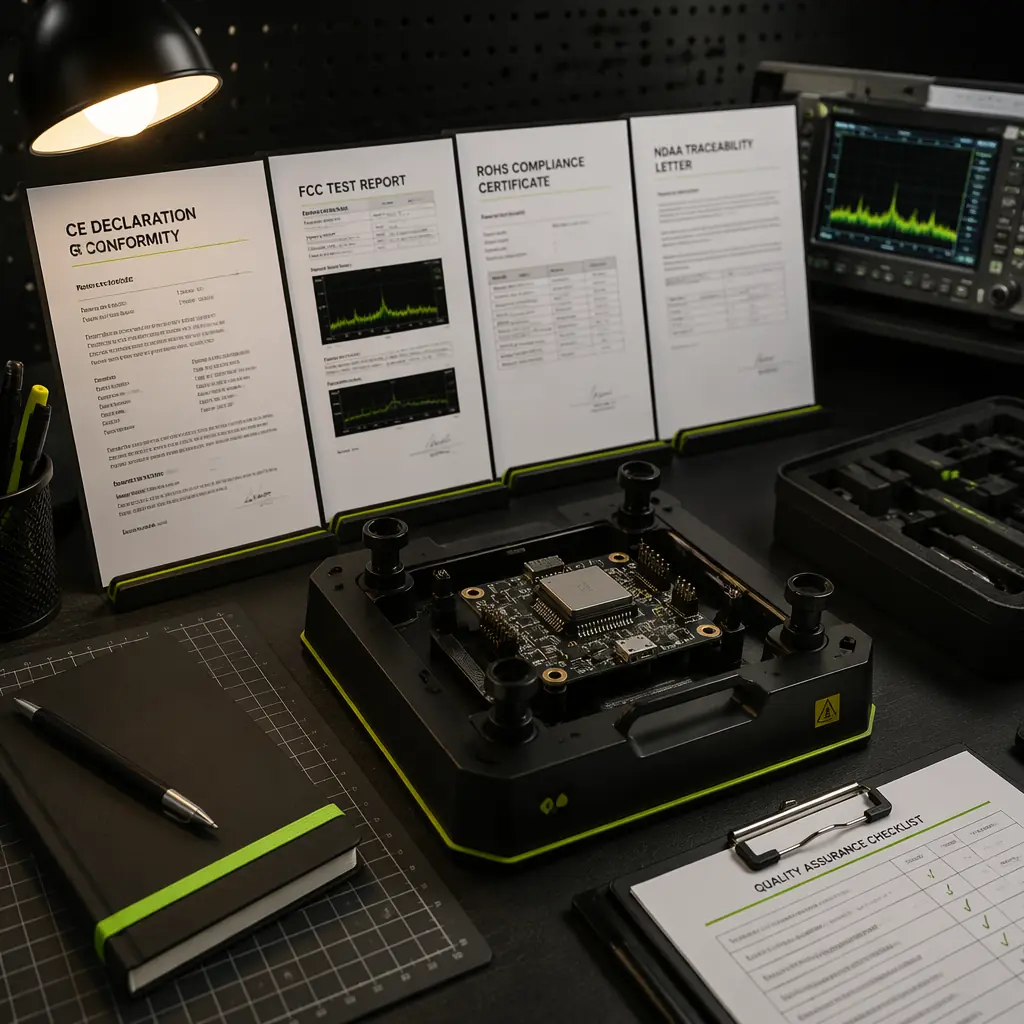
Certification & Compliance
CE, FCC and export control, the marking system behind spectrum type approval.
Remote ID & BVLOS
How broadcast and network Remote ID add their own spectrum and compliance layers.
GNSS Anti-Jamming
Protecting the navigation link in the same contested RF environment.