
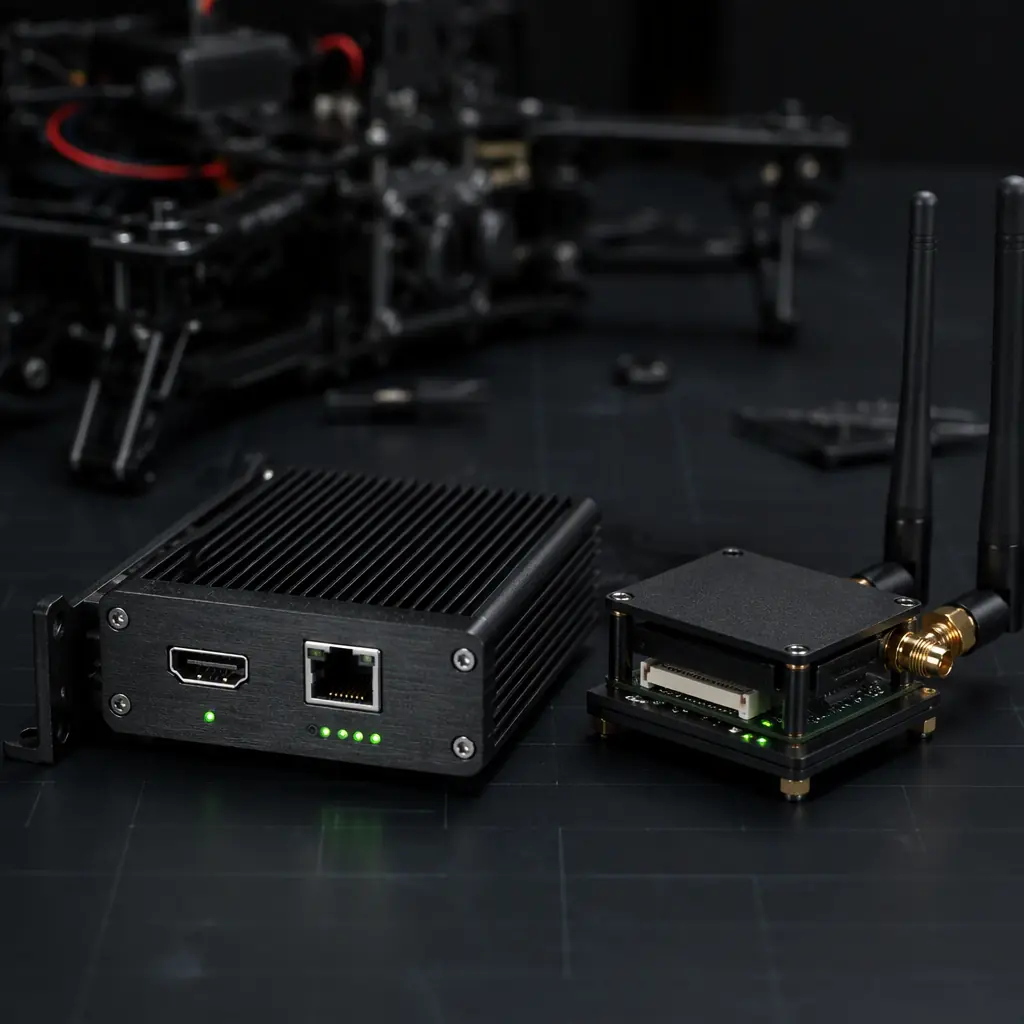
Video is the payload that every operator actually watches, yet most procurement discussions stop at the camera sensor and the transmitter power. The encoder sits between them and quietly decides image quality, range and latency. The FPV and video downlink guide covers the RF ecosystems, HDZero, Walksnail and DJI, and this guide goes one layer deeper: the encoding pipeline itself and the cellular return links that increasingly carry inspection video beyond visual line of sight.
Why the encoder decides the link budget
A video link budget starts with a bitrate, and the bitrate starts with the codec. The raw math: 1920×1080 at 30 fps, 8-bit 4:2:0, is about 1.49 Gbps uncompressed. No UAV data link carries that: every practical system compresses first. What the codec does to that raw stream sets everything downstream:
- H.264 (AVC). The baseline. At 1080p30, a well-tuned H.264 encoder produces broadcast-quality video at 4-8 Mbps and acceptable video at 2-4 Mbps. Every receiver decodes it, every encoder chip supports it, and its motion-search efficiency is good enough that many industrial links still use it.
- H.265 (HEVC). Roughly 30-50% lower bitrate than H.264 for the same quality. A 1080p30 stream that needs 6 Mbps in H.264 needs about 3.5-4 Mbps in H.265, and 4K60 needs about 20-25 Mbps instead of 40-50 Mbps. The cost is encoder complexity and decoder availability. The receiving end must be specified at the same time as the aircraft, not assumed.
- AV1. Another 20-30% below H.265 in compression efficiency, but encoder silicon is still maturing and hardware decode on GCS hardware is less universal. For UAV links it matters mainly where a licensed frequency band caps the bitrate hard, such as a 4 MHz channel.
The bitrate is then traded against the physical layer. The RF communication systems guide shows how range scales with bandwidth and SNR; halving the bitrate roughly doubles the range for a given power and antenna. Which is why a codec choice is an antenna-length decision in disguise.
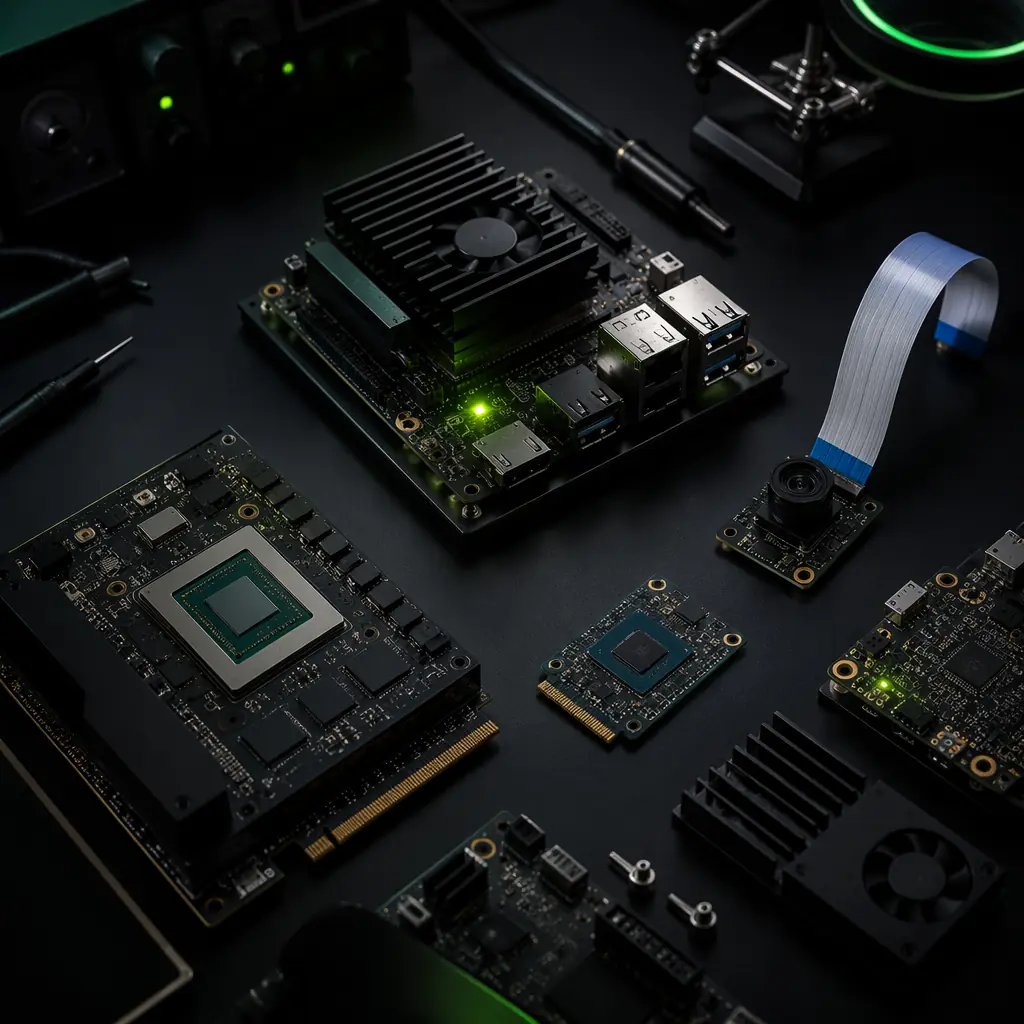
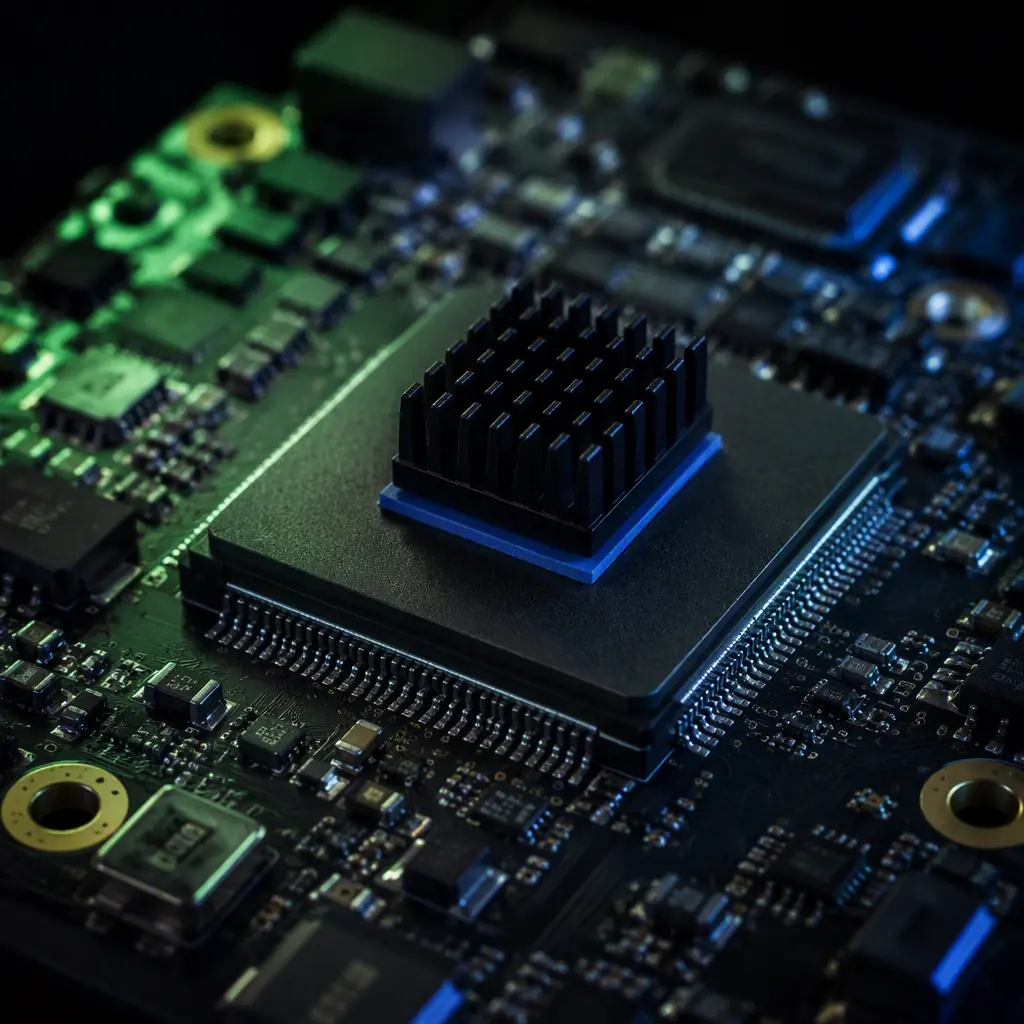 Encoder silicon
The glass-to-glass latency budget
For live operations, manual inspection, first-person flight, search and rescue, latency is a specification, not a preference. The full pipeline from scene to screen breaks down like this:
| Stage | Typical contribution | What moves it |
|---|---|---|
| Sensor exposure + readout | 8-33 ms | Rolling vs global shutter, frame rate |
| Encoder | 5-80 ms | Low-latency mode vs maximum compression; B-frame count |
| RF or LTE transmission | 2-100 ms | OFDM processing, cellular RTT, retransmission |
| Decoder + display | 10-60 ms | GCS hardware decode, display pipeline, vsync |
An HDZero-style system optimized for racing runs 20-30 ms end to end by using all-intra encoding with no B-frames: every frame is independently decodable, at the cost of roughly 2-3× the bitrate of a long-GOP stream. An inspection system that tolerates 150-300 ms can use a long-GOP H.265 stream and fit far more video into the same link. The camera and gimbal selection guide covers the sensor-side latency choices; the encoder configuration is where the operator side is decided.
The procurement rule: state the required glass-to-glass latency as a number, then verify it with the supplier's measured end-to-end test, not with a spec sheet. Latency claims without a measurement method are marketing.
Dedicated encoder silicon versus SoC encoding
Where the encoding happens on the aircraft determines what is achievable:
- Standalone encoder modules. A dedicated HDMI/SDI-to-stream encoder board, commonly built around Ambarella or HiSilicon-class silicon, accepts any camera output and emits H.264/H.265 with hardware-tuned low latency. This is the standard for gimbal payloads whose cameras have no built-in streamer.
- Companion-computer encoding. The edge AI and onboard computing guide covers Jetson and similar platforms; their hardware video encoders (NVENC-class) do 4K60 H.265 at single-digit millisecond latency while the same chip runs the perception stack. This suits platforms that already carry a companion computer for processing.
- Camera-internal encoding. Many industrial gimbals stream H.264/H.265 natively over IP or SDI. Zero extra hardware, but the codec settings, GOP structure and latency are whatever the camera vendor chose, and often not configurable.
Mixing two encoders on one aircraft is common and correct: a low-latency H.264 stream for the pilot's eyes, and a higher-efficiency H.265 stream for the recorded inspection product. The payload integration guide shows how to budget the power and interfaces for both paths.
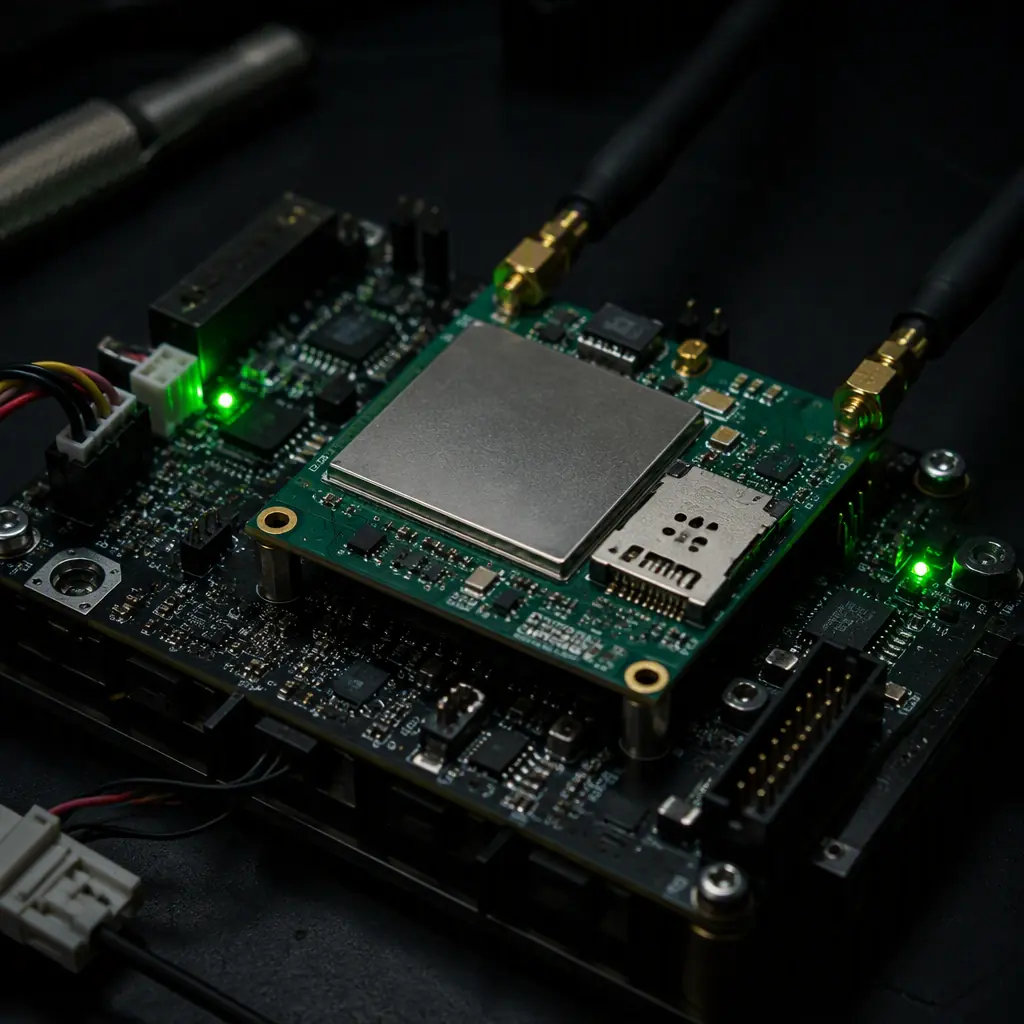 LTE return module
When the LTE video return replaces the RF downlink
A dedicated RF downlink is range-limited by physics: 2.4 GHz and 5.8 GHz links carry high bitrates only within a few kilometers at legal power. An LTE video return works anywhere the cellular network reaches, 20, 40, 60 km from the pilot, and that changes which missions are possible. Typical real numbers:
- Inspection corridors. A power-line or pipeline survey that follows a 30 km corridor can stream 1080p30 at 3-6 Mbps over LTE for the whole flight, with the pilot's control link staying on a short-range RF radio.
- Multi-operator coverage. One SIM on a single carrier gives 5-15 Mbps uplink in good coverage but drops to unusable in dead zones. Dual-SIM or bonded multi-modem links (two LTE modules on different carriers) sustain 8-20 Mbps aggregate and switch carriers mid-flight. The antenna selection guide applies here too, the LTE antennas need placement and diversity like any other RF system.
- Adaptive bitrate is mandatory. Cellular throughput varies second to second. A professional return link adjusts the encoder bitrate dynamically, 8 Mbps down to 1.5 Mbps, before the network drops the stream. Fixed-bitrate LTE video is the number-one cause of frozen inspection feeds.
The remote ID and BVLOS guide covers the regulatory side of flying beyond visual line of sight; the LTE video return is the data side of the same operations, and regulators increasingly expect the command-and-control link to be independent from the video return path.
Designing the return link: from camera to ground station
A complete video return system has five layers, and each is specifiable:
- Capture. Camera output format and frame rate. 1080p30 or 4K30, HDMI/SDI/MIPI. The encoder must match the sensor output from the gimbal selection.
- Encode. Codec, resolution, GOP length, latency mode, bitrate ceiling and floor. Write these down; they are the contract with the link.
- Transport. RTP/RTSP over UDP or SRTP, with forward error correction sized to the expected packet loss. On LTE, 2-5% packet loss is normal at cell edges, without FEC the stream stutters.
- Network. The modem(s), SIMs, and the VPN or private APN that keeps the stream secure and routable. Public-internet video return without encryption is how inspection footage leaks.
- Receive. The ground station decoder, hardware decode, display output, recording, and the operator's video wall. The ground control station guide covers the receiving-side platform in depth.
Layering matters because each layer can be upgraded independently: a better encoder improves an existing RF link, a second modem upgrades an LTE link, and a faster GCS improves decode margin without touching the aircraft.
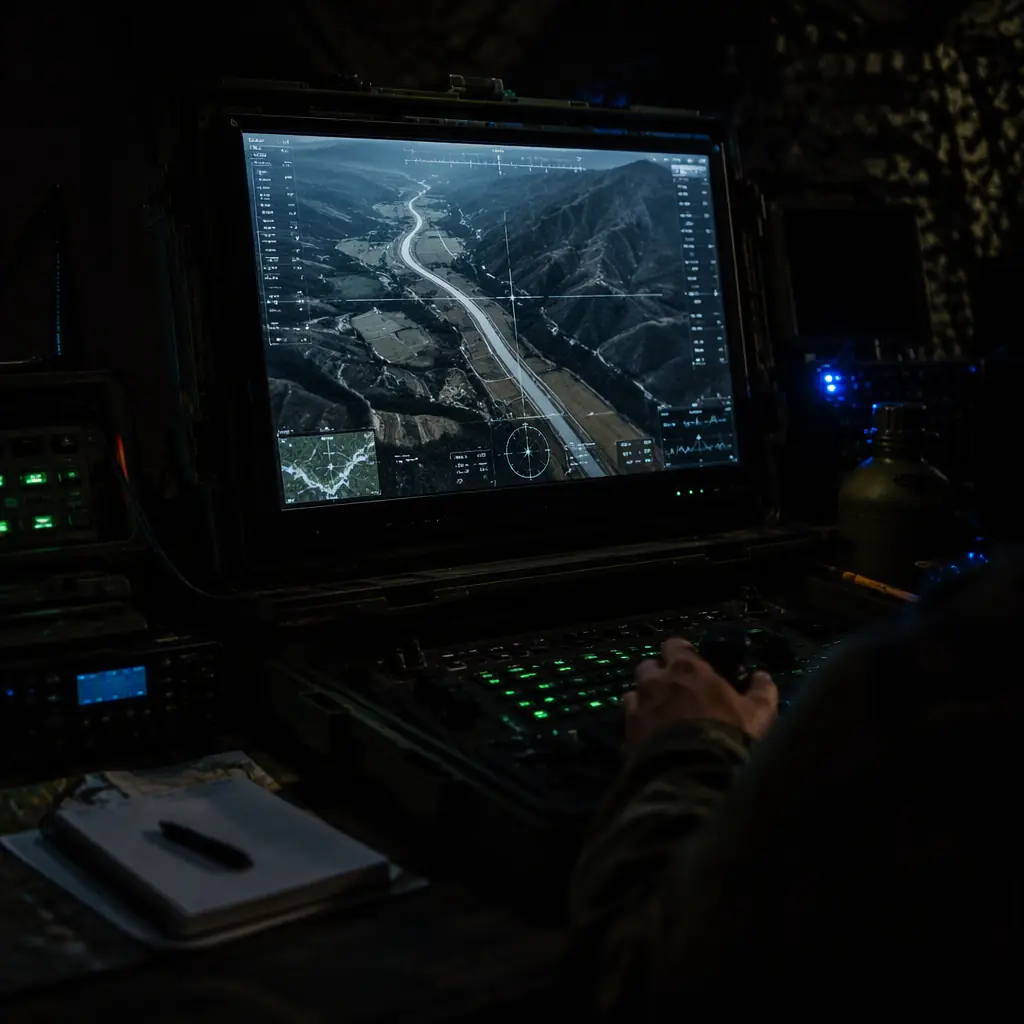 Ground station receive
Video return procurement checklist
When you specify a video return system, as a component or as part of a complete stack, put these line items in the RFQ:
- Codec and profile. H.264 High, H.265 Main or AV1, and the resolution/frame-rate ladder (1080p30, 4K30, 720p60).
- Bitrate range. The minimum and maximum bitrate the encoder will track, and whether adaptation is automatic. Demand a stated ceiling and floor.
- Glass-to-glass latency. A number plus the test method: measured at which resolution, bitrate and link condition.
- GOP and error resilience. Keyframe interval, FEC scheme, and behavior on packet loss. Does the stream freeze, drop to low-res, or recover within a stated time?
- LTE specifics. Dual-SIM support, carrier aggregation, band coverage for your operating region (B1/B3/B7/B28 etc.), and the antenna diversity configuration.
- Interfaces. Inputs (HDMI, SDI, MIPI) and outputs (Ethernet, USB, SFP) that match the camera and the GCS from the communication protocols guide.
- Power and thermal. Encoder and modem power draw at peak encode, and the thermal envelope, encoder silicon derates in hot payload bays, and the thermal management guide shows why this matters.
The bottom line: the encoder is the cheapest component in the video chain and the one with the most leverage over range, quality and latency. Specify it deliberately, verify the latency and bitrate claims with measurements, and treat the LTE return link as an engineered network path, not a SIM card in a box. EMS Drone configures video return systems end to end: encoder selection matched to the gimbal, dual-SIM LTE return with adaptive bitrate, FEC-tuned transport, and the ground station receive side, with the latency and bitrate test reports delivered with the hardware. Send the mission profile, and we will specify the encoding and return link that fits it.
Explore Communications & RF Back to Blog
Continue Reading
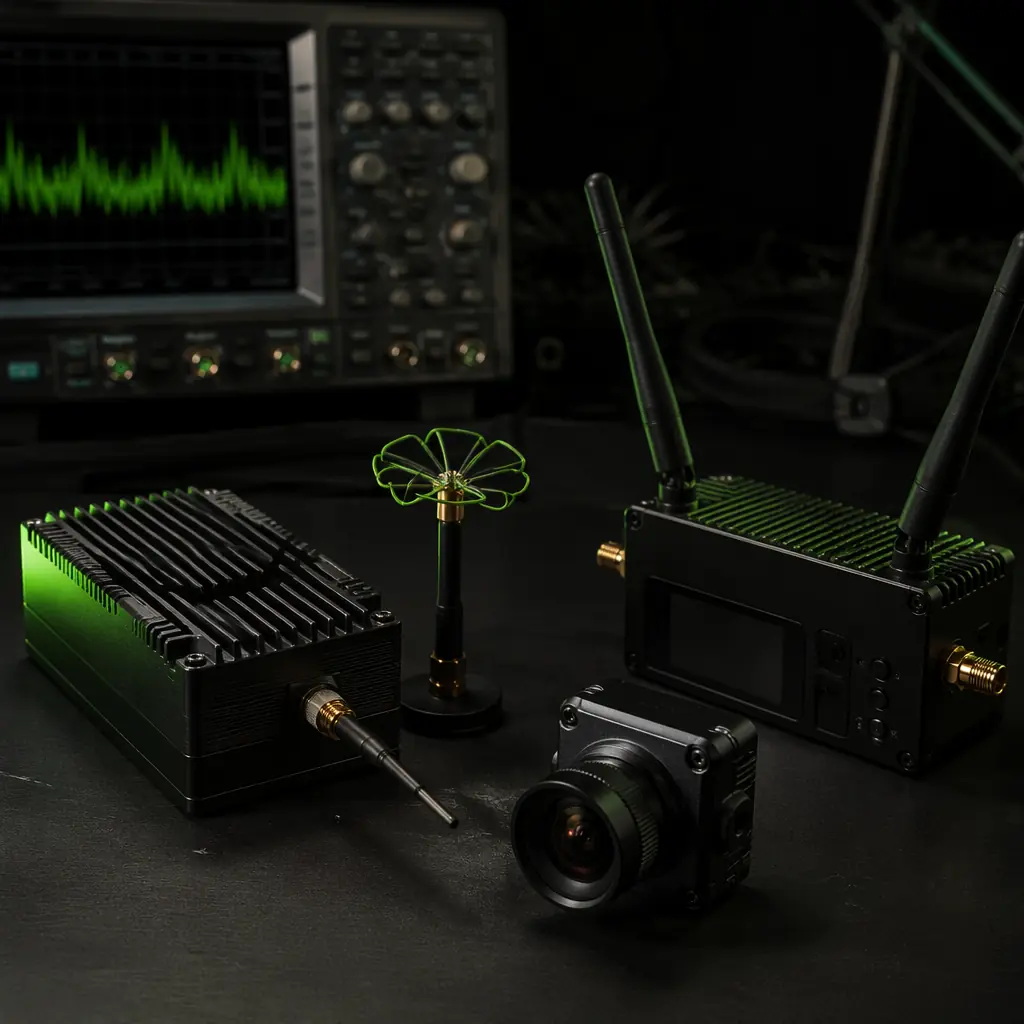
FPV & Video Downlink Systems
The RF ecosystems, HDZero, Walksnail, DJI, that carry the encoded stream.
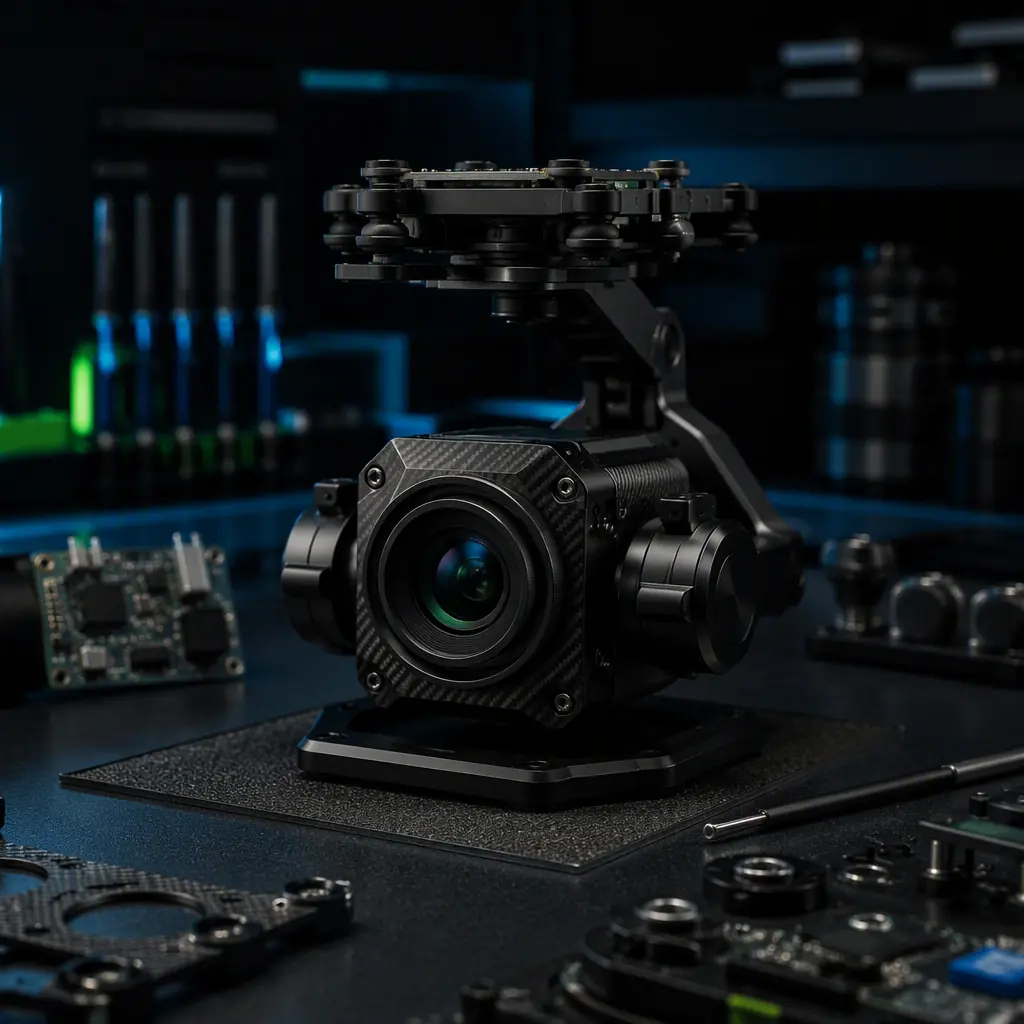
Camera & Gimbal Selection
The sensor-side inputs the encoder must match.
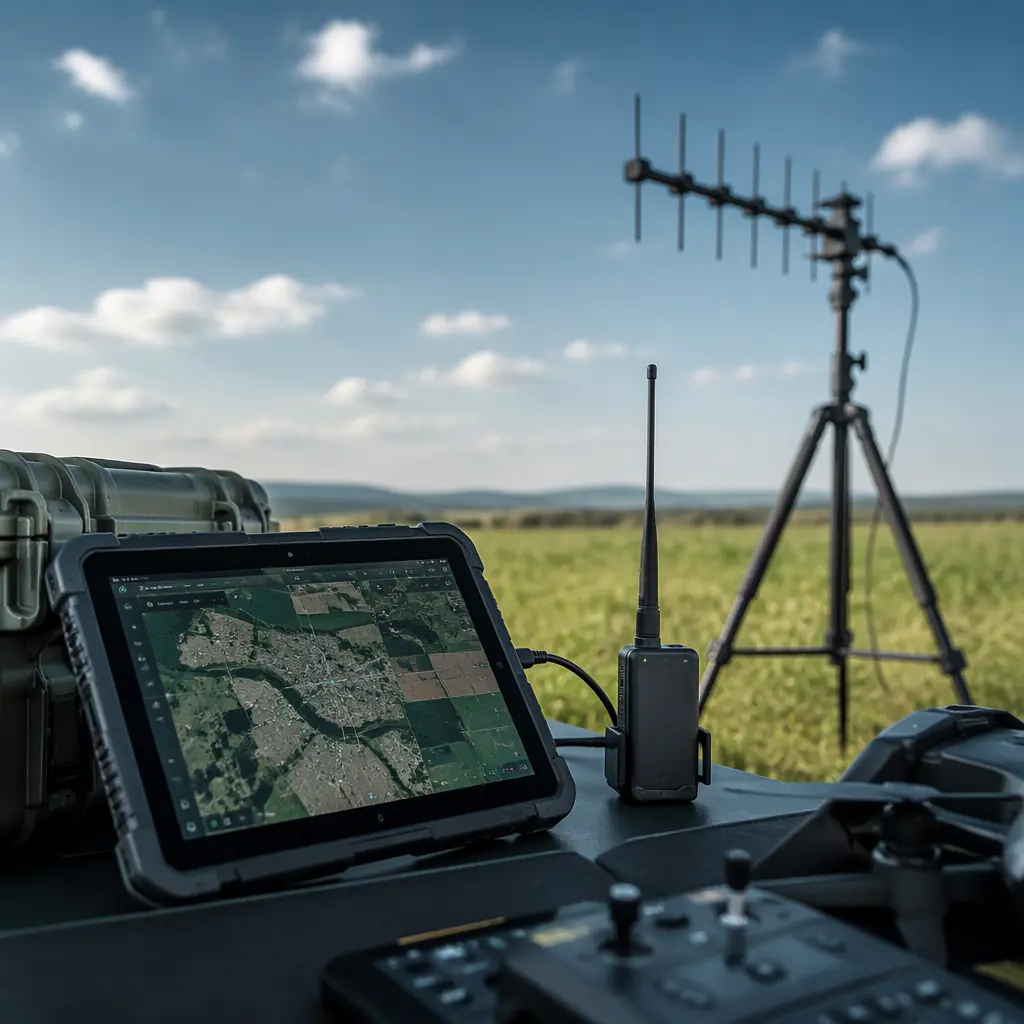
Ground Control Station Hardware
The receiving platform for the return stream.
Remote ID & BVLOS Components
The regulatory context for LTE video return operations.
UAV Edge AI & Onboard Computing
The companion computers that encode and process video onboard.