
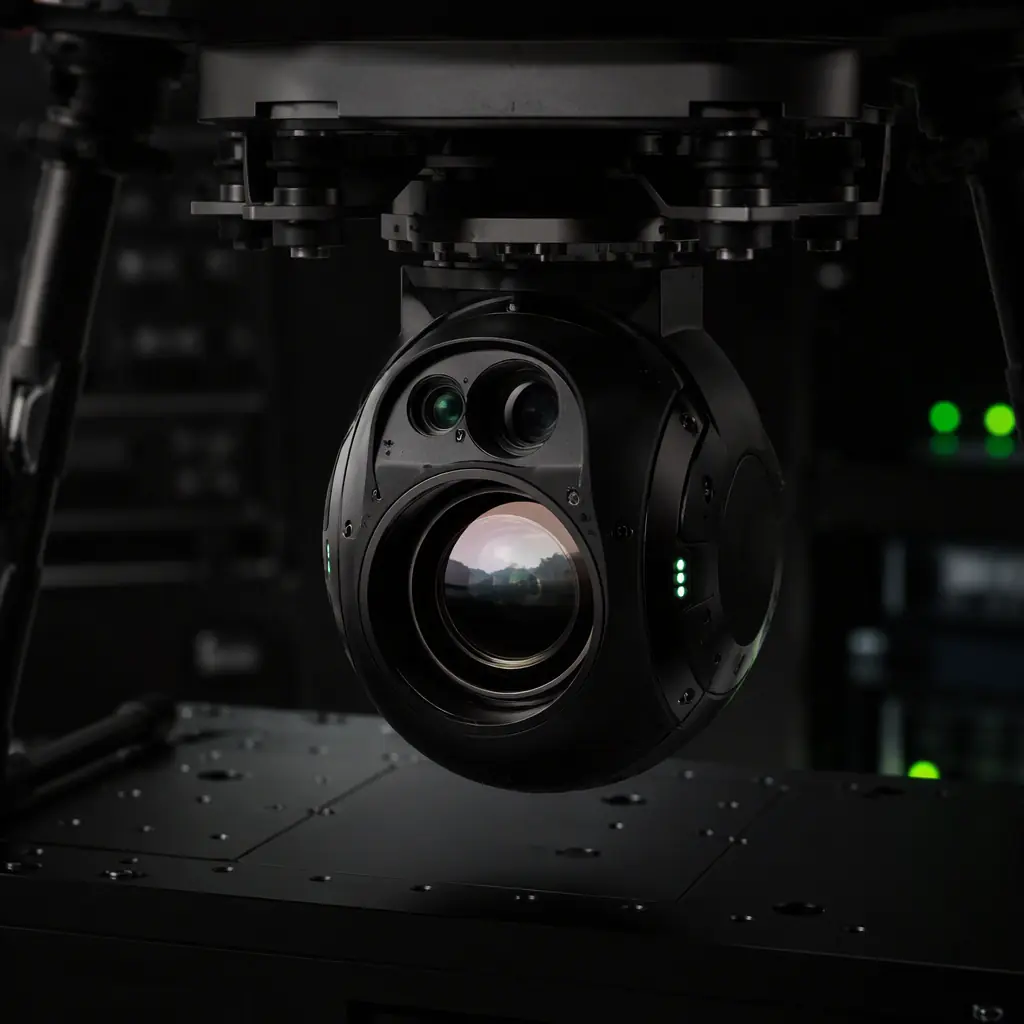
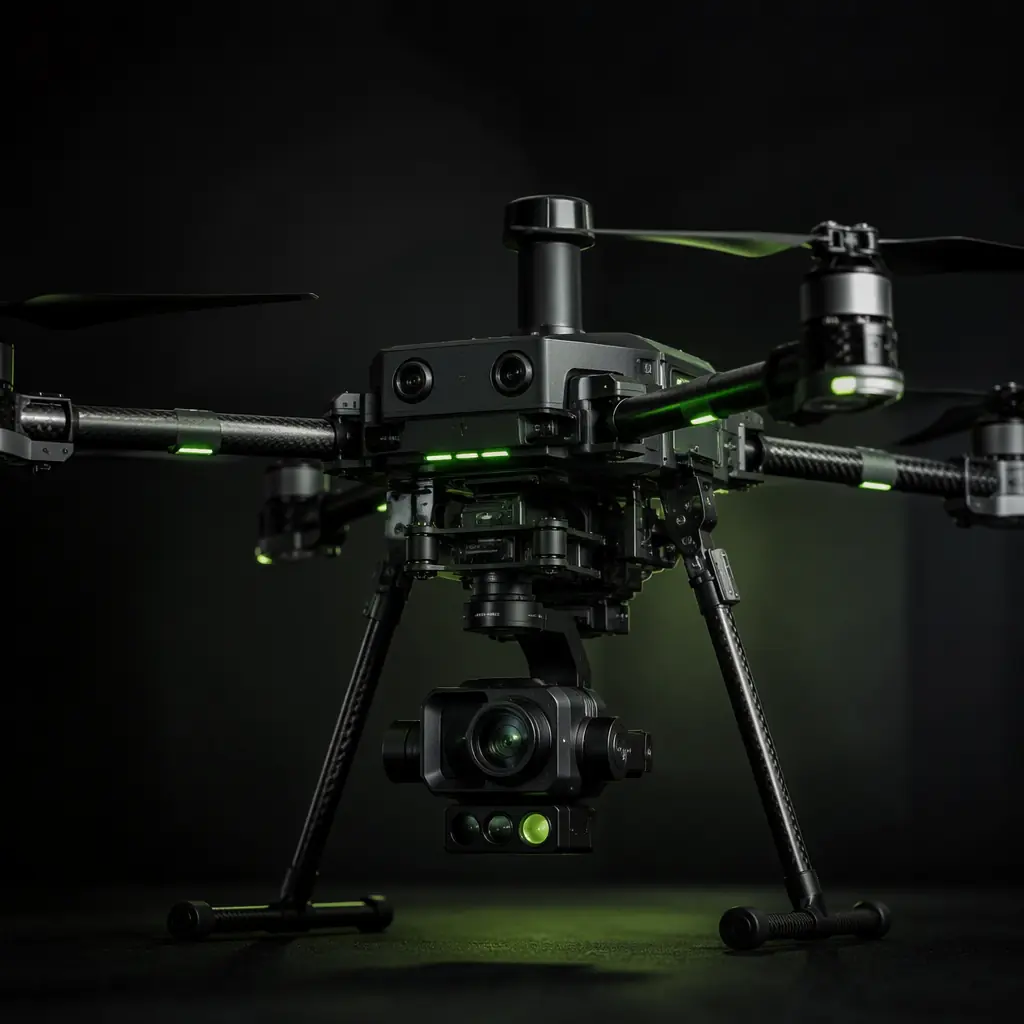
Inspection programs buy thermal payloads for one reason: to find temperature anomalies before they become failures. The industrial inspection components guide covers the full inspection airframe; this guide focuses entirely on the thermal payload itself, the sensor, the lens, the calibration and the compliance that make the data defensible.
Radiometric versus non-radiometric: the first procurement fork
The single most important question is whether the payload records temperature or just imagery:
- Non-radiometric cores produce an image, hot things look bright, but the pixel values are display data, not calibrated temperature. Good for search and rescue, pilot situational awareness and wildlife surveys, where the goal is to see a warm object, not to measure it.
- Radiometric cores output per-pixel temperature (typically 14-bit data, 0.01 °C quantization) calibrated against a known blackbody reference. Every pixel is a measurement, which is what makes a thermography report, "busbar connection at 87.3 °C, 34 °C above the reference phase", legally and technically defensible. Radiometric capability roughly doubles the core price.
If the deliverable is a maintenance report with temperature deltas, the payload must be radiometric. There is no software that turns a non-radiometric stream into calibrated temperature. The public safety components guide covers the non-radiometric side of the market, where detecting the warm object is the whole job.
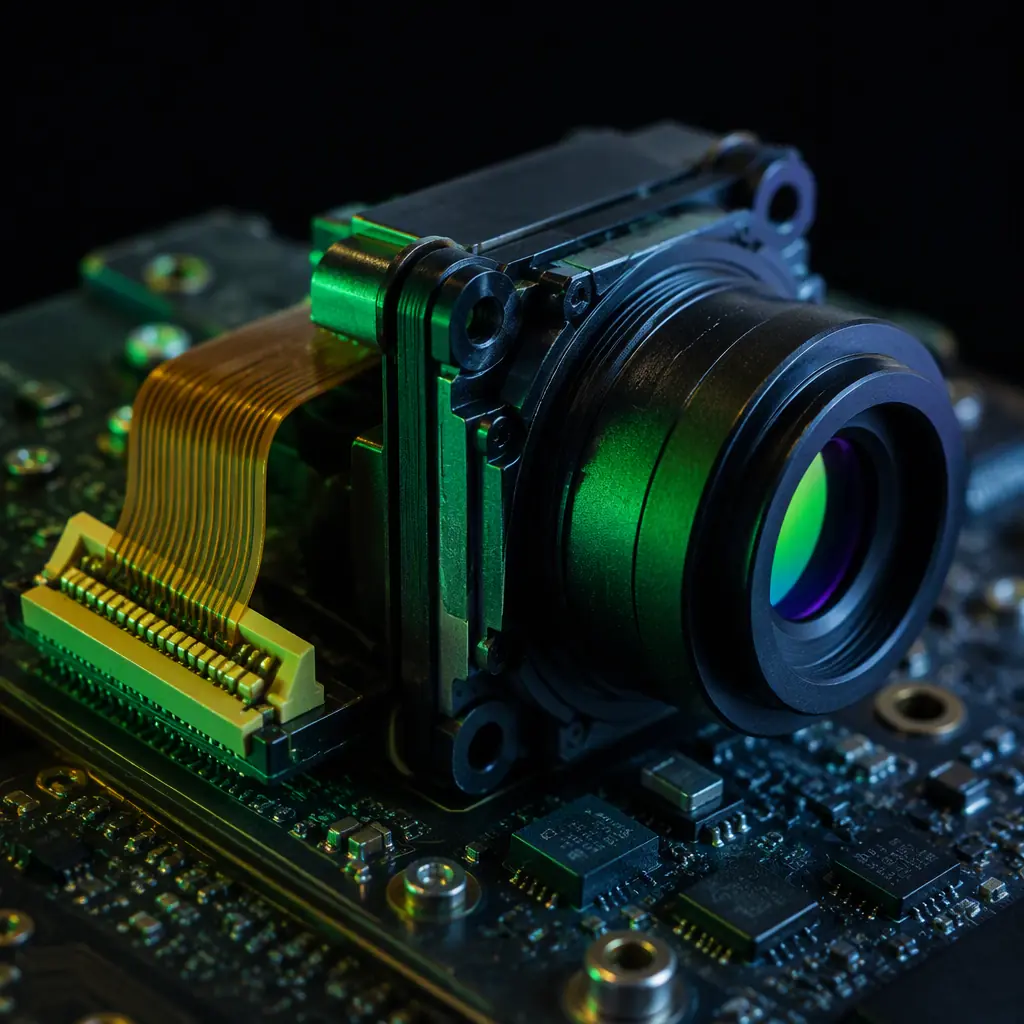 Thermal core
Reading the spec sheet: resolution, NETD and what they do not tell you
Three numbers dominate thermal payload spec sheets, and two of them are routinely misunderstood:
| Spec | Typical values | What it actually decides |
|---|---|---|
| Thermal resolution | 384×288, 640×512, 1024×768 | How many temperature samples exist per scene, the spatial detail of the heat map |
| NETD (noise equivalent temperature difference) | 30-60 mK | Thermal sensitivity. The smallest temperature difference the core can resolve above noise |
| Pixel pitch | 12 µm, 17 µm | Detector element size; combined with the lens it sets instantaneous field of view |
NETD is the number that separates a professional core from a toy: a 40 mK NETD core resolves a 0.04 °C difference, which is what catches a connection heating up 20 minutes before it fails. But NETD is quoted under laboratory conditions (300 K blackbody, specific integration time); real-world sensitivity varies with scene temperature, exposure and the automatic gain control behavior. Demand the NETD at the operating condition you care about, not the best-case headline.
Resolution is where buyers overpay: a 640×512 core has 2.96× the pixels of a 384×288 core but the same lens sees the same field of view, the 640 core simply samples it more finely. The right question is not "how many pixels" but "what is the ground sampling distance at my inspection altitude", which is set by the lens math in the next section.
Lens, field of view and the detection-range math
Every thermal payload spec starts with the horizontal field of view, and the lens choice is the biggest lever on what the mission can see:
- IFOV and ground sampling. The instantaneous field of view per pixel is roughly pixel pitch ÷ focal length. A 19 mm lens on a 17 µm-pitch 640×512 core gives an IFOV of about 0.9 mrad, at 100 m altitude, each pixel covers roughly 0.09 m on the ground. At 30 m inspection altitude (typical for a power-line close pass), that same lens resolves about 2.7 cm per pixel, enough to see a heating clamp but not to measure it precisely.
- Wide versus narrow. A 13 mm lens (wide) covers more scene per pass and is forgiving in flight planning; a 35 mm lens (narrow) triples the reach but makes the aircraft positioning tolerance tighter. Hybrid dual-lens payloads exist but cost weight and budget.
- The pixel rule for measurement. Thermography standards (ISO 18434-style practice) want an anomaly to cover multiple pixels, at least 3×3, ideally 10×10, for a trustworthy temperature reading. That rule, not the marketing range figure, sets the practical inspection altitude for a given lens.
The camera and gimbal selection guide covers the same focal-length trade for visible cameras; the thermal lens follows the identical math with a different detector pitch, which is why thermal payloads need their own lens spec, never a "same as visible" assumption.
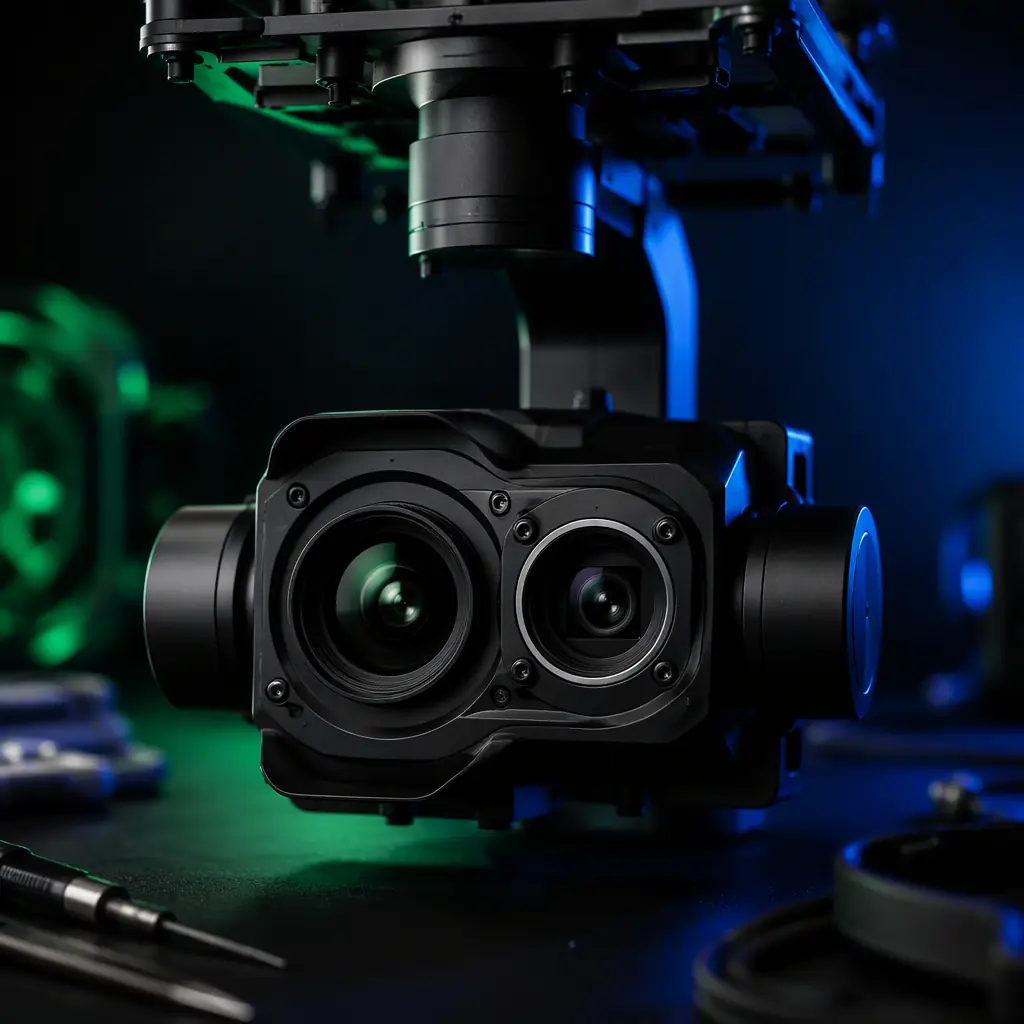 Thermal-visual fusion
Thermal-visual fusion: why one sensor is not enough
A thermal-only inspection stream is hard to localize, a hot pixel 30 m from the aircraft tells you nothing about which tower, which bay or which bolt. Professional inspection payloads fuse the thermal and visible channels:
- Side-by-side or blended output. The thermal core and a visible camera share a field of view, and the payload (or the ground software) overlays or blends them. The operator sees the visible context with the thermal anomaly painted on it.
- Registration quality matters. Cheap fusion is a screen overlay; good fusion is a calibrated co-registration where the thermal pixel and the visible pixel map to the same world point, maintained across zoom and gimbal movement. Ask the supplier how the two channels are registered and what the parallax is at the inspection range.
- Data timestamps. For a defensible report, the thermal frame, the visible frame and the flight log (position, attitude, altitude) must share a synchronized timestamp. The payload integration guide shows how the synchronization architecture is specified on the electrical side.
For GIS-style deliverables, thermal orthomosaics of solar farms, roof inspections, substations, the fused stream feeds the same photogrammetry pipeline as a visible survey. The mapping and survey guide covers the positioning and RTK side that makes thermal mosaics geographically meaningful.
Gimbal and stabilization: the thermal-specific requirements
A thermal core has no shutter-based exposure tricks to hide blur, and its frames are lower resolution than visible cameras, which makes stabilization disproportionately important:
- Angular stabilization. A 2-axis or 3-axis gimbal holding 0.01° class stability keeps the narrow-lens thermal image usable; a fixed mount turns a 35 mm lens into a smeared mess at any vibration level. The propeller balancing and vibration guide explains the vibration environment the gimbal must reject.
- Shutter and calibration events. Radiometric cores periodically close a shutter to recalibrate (typically every 1-5 minutes, 0.2-1 s of black frame). The payload must either hide these events or flag them in the data; a gimbal that lets the operator re-point during calibration keeps the inspection moving.
- Thermal management of the payload. The core's own temperature affects its readings; the gimbal housing and the payload bay layout matter. The thermal management guide covers keeping the avionics: including the thermal core's reference, within its operating band.
Calibration drift and data defensibility
A radiometric payload is a measurement instrument, and instruments drift. The procurement conversation should include:
- Factory calibration certificate. The core ships with a calibration traceable to a reference standard, and the certificate should state the uncertainty across the operating temperature range (-20 °C to +50 °C typical).
- In-field verification. A simple blackbody or a known-temperature target flown at the start of each campaign verifies the core is still measuring correctly. Some payloads log internal temperature and calibration events so the report can prove the data path.
- Report software. The analysis tool must export the temperature data, the emissivity setting used and the measurement parameters. An anomaly report without its emissivity assumption is not reproducible. Emissivity of the target (0.95 for painted surfaces, 0.2-0.4 for bare aluminum) changes the temperature reading by tens of degrees if applied wrong.
When the deliverable feeds a maintenance decision or an insurance claim, the calibration story is as important as the sensor. The certification and compliance guide frames how the payload evidence sits inside the overall compliance package.
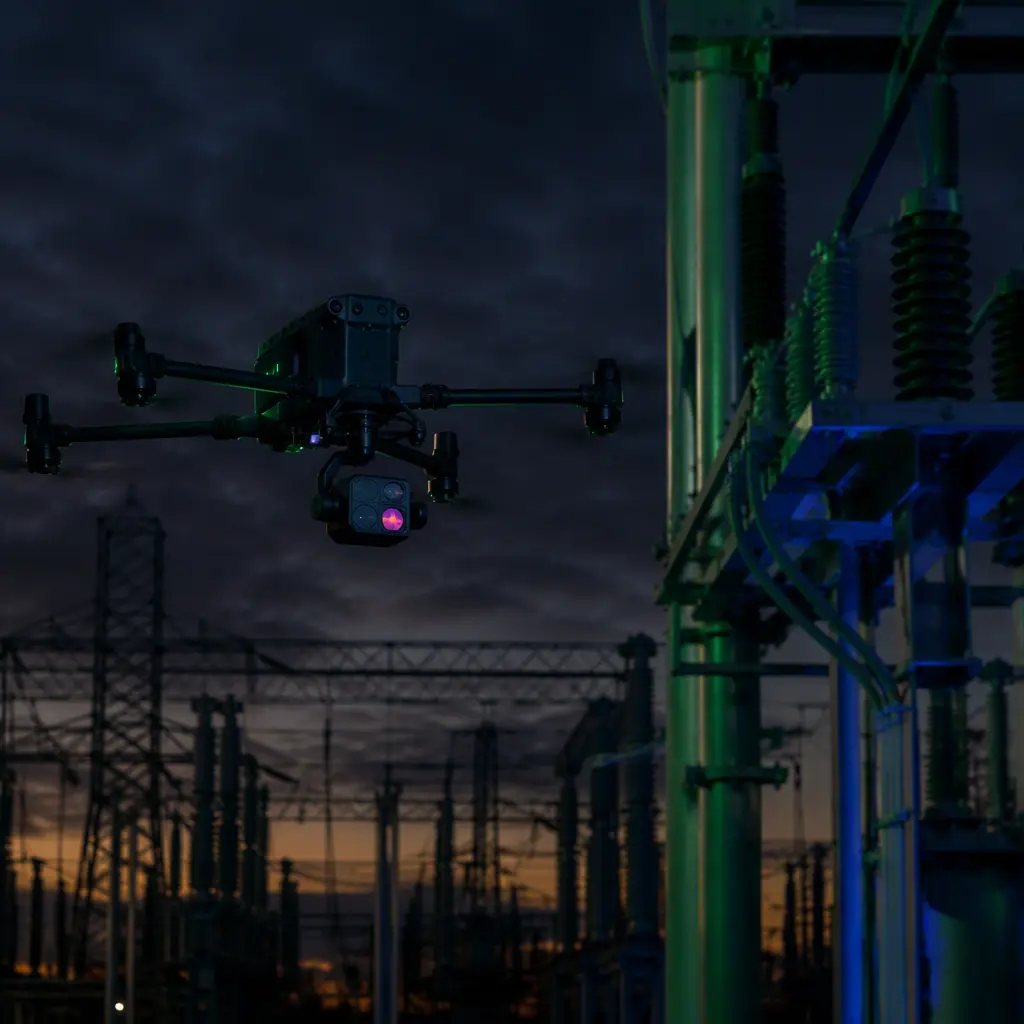 Inspection mission
Export compliance: the constraint that delays purchases
Thermal camera cores are controlled goods in most exporting countries, and this is where UAV procurement programs stall:
- Classification. High-performance thermal cores (typically those exceeding resolution and frame-rate thresholds. 640×512 at 30 fps and above is the zone that triggers review) fall under export control regimes such as ITAR/EAR in the United States and equivalent controls in Europe and China. The exact thresholds change; the classification must be checked per shipment, not once at product launch.
- End-user documentation. Exporters will ask for the end user, the end use and sometimes a certificate of final destination. Inspection companies flying for utility or government clients should expect this paperwork on every order.
- Plan the lead time. License or classification review adds weeks to delivery. The export logistics and ITAR/EAR guide covers the shipping side in detail; for thermal payloads, the compliance clock starts before the order, not at customs.
The practical rule: state the country of operation and the end user early in the RFQ, and ask the supplier to confirm the export classification of the specific core before you commit to a delivery date.
Thermal payload procurement checklist
- Mission type. Radiometric for measurement and reporting; non-radiometric for detection and search. State which one the deliverable requires.
- Core specs. Thermal resolution (384×288 minimum for inspection, 640×512 preferred), NETD at the operating condition (≤50 mK), pixel pitch (12-17 µm) and the lens focal length matched to your inspection altitude via the pixel rule.
- Fusion and sync. Visible channel with calibrated co-registration, synchronized timestamps across thermal, visible and flight log.
- Gimbal. Axis count and angular stability; shutter/calibration event handling; payload power and interface budget per the payload power budgeting guide.
- Calibration. Factory certificate with uncertainty, in-field verification procedure, emissivity handling in the analysis software.
- Compliance. Export classification of the core, end-user documentation requirements and confirmed lead time.
The bottom line: a thermal inspection payload is a measurement system with an image attached, and the specification language should follow the measurement, NETD, IFOV, calibration, emissivity, not the megapixels. Buy radiometric if the report must carry numbers, match the lens to the inspection altitude, demand the calibration and synchronization story, and put the export classification on the critical path. EMS Drone specifies and integrates thermal payloads for inspection platforms: radiometric cores matched to mission altitude, thermal-visual fusion with calibrated co-registration, gimbal integration, and the calibration and compliance documentation package delivered with the payload. Send the inspection profile and operating region. We will confirm the export classification and specify the thermal payload that produces defensible temperature data on the first campaign.
Explore Payloads & Gimbals Back to Blog
Continue Reading
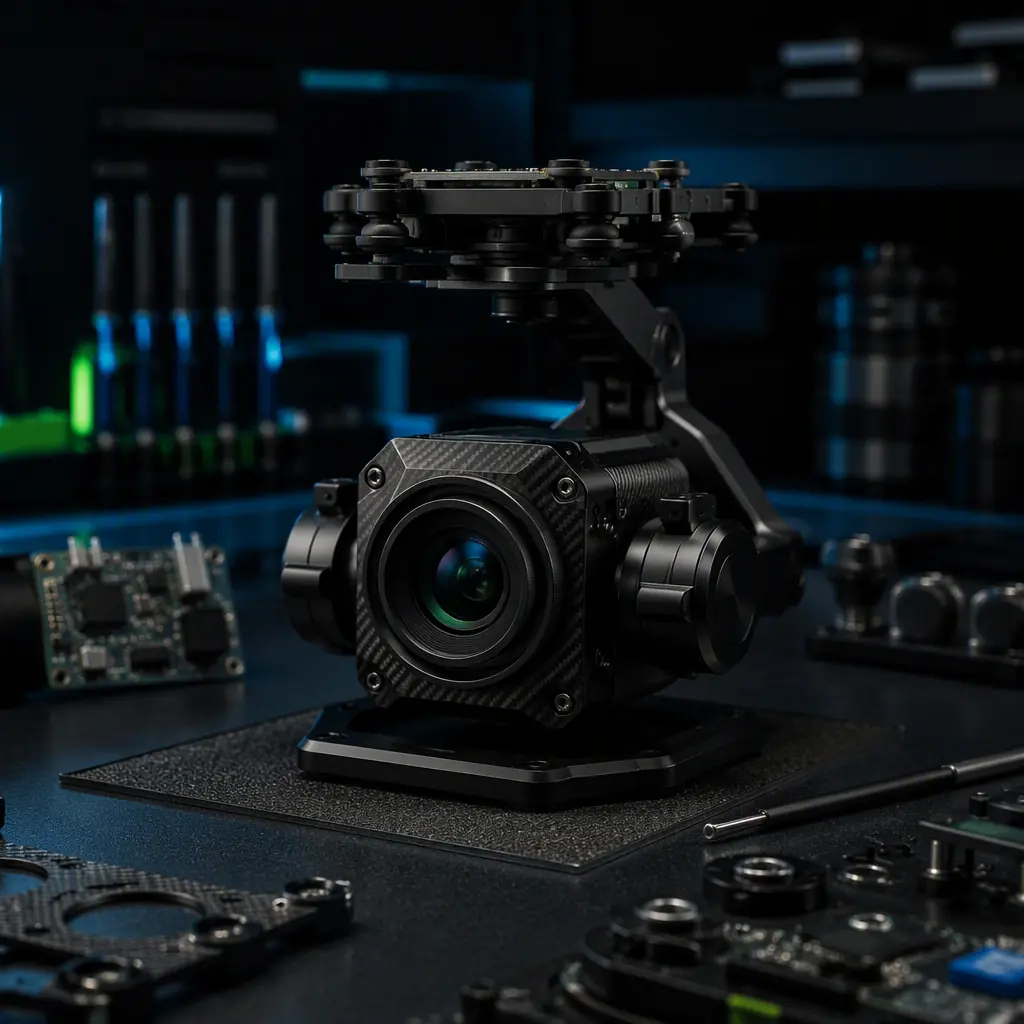
Camera & Gimbal Selection
The visible-sensor lens and stabilization math the thermal payload shares.
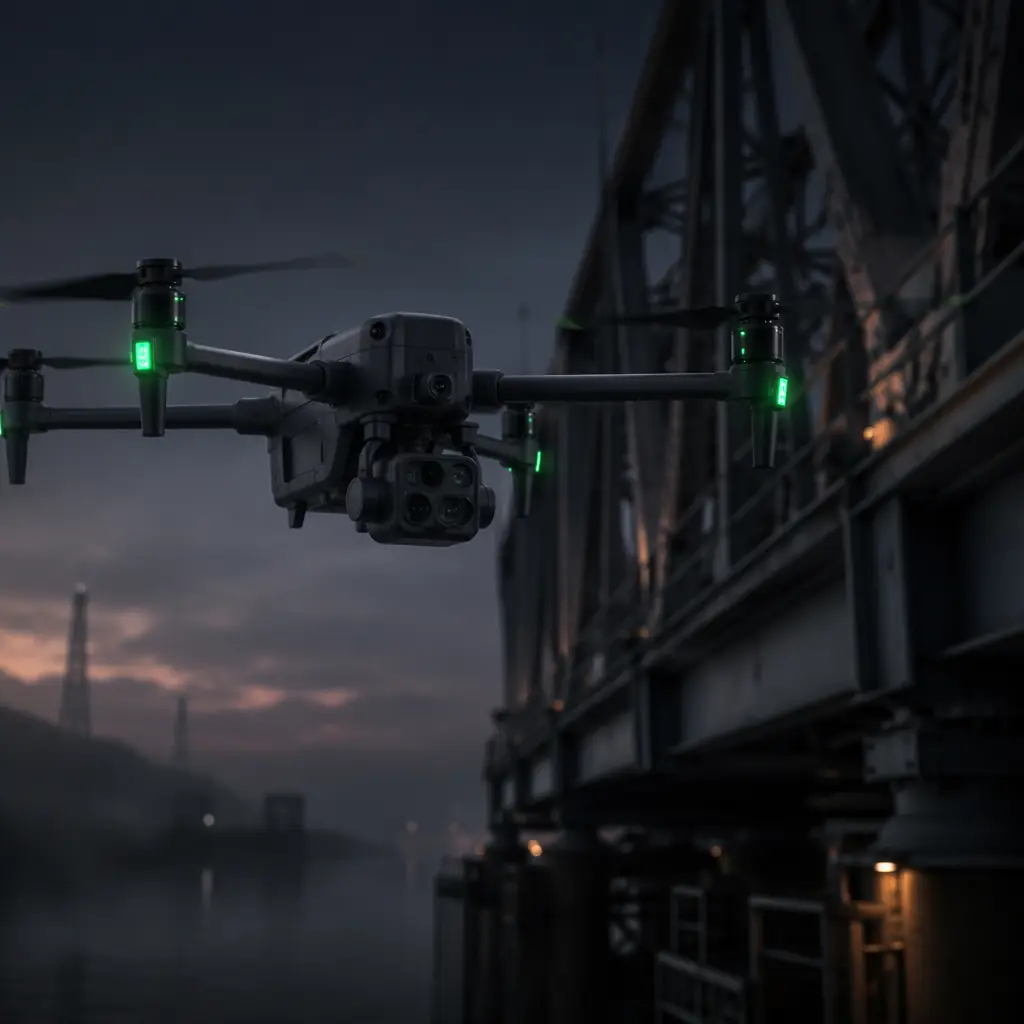
Industrial Inspection Components
The full inspection airframe the thermal payload flies on.
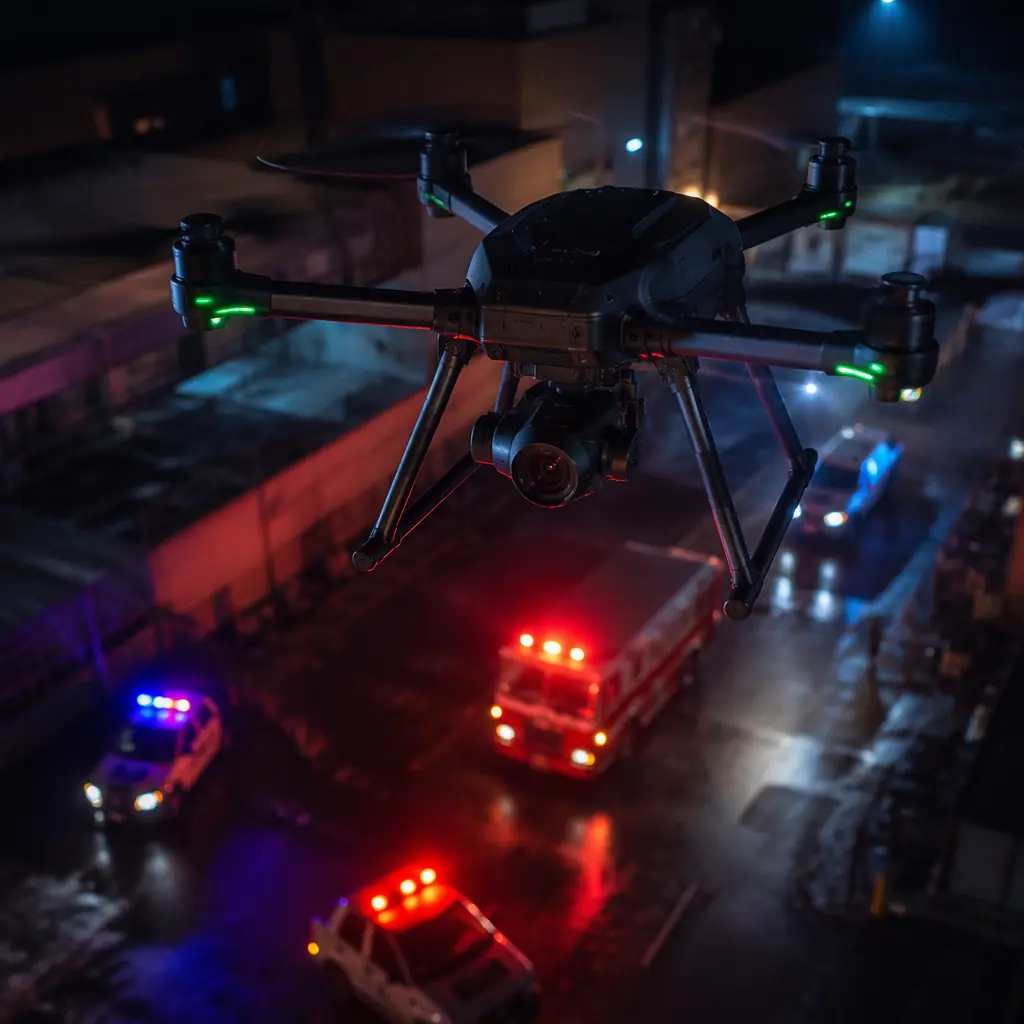
Public Safety Components
Where non-radiometric thermal detection does the job.
Export Logistics & ITAR/EAR
The compliance clock that governs thermal core delivery.
UAV Payload Integration
The interfaces, sync and power that tie the thermal payload to the aircraft.