
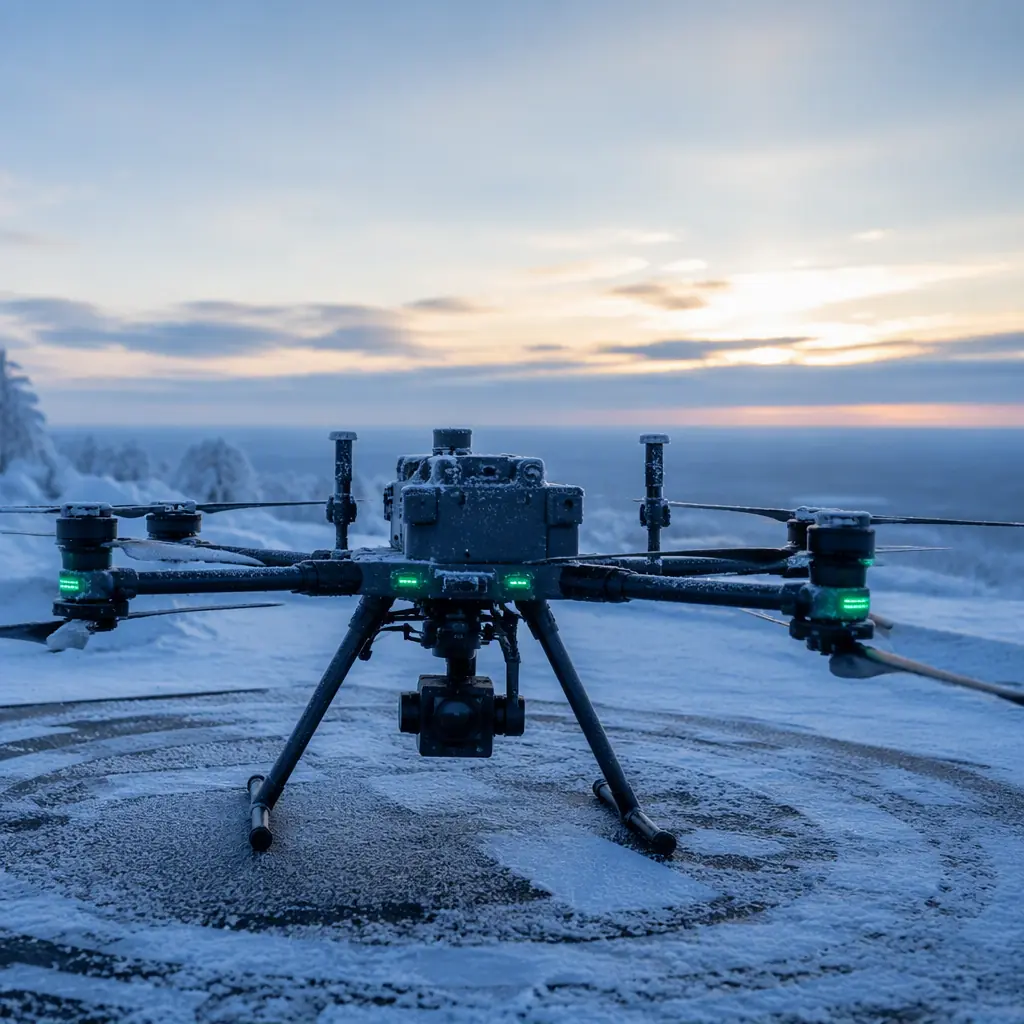
Cold weather is not a niche problem. It is the normal operating environment for inspection, mapping and logistics fleets across Scandinavia, Canada, the northern United States, the Alps and the high plateau regions where much of the world's power-line and pipeline infrastructure sits. The components that keep a UAV flyable at -15°C are the same components that determine whether the mission happens at all. This guide builds on the environmental qualification testing guide, which covers how components are tested against cold; here the focus is the operational selection, what to buy, what to heat, and what to change in the procedure.
What cold actually does to a UAV, subsystem by subsystem
Cold degrades every subsystem, but the failure modes are different and need different mitigations:
| Subsystem | Effect below 0°C | Typical threshold |
|---|---|---|
| LiPo / Li-Ion battery | Capacity drops, internal resistance rises, C-rating derates sharply | -10°C: ~30-50% capacity loss, effective C-rate roughly halved |
| Propeller | Ice accretion on the leading edge changes airfoil shape and balance | Visible accretion below -5°C in humid or precipitating air |
| Pitot-static system | Moisture freezes in the probe and lines, airspeed becomes unreliable | Below 0°C in humid air; any precipitation |
| ESC and motor | Capacitor ESR rises, solder joints stress, cold-soaked electronics behave differently | Below -20°C sustained |
| Servos and mechanicals | Grease stiffens, current draw rises, response slows | Below -20°C for standard grease; below -10°C for cheap units |
| Airframe composites | Matrix micro-cracking risk under impact at low temperature | Impact loading below -30°C (per MIL-STD-810H cold test) |
The pattern to notice: most degradation is gradual between 0°C and -20°C, then accelerates. A fleet that operates above -15°C with preheated batteries and a careful preflight can be reliable; the same fleet at -30°C without those measures will fail in the air. The battery and power management guide covers the chemistry side; below we go component by component.
Batteries in the cold: preheat before you fly, derate before you plan
The battery is the largest cold-weather derating on the aircraft. At -10°C a LiPo pack's usable capacity drops by 30-50% and its effective C-rate roughly halves, a 25C pack behaves like a 12C pack. The result is not just shorter endurance: the voltage sags under load, the autopilot's low-voltage failsafe triggers earlier, and the landing phase, the highest-current phase of the flight, arrives with the pack already at its knee. The component-level mitigations:
- Preheating. A battery warmed to 20-25°C before flight performs almost as well as it does in summer. Heating pads rated 10-30 W per pack, insulated battery bags, or simply keeping packs in a heated vehicle until the moment of launch. Preheat time at -15°C is typically 30-60 minutes for a 6S pack; a self-heating feature, the pack warming itself through controlled discharge, is built into some packs but adds management complexity. The field charging guide covers generator and heater logistics at remote sites.
- In-flight thermal management. A pack warms itself during discharge, so the riskiest phase is the first minutes after launch from a cold-soaked pack. Plan a low-power climb and a hover warm-up before loading the battery hard.
- Li-Ion vs LiPo. Li-Ion cells tolerate cold better than high-C LiPo cells, a meaningful advantage for long-endurance aircraft that already run Li-Ion, at the cost of lower peak current. The chemistry trade-offs are covered in the battery guide's comparison.
- Landing reserve. Add 20-30% to the planned landing reserve in cold conditions. The pack's voltage sag under load means the failsafe floor is reached sooner than the capacity percentage suggests.
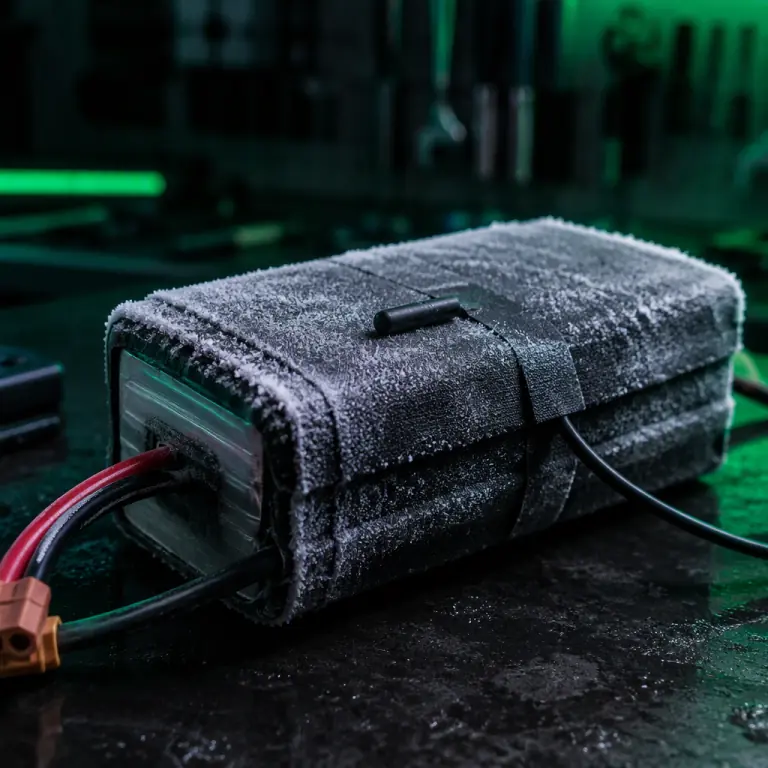 Battery preheat
Propeller and airframe icing: keeping the lifting surfaces clean
Ice on a propeller is a double failure: the added mass unbalances the rotor and the reshaped leading edge reduces thrust and efficiency. A few grams of ice on a 24-inch carbon propeller spinning at 6,000 rpm is a significant vibration source, and the vibration propagates through the motor mount into the IMU. The mitigation options, in order of practicality:
- Anti-icing coatings. Hydrophobic and ice-phobic coatings on the leading edge reduce accretion in light icing conditions. Cheap, passive, and worth doing on every cold-climate airframe; they are not a substitute for avoiding known icing conditions.
- Electro-thermal de-icing. Resistive heating elements bonded to the propeller leading edge or the wing leading edge, cycled to shed ice. Available on some industrial propellers and fixed-wing UAV wings; adds wiring through the spinner and a few watts of power draw, which must be in the power budget. The payload power budgeting guide covers how to account for heaters in the total power chain.
- Ground de-icing. De-icing fluid or warm-air treatment before launch removes frost and rime that would otherwise accrete. This is the same discipline as manned aviation ground de-icing, scaled down.
- Propeller selection. A stiffer, well-balanced prop with a smooth leading edge accretes less and sheds better. The propeller selection guide covers blade geometry trade-offs; for cold fleets, add "icing behavior" to the selection criteria.
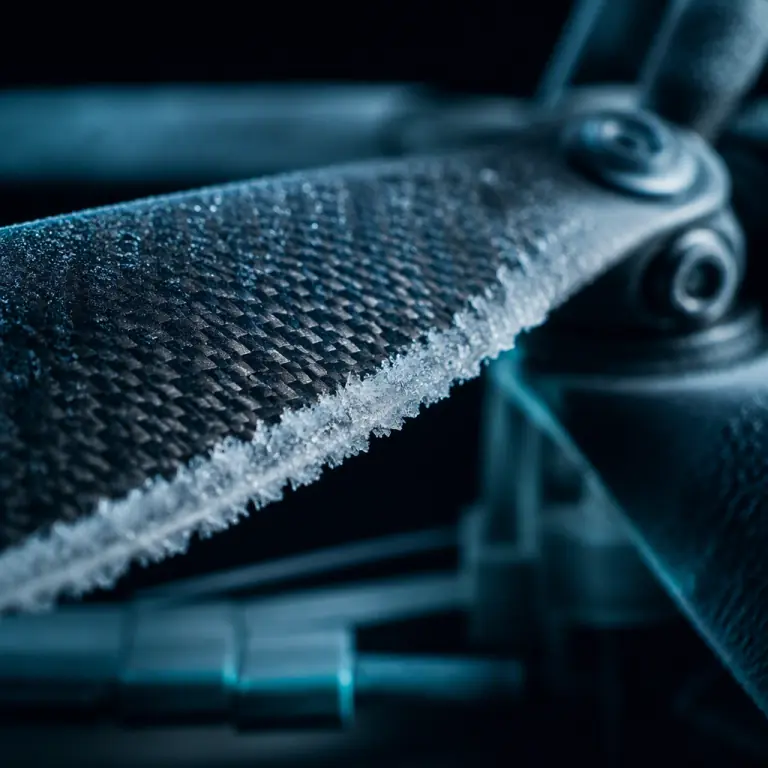 Leading-edge icing
Pitot-static and sensor heating: protecting the air data
The pitot-static system measures the airspeed the autopilot and the pilot both trust. Moisture freezing in the pitot probe or static ports turns that trust into fiction. The airspeed reading freezes or reads erroneously, and depending on the autopilot's airspeed estimator, the aircraft may compensate in the wrong direction. For a fixed-wing or VTOL aircraft transitioning to wing-borne flight, a bad airspeed reading near the transition point is a control hazard. The hardware answer is pitot heat:
- Pitot probe heaters. A resistive element in the probe, typically 10-50 W, powered from the servo rail or a dedicated output. The heater must be on before the probe enters icing conditions. Switching it on after ice has formed is a de-icing race the probe often loses.
- Static port design. Static ports should be positioned to avoid moisture ingress, and the plumbing should drain rather than trap water. The IP-rated components guide covers sealing and drainage principles that apply to the air-data system.
- Redundant air data. A secondary airspeed source, a separate probe or a GNSS-based groundspeed estimate, lets the autopilot detect an iced pitot and fall back. The sensor fusion guide covers how the estimators vote between airspeed sources.
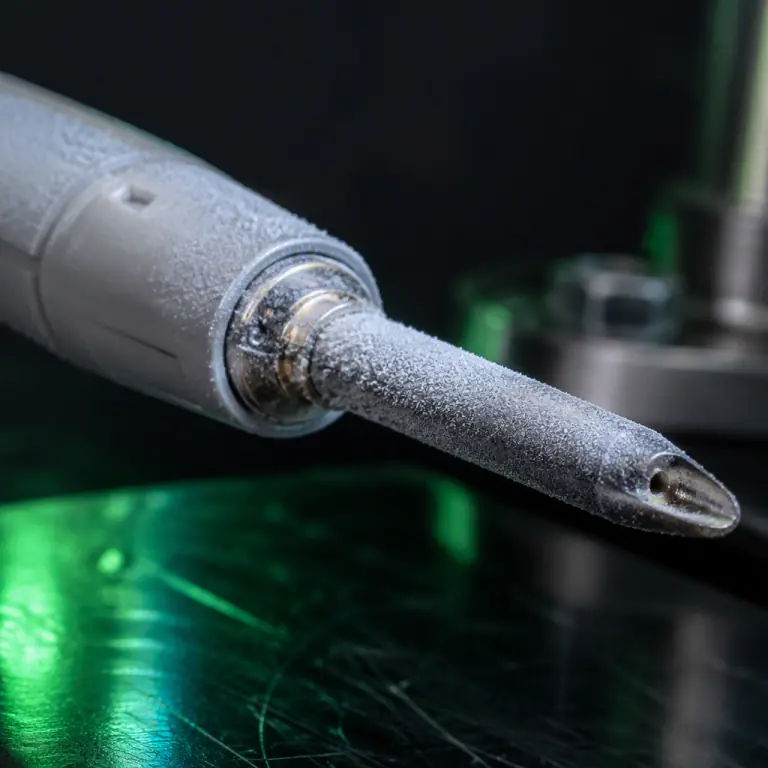 Pitot heat
ESC, motor and servo cold limits: electronics and lubricants
The propulsion and actuation electronics have their own cold envelope:
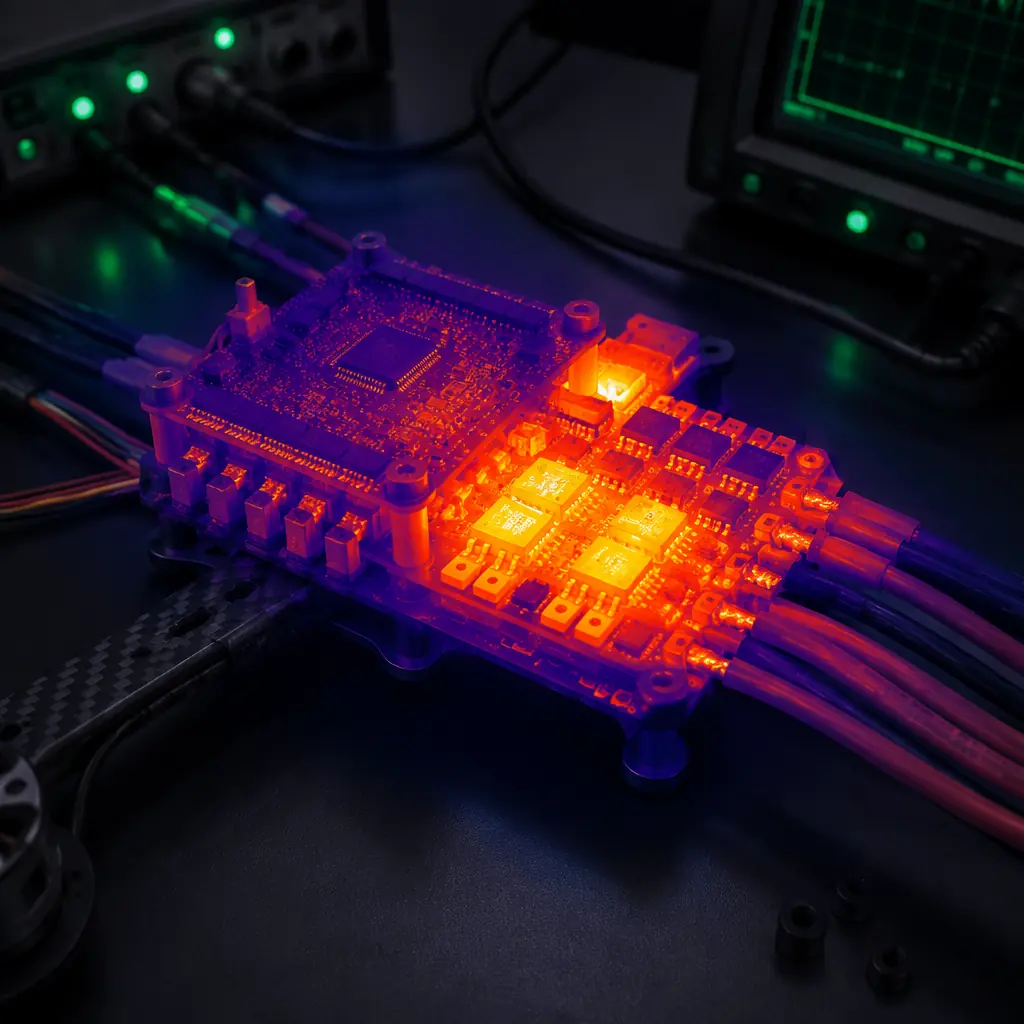
- ESC cold behavior. Electrolytic capacitor ESR rises as temperature falls, which increases ripple on the input bus and stress on the FETs. Most industrial ESCs are rated to -20°C or lower, but a cold-soaked ESC on a hard throttle ramp behaves worse than a warm one. If the aircraft will operate below -20°C, specify ESCs with low-temperature-rated capacitors and check the datasheet's minimum operating temperature, and the thermal management guide for the enclosure and airflow decisions that keep electronics in their happy band.
- Motor bearings. Standard bearing grease stiffens below -20°C, raising no-load current and reducing efficiency. Low-temperature grease (-40°C rated) is a small cost difference and a large reliability difference for cold fleets.
- Servos. As covered in the servo and actuator selection guide, servo response slows and current draw rises as grease stiffens. For cold-climate airframes, specify servos with -20°C or -30°C operating ratings and low-temperature grease from the factory.
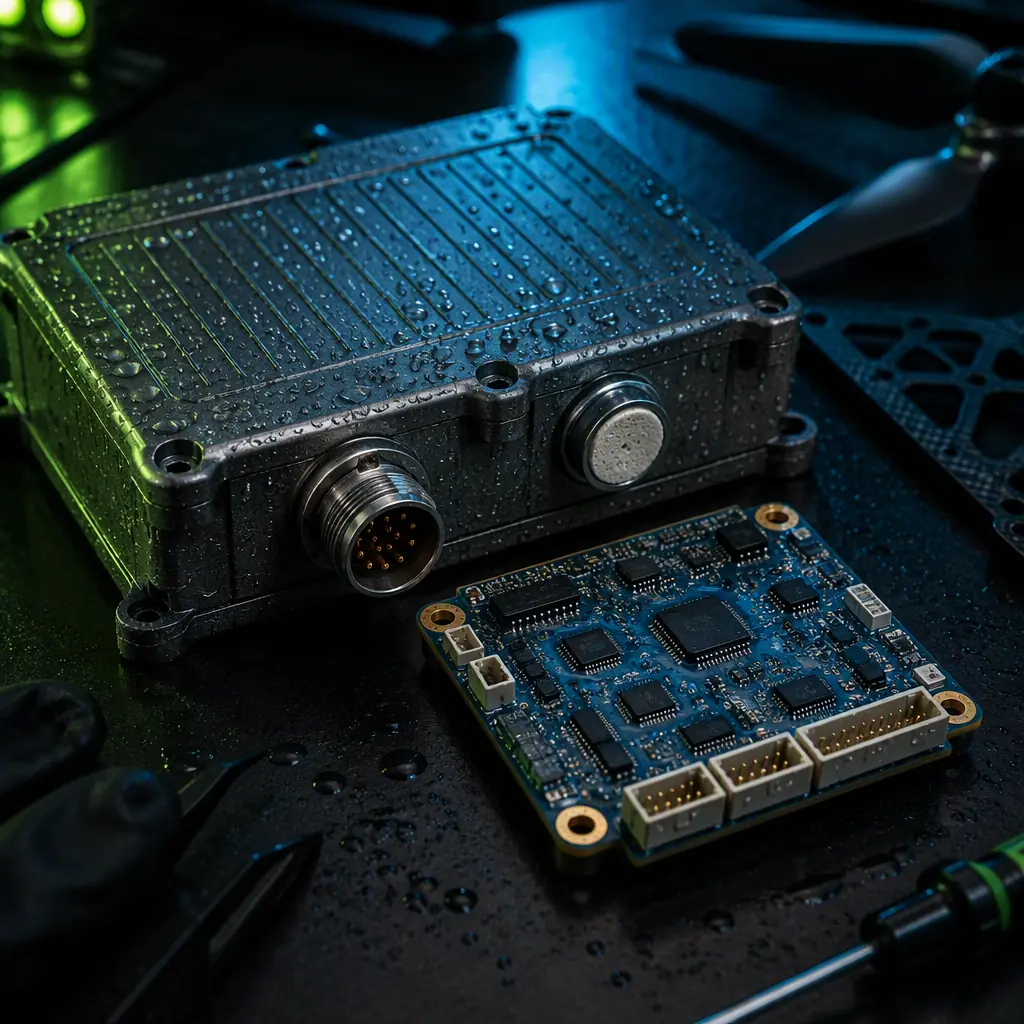
- Conformal coating. The bigger cold-weather enemy of electronics is not the cold itself but the condensation cycle, cold-soaked electronics warm up and attract moisture, which freezes and shorts. Conformal coating on the flight controller, ESCs and connectors is the single cheapest insurance; the electronics manufacturing quality guide covers coating standards and application.
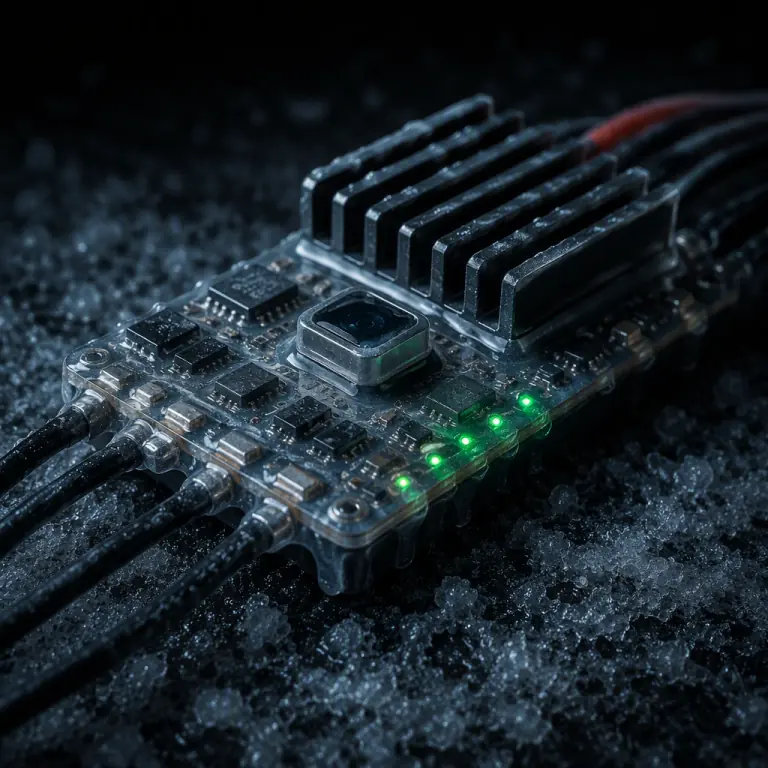 Cold-rated ESC
Test standards: what cold-rated actually means
"Cold-rated" is a claim until it is attached to a standard. The two test frameworks that matter for UAV components:
- MIL-STD-810H Method 502 (Low Temperature). Defines storage and operating cold tests: for example, 24 hours at the specified storage temperature followed by an operating test at the same temperature, plus a cold-start cycle. A component that passes Method 502 has evidence behind its rating; the environmental qualification guide walks the full MIL-STD-810H program.
- DO-160 Section 4 (Low Temperature). The avionics standard, with categories A1-A4 covering operating and short-time operating envelopes. For UAV components derived from aviation practice, DO-160 categories are a strong procurement signal.
When a supplier says "operates to -20°C," ask which standard and which category, and ask for the test report. The difference between a tested rating and a marketing number is exactly the difference between a component that works at -20°C and one that fails at -12°C.
Cold-weather operating procedure: the flight plan half of the solution
Hardware gets the aircraft most of the way; procedure closes the gap. The cold-weather preflight that separates a dispatchable fleet from a grounded one:
- Battery preheat on the schedule. Packs come out of the heated bag 30-60 minutes before launch and go back in immediately after landing; a cold pack left on the ground is a dead pack by the next sortie.
- Warm-up flight segment. A low-power climb and a controlled hover or straight-and-level segment before the first hard maneuver lets the battery, ESC and motors reach operating temperature gradually.
- Condensation management. After landing, let the aircraft warm up in a dry area before opening enclosures, opening a cold-soaked enclosure indoors invites condensation onto the electronics. If the airframe has a breather vent, the waterproofing guide's pressure-equalizing vent section explains the trade-off.
- Visibility in snow. Snow is a low-contrast environment; the aircraft's anti-collision strobes and position lights become mission-critical for both the pilot and other airspace users. The anti-collision lighting guide covers the brightness and flash-pattern requirements.
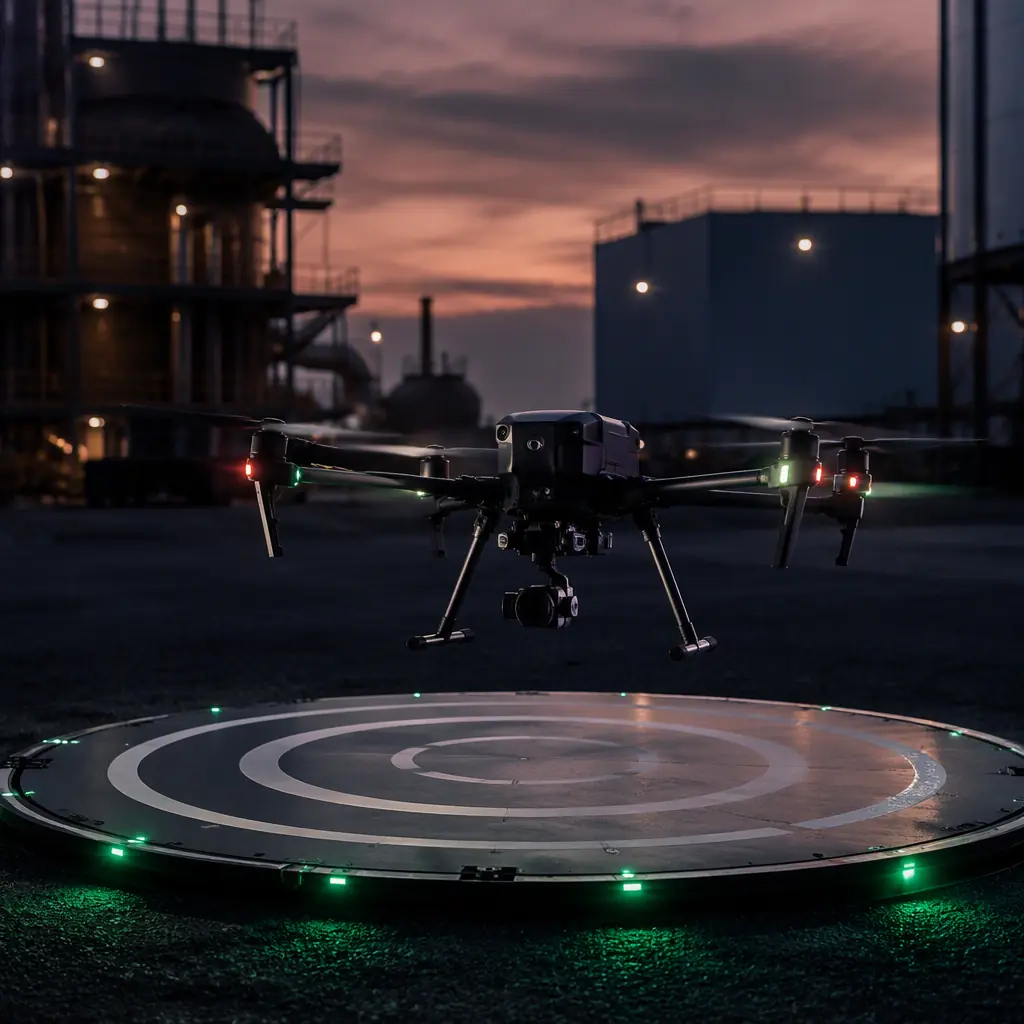
- Dock and charging site. An automated dock in winter needs pad heating and ice management on the charging contacts, the precision landing and docking guide covers dock-side heating as part of the landing system.
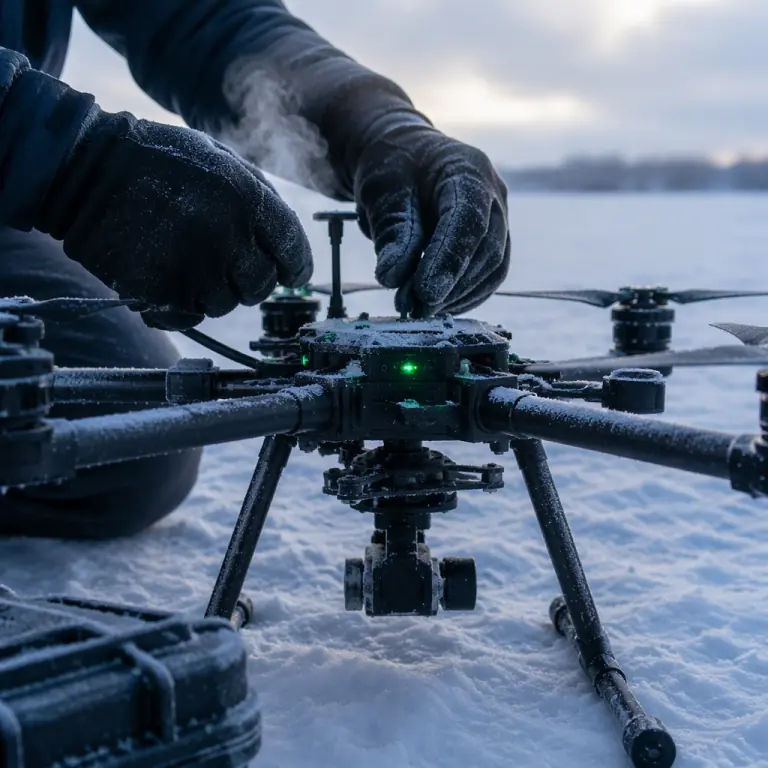 Cold-weather ops
Cold-weather procurement checklist
- Battery strategy. Preheat hardware (pads, insulated bags, heated vehicle), Li-Ion consideration for long-endurance cold missions, and a 20-30% larger landing reserve in the mission plan.
- Icing mitigation. Anti-icing coating on props and leading edges, electro-thermal de-icing where the mission crosses known icing conditions, and ground de-icing in the procedure.
- Air data. Heated pitot probe (10-50 W) switched on before entering icing conditions, drainable static plumbing, and a secondary airspeed source for redundancy.
- Electronics. Low-temperature-rated ESCs and servos (-20°C or better), -40°C bearing grease, conformal coating on all flight electronics.
- Test evidence. MIL-STD-810H Method 502 or DO-160 Section 4 test reports behind every "cold-rated" claim.
- Procedure. Written preflight for preheat timing, warm-up segment, condensation handling and dock ice management.
The bottom line: cold weather does not break UAVs randomly. It breaks the components that were never specified for it. Preheat the battery, protect the air data, coat the electronics, and demand test evidence for every low-temperature claim. EMS Drone specifies cold-weather packages, preheated battery systems, heated pitot and de-icing options, low-temperature-rated ESCs and servos, and the test standards to prove them. Send your operating temperatures and mission profile, and we will respond with the component specification and the cold-weather operating procedure.
Explore ESC & Power Back to Blog
Continue Reading
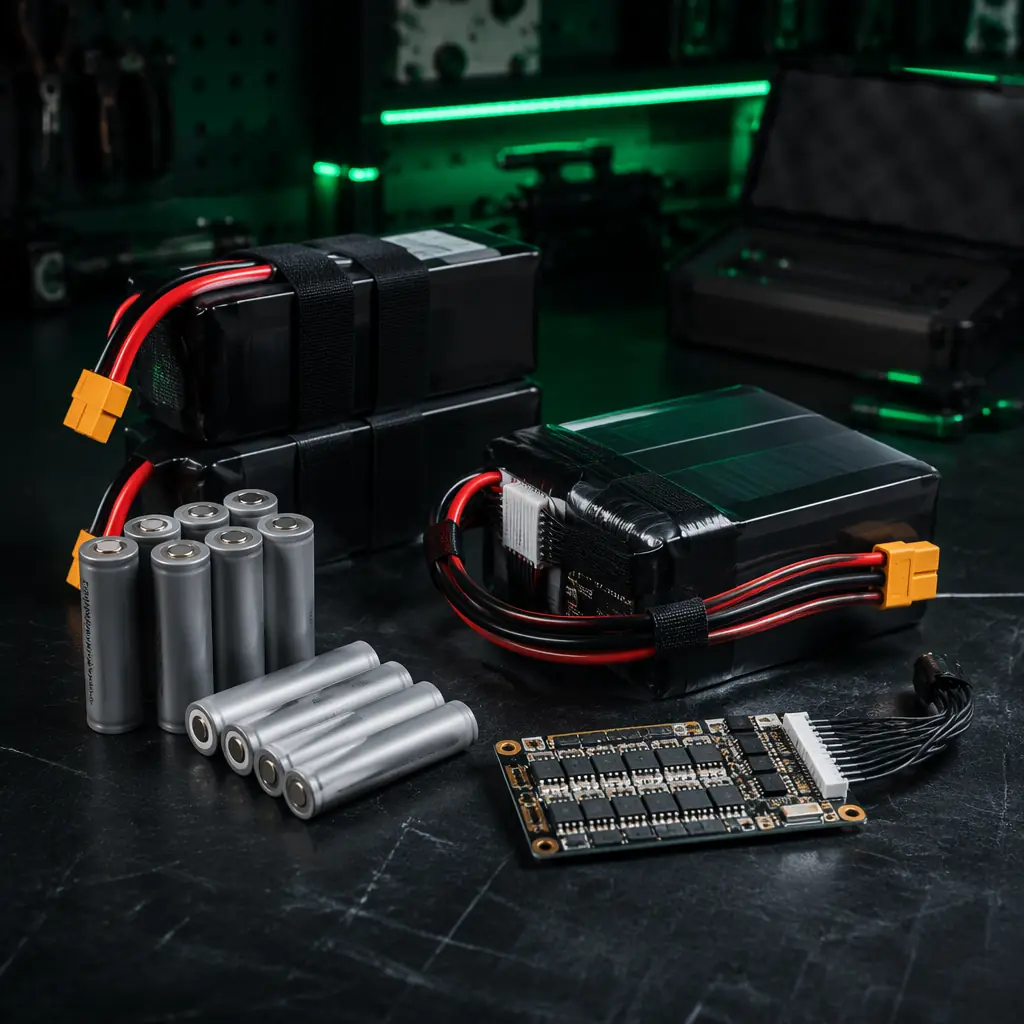
Battery & Power Management
LiPo vs Li-Ion chemistry behavior: including how cold shifts the trade-offs.
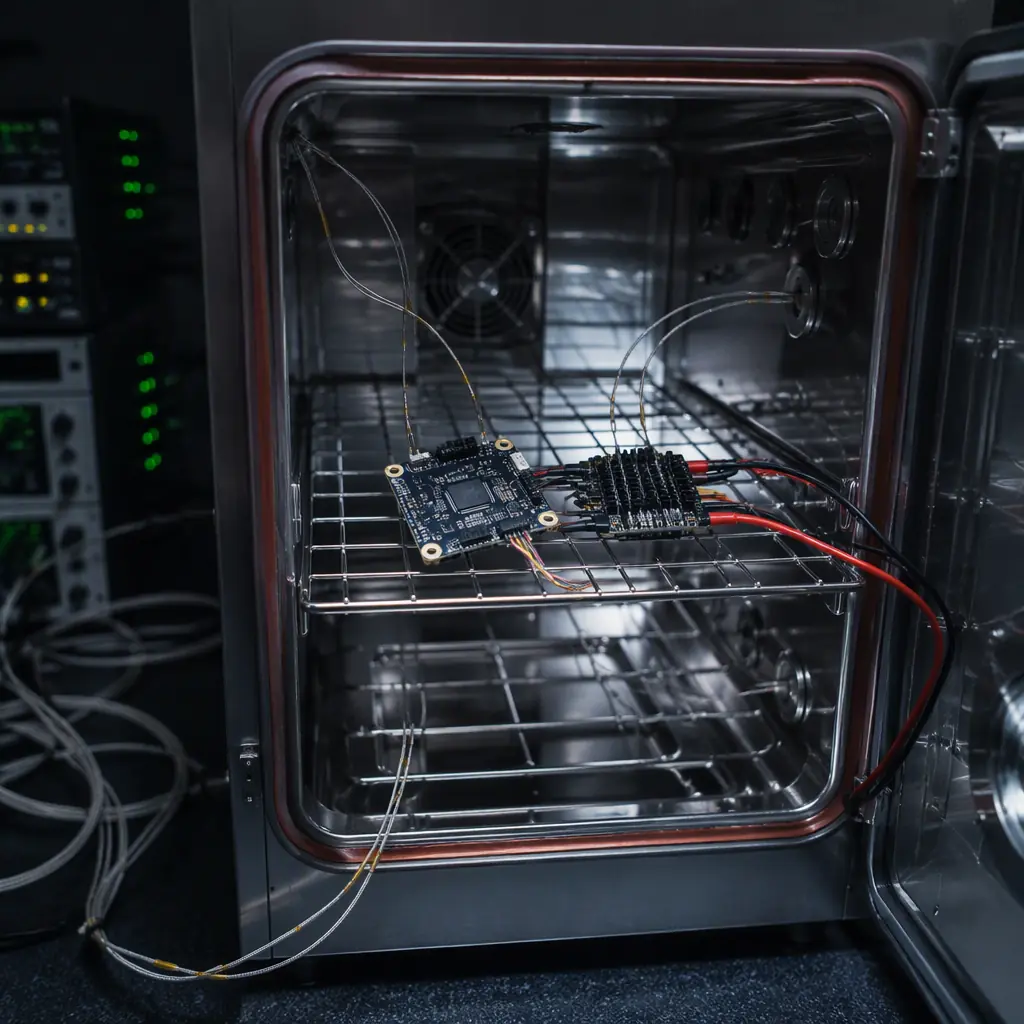
Environmental Qualification
MIL-STD-810H and DO-160 cold test methods, step by step.
Thermal Management
Keeping flight electronics inside their operating temperature band.
Waterproofing & IP Ratings
Sealing and drainage, the moisture half of the cold problem.
Precision Landing & Docking
Dock heating and ice management for winter automated operations.