
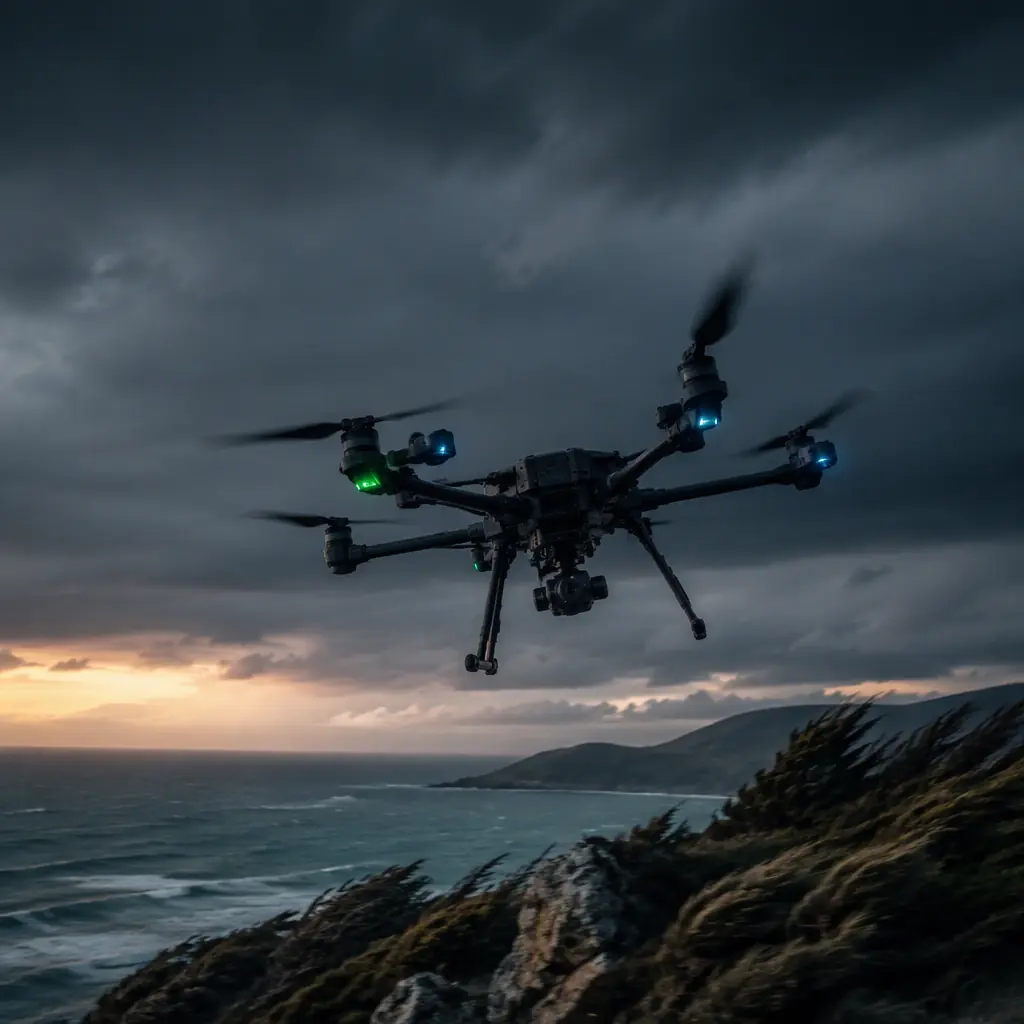
Wind does not break UAVs abruptly, it degrades them continuously. A small gust costs a few centimeters of position error; a larger one bleeds the power budget; a sustained crosswind turns a mapping grid into a crab-angle mess that the post-processing team has to fix. The flight time estimation guide treats wind as a derating factor on endurance; here the focus is the component chain that decides how much wind the aircraft can absorb at all.
What a wind rating actually means: sustained wind versus gusts
A wind figure is meaningless until you know which of two numbers it is. Sustained wind is the average over a two-minute window, the number on a weather forecast. A gust is the peak wind speed over about three seconds, and it is the number that actually loads the airframe. For a UAV, the practical rule is that gusts matter more than the average: a 10 m/s sustained wind with 14 m/s gusts is a different aircraft problem than a steady 12 m/s with no gusting, because the gust forces the propulsion system to respond fast and the controller to hold position through a step change in apparent wind.
An honest wind rating states both figures plus the conditions: "rated for 12 m/s sustained, 16 m/s gusts, in forward flight with payload" is a real specification. "Wind resistance: 5" is a marketing number. The three ceilings below are what the honest rating is made of.
| Rating class | Sustained wind | Gust tolerance | Typical aircraft |
|---|---|---|---|
| Light-wind consumer | 4-6 m/s | 8 m/s | Small quadcopters, camera drones |
| Standard industrial | 8-10 m/s | 12 m/s | Inspection and survey multirotors |
| High-wind capable | 12-15 m/s | 17-20 m/s | Heavy-lift and fixed-wing platforms |
Notice what is missing from the table: payload. The same airframe with a large gimbal payload has a smaller wind envelope than the bare airframe, because the payload adds drag area and moves the center of pressure. Any rating that does not state the payload condition is incomplete.
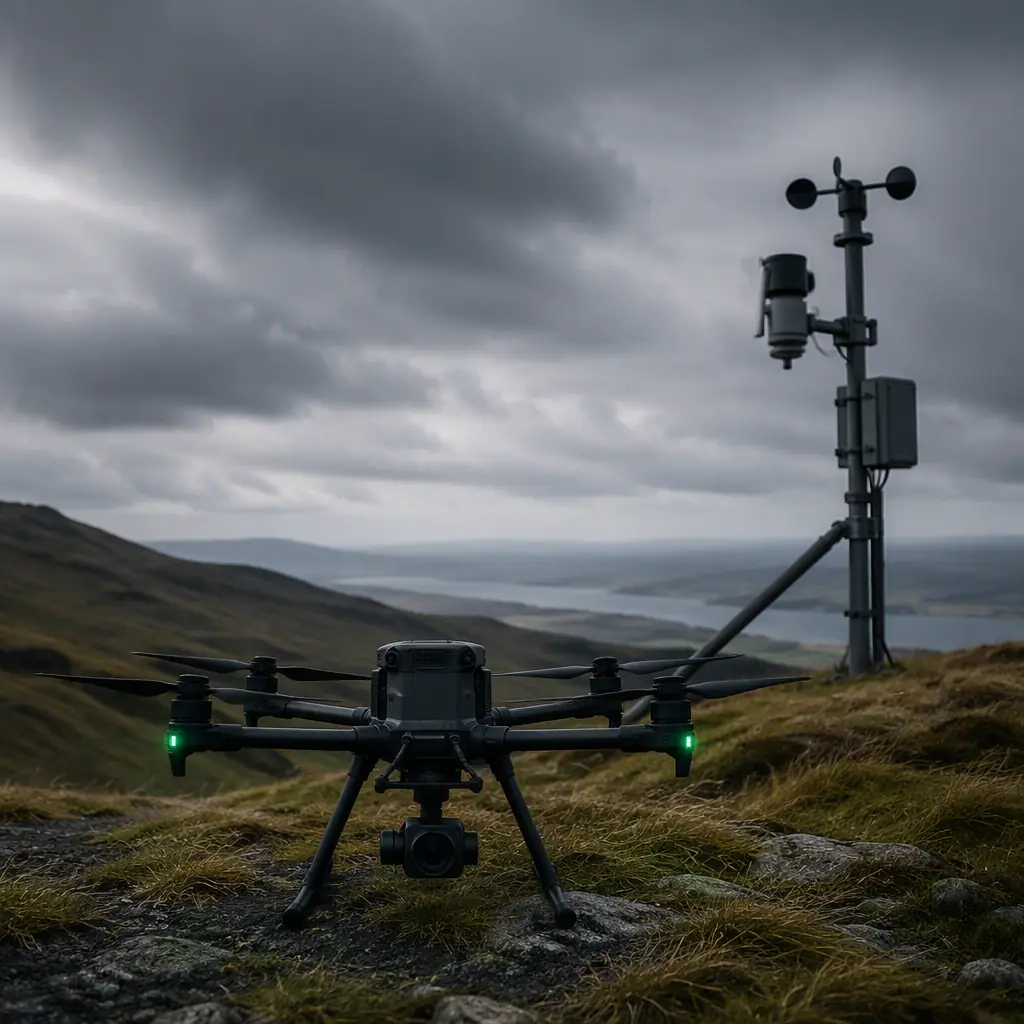 Sustained vs gust
The three physical ceilings: thrust, control authority and sensing
Every UAV wind limit is one of three physical ceilings, and each ceiling is set by components:
- Thrust ceiling. To hold position in a gust, the propulsion system must produce more thrust than the gust demands. A multirotor hovering in still air uses thrust equal to weight; a 10 m/s gust over a high-drag airframe can demand 30-50% more. Industrial multirotors are therefore designed with a hover thrust-to-weight ratio of 1.8-2.2, not the 1.3-1.5 that keeps a consumer drone airborne. The heavy-lift propulsion design guide covers how that margin is budgeted.
- Control authority ceiling. The aircraft can hold attitude only as fast as its actuators respond. ESC update rates (DShot 1200 or CAN FD at 1 kHz loops), servo speed and control surface sizing all set how quickly the aircraft can command thrust changes. A slow actuator chain converts a survivable gust into a large position excursion.
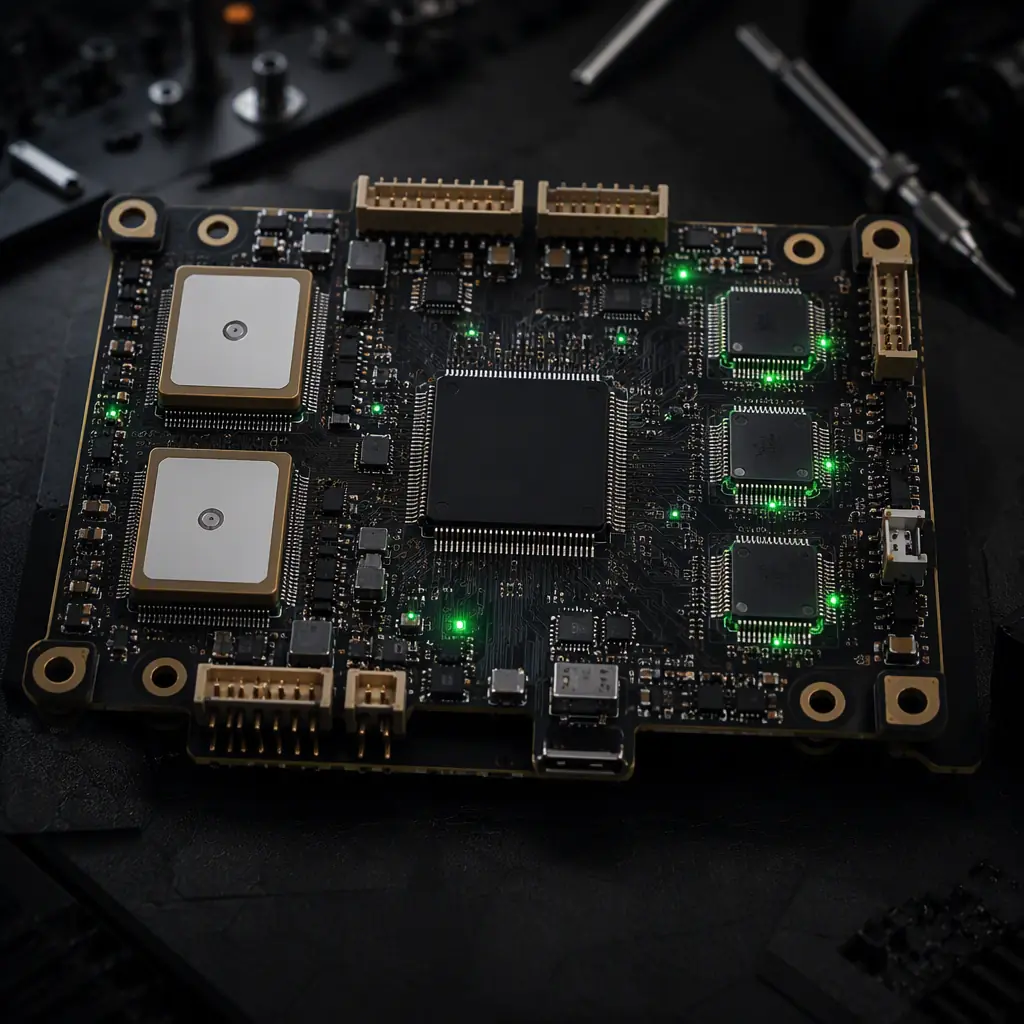
- Sensing ceiling. The autopilot cannot compensate for wind it cannot see. Airspeed sensing for fixed-wing aircraft, GPS groundspeed, and the estimator's wind states determine how the controller responds. The sensor fusion guide explains how the estimator builds a wind estimate from IMU, GNSS and air data.
The practical consequence for procurement: a "wind-resistant" claim lives or dies on the propulsion margin, the actuator chain and the sensing package, not on the marketing page.
Propulsion headroom: motors, ESCs and propellers sized for gust rejection
Gust rejection is a peak-power problem wearing a thermal disguise. A gust demands a burst of thrust for seconds, not minutes; the motor and ESC must deliver that burst without tripping protection, and the battery must hold voltage through it. The component choices:
- Motors. The relevant specification is the peak-to-continuous ratio and the thermal time constant, not just the continuous thrust. A motor that runs continuously at 60% of its rated peak has the headroom a gust demands; one that runs at 95% does not, regardless of the datasheet's headline thrust figure. Motor sizing is covered in the motor KV selection guide; for wind capability, add "gust burst margin" to the selection criteria.
- ESCs. The ESC must carry the same burst without current limiting or over-temperature shutdown. A 60-second peak current rating above the motor's stall-adjacent demand is the safety margin that keeps a gust from ending the flight. ESC protocol choice (DShot 1200 or CAN FD) sets the update latency of the control loop; the ESC firmware guide compares the options.
- Propellers. Blade stiffness and diameter set how much of the motor's torque becomes thrust in turbulent air. A flexible blade that twists under load sheds thrust exactly when the gust hits; a stiff carbon blade holds its pitch geometry. Propeller behavior under load is covered in the propeller selection guide.
- Validation. A thrust curve measured on a test bench with a 10-second gust burst profile tells you more than any datasheet. The propulsion testing and validation guide covers the test rigs and the numbers to request.
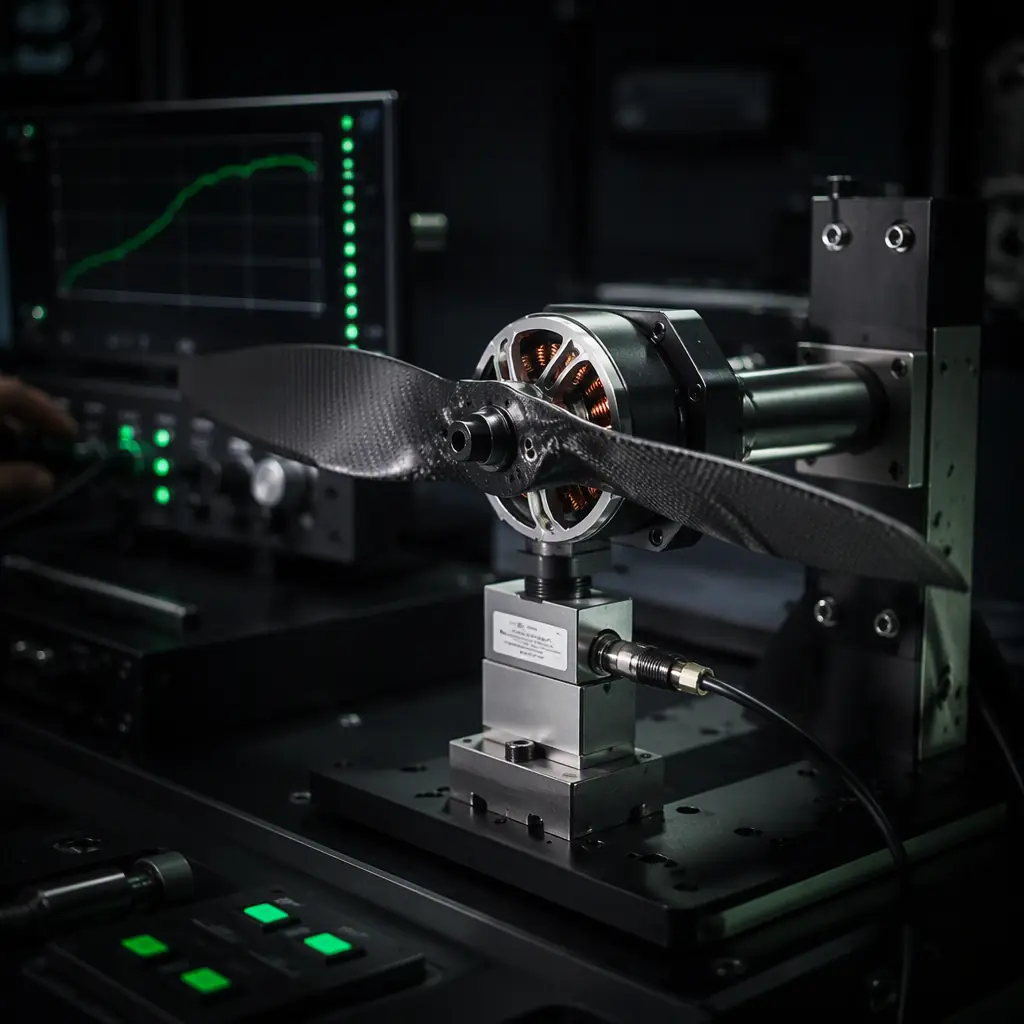 Thrust margin
Airframe and payload: stiffness, drag and the wind footprint
The propulsion system fights the wind, but the airframe decides how much wind there is to fight. Two airframe properties dominate:
- Stiffness. A flexing airframe adds lag to the control loop. When a gust hits, a soft frame bends, the IMU reads the bending as an attitude change, and the controller commands a correction that arrives after the frame has sprung back, a recipe for oscillation in exactly the conditions that need stability. Carbon fiber layup quality and arm cross-section set this; the airframe materials guide compares carbon, aluminum and G10 stiffness behavior.
- Drag footprint. Frontal area and drag coefficient set the force a gust applies. A payload bay full of antenna masts, gimbal housings and sensor brackets can double the drag area. For wind-heavy missions, payload placement and fairing decisions are wind decisions. The payload integration guide covers mounting and drag trade-offs.
- Configuration. Fixed-wing and VTOL aircraft have fundamentally different wind behavior than multirotors. Higher cruising speeds make a 10 m/s wind a smaller fraction of the flight envelope, but crosswind landings and transition phases have their own limits. The multirotor vs fixed-wing comparison lays out the trade-offs.
Sensing the wind: airspeed, estimation and the autopilot's role
The controller can only reject what it can measure. The wind sensing chain has three links:
- Airspeed sensing. A fixed-wing or VTOL aircraft needs a pitot-static system to measure airspeed directly; the controller uses it to hold a safe margin above stall in gusty conditions. Airspeed accuracy and lag matter more in wind than in calm air, the cold-weather guide's pitot discussion applies the same logic to the wind case, where the probe must stay clean and unblocked.
- Wind estimation. In hover, the autopilot estimates wind from the difference between commanded and achieved velocity, the EKF's wind states. The quality of that estimate depends on GNSS accuracy and IMU quality; a low-cost IMU with high noise produces a noisy wind estimate and a controller that reacts to its own noise. Redundant IMU and GNSS architectures are covered in the sensor fusion guide.
- Controller tuning. Wind rejection is a tuning problem as much as a hardware problem. Gains that are stable in calm air can oscillate in gusty conditions if the estimator lags. The PID tuning guide covers the gain structure and the wind-rejection tuning passes that separate a wind-capable aircraft from a marginal one.
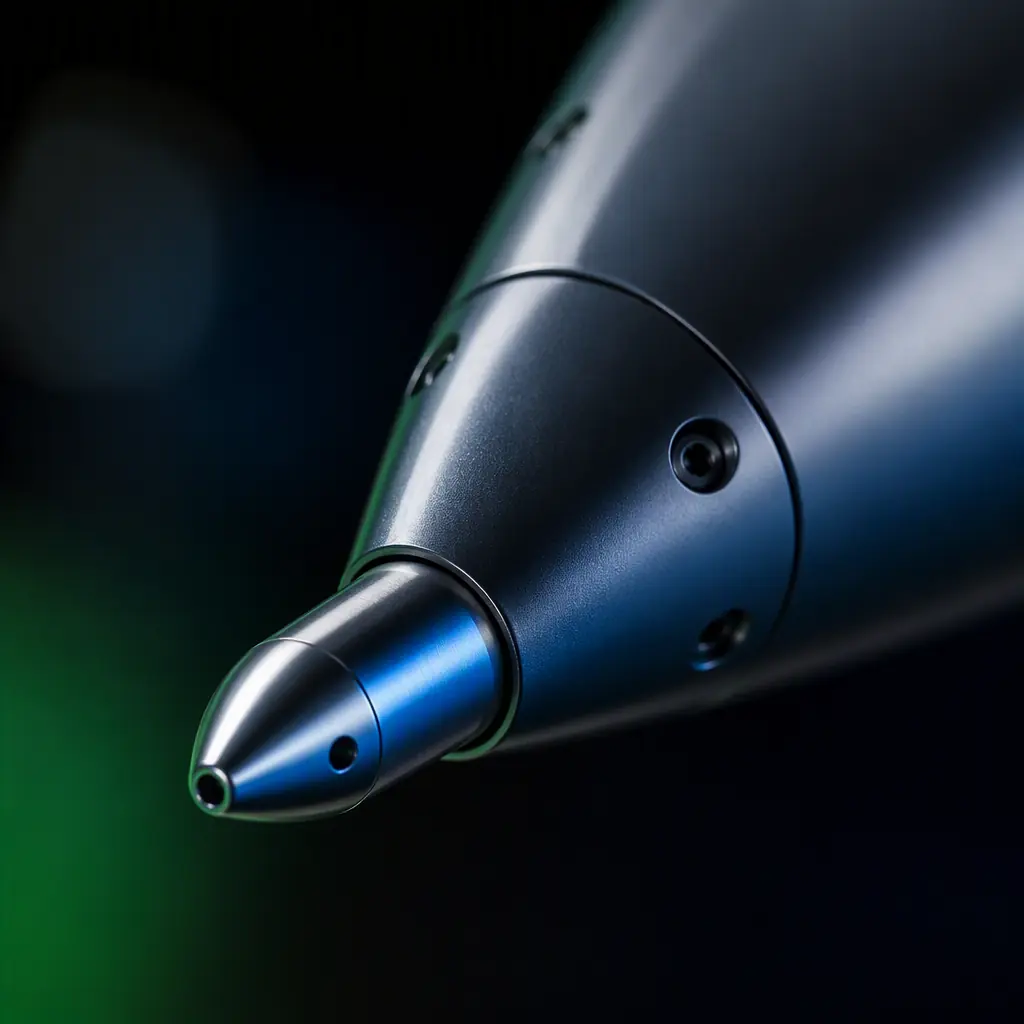 Airspeed sensing
Reading the datasheet: what wind-resistance numbers hide
There is no universal wind test standard for UAVs, so every "wind resistance" claim carries hidden assumptions. Before comparing two suppliers, ask which of these the number was measured with:
- Hover or forward flight. A multirotor's wind limit in forward flight is usually higher than in hover, because the airframe's forward speed adds to the gust tolerance. A claim measured in cruise overstates hover capability.
- Payload installed or bare airframe. As noted above, payload drag shrinks the envelope. Ask for the rating with the actual payload configuration.
- Autopilot tuning. The same airframe with aggressive wind-rejection tuning handles more wind than with default gains. A rating is partly a software configuration.
- Sustained, gust, or "survived once." A 15 m/s gust that the aircraft survived during a test flight is not the same as a 15 m/s sustained rating. Ask for the test log, not the highlight.
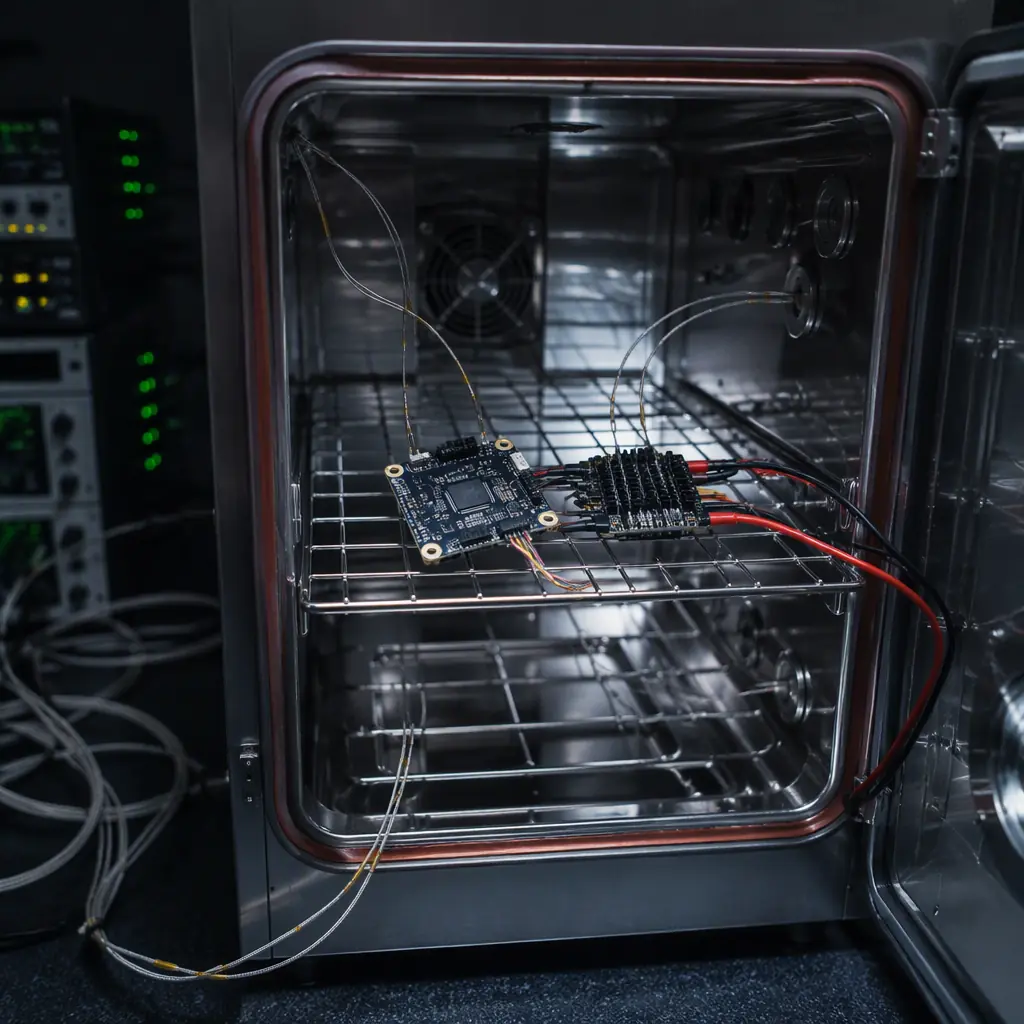
The environmental qualification testing guide covers how wind testing fits into MIL-STD-810H and DO-160 programs, and how to demand the evidence behind the claim.
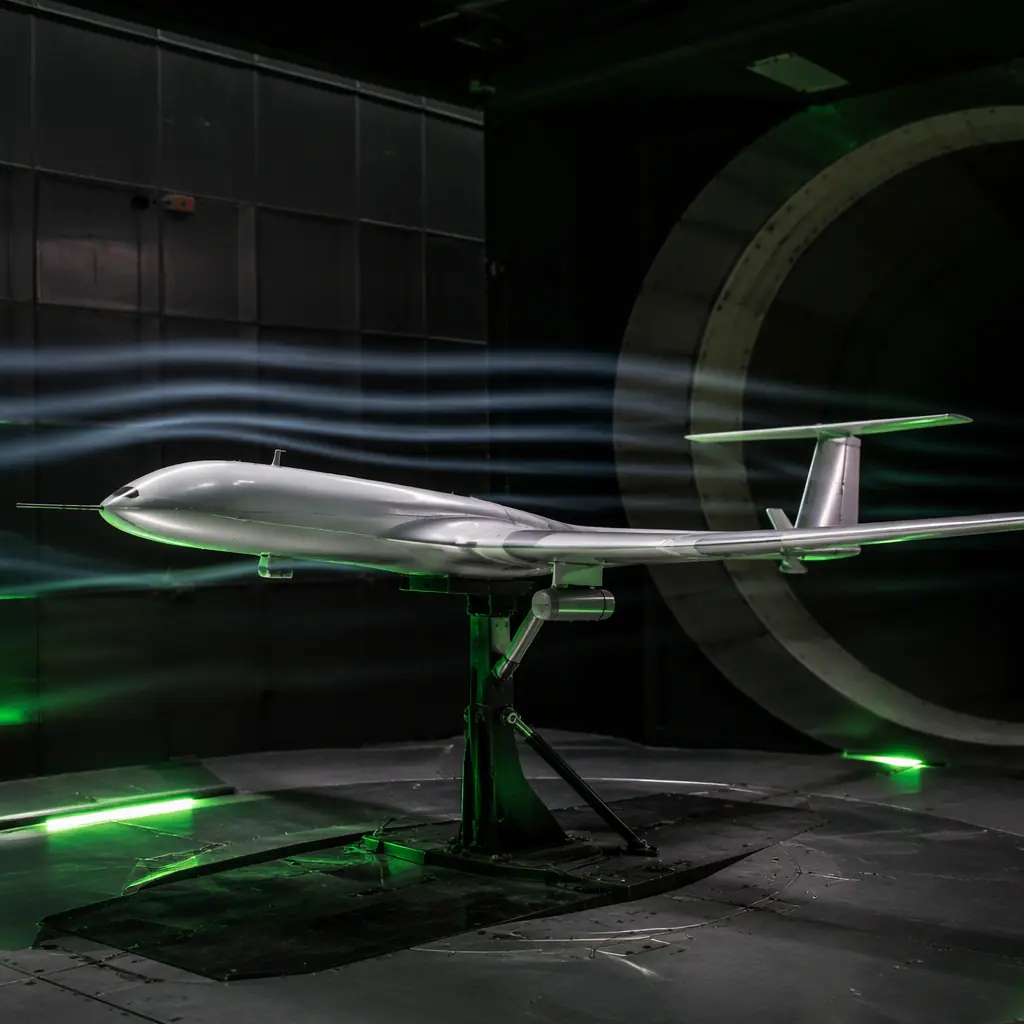 Wind tunnel test
Wind-rated procurement checklist
- Thrust margin. Hover thrust-to-weight ratio of 1.8-2.2 for multirotors, with the gust burst margin stated in the motor and ESC peak ratings.
- Actuator chain. ESC update rate (DShot 1200 or CAN FD), servo speed, and control surface sizing matched to the gust response requirement.
- Sensing package. Redundant IMU/GNSS for wind estimation quality, and a clean, accurate airspeed system for fixed-wing and VTOL aircraft.
- Airframe. Stiff carbon layup and a payload layout that minimizes frontal drag area.
- Evidence. Wind tunnel or field test data stating sustained, gust, payload and flight-mode conditions, and the autopilot tuning configuration used.
- Procedure. A written wind operating limit for the fleet that includes payload configuration and pilot decision criteria, linked to the mission planning workflow in the mission planning guide.
The bottom line: wind capability is a component chain, thrust margin in the motor and ESC, stiffness in the airframe, quality in the sensing package, and honesty in the test data. A UAV specified for wind handles the gusts that ground the competition. EMS Drone specifies wind-rated propulsion and airframe packages, matched motor-ESC-propeller sets with measured gust burst margins, stiff carbon airframes, and the test evidence behind every number. Send your mission profile and operating wind environment, and we will respond with the component specification and the wind test data.
Explore Propulsion Back to Blog
Continue Reading
Flight Time Estimation
How wind, payload and temperature derate the endurance equation.
Multirotor vs Fixed-Wing
How airframe configuration changes the wind envelope.
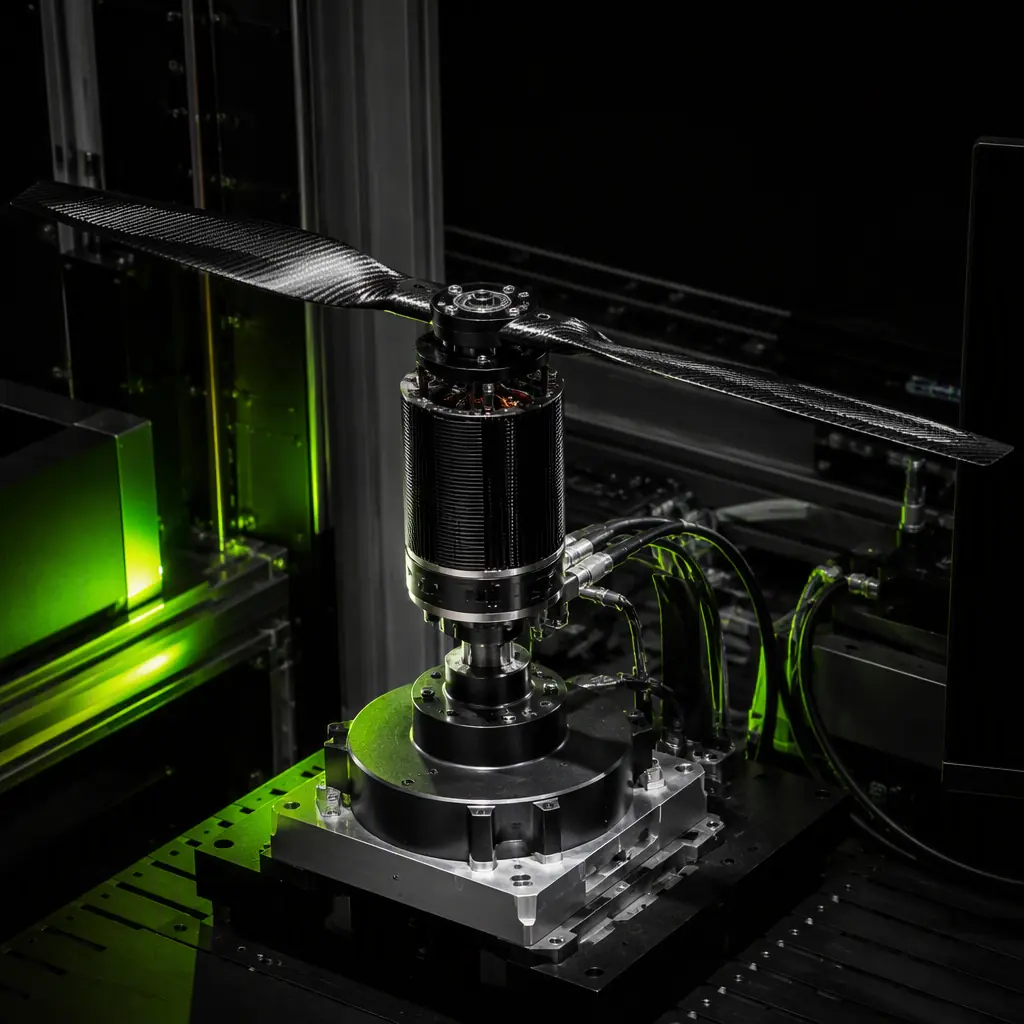
Propulsion Testing
Thrust curves, gust burst tests and the numbers to request.
Sensor Fusion
How the estimator builds the wind state the controller trusts.
Environmental Qualification
MIL-STD-810H and DO-160 wind and weather test programs.