
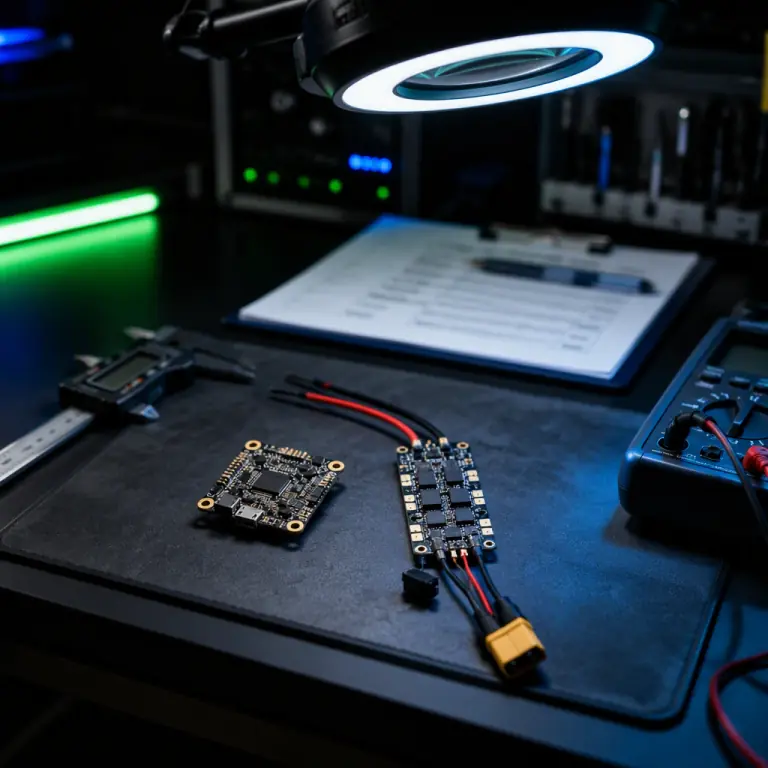
You approved the factory's test report, released the balance payment, and eleven days later a carton of ESCs arrives at your integration bench. Three of the first ten fail their power-on check. The supplier's report said 100% tested. Somewhere between the test bench in Shenzhen and the aircraft you are trying to deliver, the definition of "tested" changed. Pre-shipment inspection exists to close exactly that gap, and it is the last control point where you still have leverage: after the freight forwarder picks the carton up, your only remaining tools are a warranty claim and an RMA negotiation. The supplier evaluation checklist helps you qualify the factory before you order; this guide covers what to verify in the days before the shipment leaves it.
Where pre-shipment inspection sits in the procurement sequence
Inspection is not one event. It is a chain, and each link answers a different question. Factory audits answer "can this supplier build to our specification at all?" The manufacturing quality guide explains the in-process layers (AOI, X-ray, ICT, functional test) that happen during production. Pre-shipment inspection answers a narrower, later question: "of the units in this specific lot, are the ones about to be shipped the ones we specified?" That distinction matters because a factory can pass an audit and still ship a bad batch, the audit tests capability, the pre-shipment inspection tests the lot.
| Control point | Question it answers | Who runs it | When |
|---|---|---|---|
| Supplier audit | Can this factory build to our spec? | Buyer or third party | Before the order |
| First article inspection | Does the first build match the spec? | Buyer + supplier | Before series production |
| In-process QC | Is production under control? | Supplier (witnessed) | During manufacturing |
| Pre-shipment inspection | Is this lot ready to ship? | Buyer, supplier QC or third party | After production, before freight |
| Incoming inspection | Did the lot survive the journey? | Buyer | On arrival |
The commercial logic is simple: the payment schedule is the inspection schedule. A typical component order runs 30% deposit and 70% balance against the shipping documents. Which means the moment the balance is paid, the lot is legally and practically yours. If you want inspection to have teeth, it must be a condition of that balance release, written into the purchase order before production starts. The UAV component RFP guide shows how acceptance criteria are drafted; the same clauses become the inspection scope at the end of the run.
AQL sampling: how many units to test and what the numbers mean
Unless the lot is tiny or the component is flight-critical, you do not test every unit, you sample, using the acceptance sampling plans in ISO 2859-1 (published in the US as ANSI/ASQ Z1.4). The plan has two parts: a sample size code letter, derived from the lot size and the inspection level, and an Acceptable Quality Limit (AQL) that defines how good the process must be for the lot to pass. For general inspection level II, the default for most component purchases, the code letters run:
| Lot size | Code letter | Sample size |
|---|---|---|
| 26-50 | D | 8 |
| 51-90 | E | 13 |
| 91-150 | F | 20 |
| 151-280 | G | 32 |
| 281-500 | H | 50 |
Read the numbers honestly: a 200-unit order of ESCs samples 32 units, and under a single-sampling plan at AQL 1.0 the lot passes only if those 32 contain zero defects beyond the minor class. The accept/reject boundary for that cell is 0 accepted, reject on 1. At AQL 2.5 the same 32-unit sample tolerates one defect and rejects on two. That is not "1% or 2.5% of the lot may be bad"; it is a process-quality statement. AQL 1.0 says the supplier's process must average no worse than 1% defective for the plan to accept most lots. Small UAV component orders have a quirk that makes textbook AQL less useful than it looks: lots of 50-300 units with sample sizes of 13-50 are large fractions of the whole order, and for flight controllers, ESCs, GNSS modules and radios the marginal cost of testing the full lot is often lower than the cost of managing any defect that escapes. Many aerospace buyers therefore specify c=0 plans (accept on zero, reject on one, full inspection of the sample) or 100% functional test for safety-relevant components, and reserve AQL sampling for cosmetic and mechanical attributes.
Whatever plan you choose, define the defect classes in writing before inspection starts. A standard three-class split for UAV electronics: critical (safety or airworthiness. A battery that cannot balance, an ESC that does not shut down on signal loss), major (functional. An IMU that fails calibration, a radio whose output power is 3 dB low, a motor phase that draws 20% more current than its siblings), and minor (cosmetic, scratched anodizing, a label applied crooked). Critical defects reject the lot regardless of count. If you have not written these classes down, the inspector, yours or theirs, will invent their own, and that is how a batch of ESCs with a 1-in-10 bench failure rate ends up "approved."
Functional tests: what to run before you release the lot
AQL sampling answers "how many"; the test scope answers "what." A visual and dimensional check catches damaged goods, but most UAV component failures are electrical and only appear under power. The test matrix below is the minimum that separates a shippable lot from a gamble, per component class. Every test should record a pass/fail per serial number, not a lot-level "OK", because a per-unit record is what lets you trace a field failure back to its sibling units later.
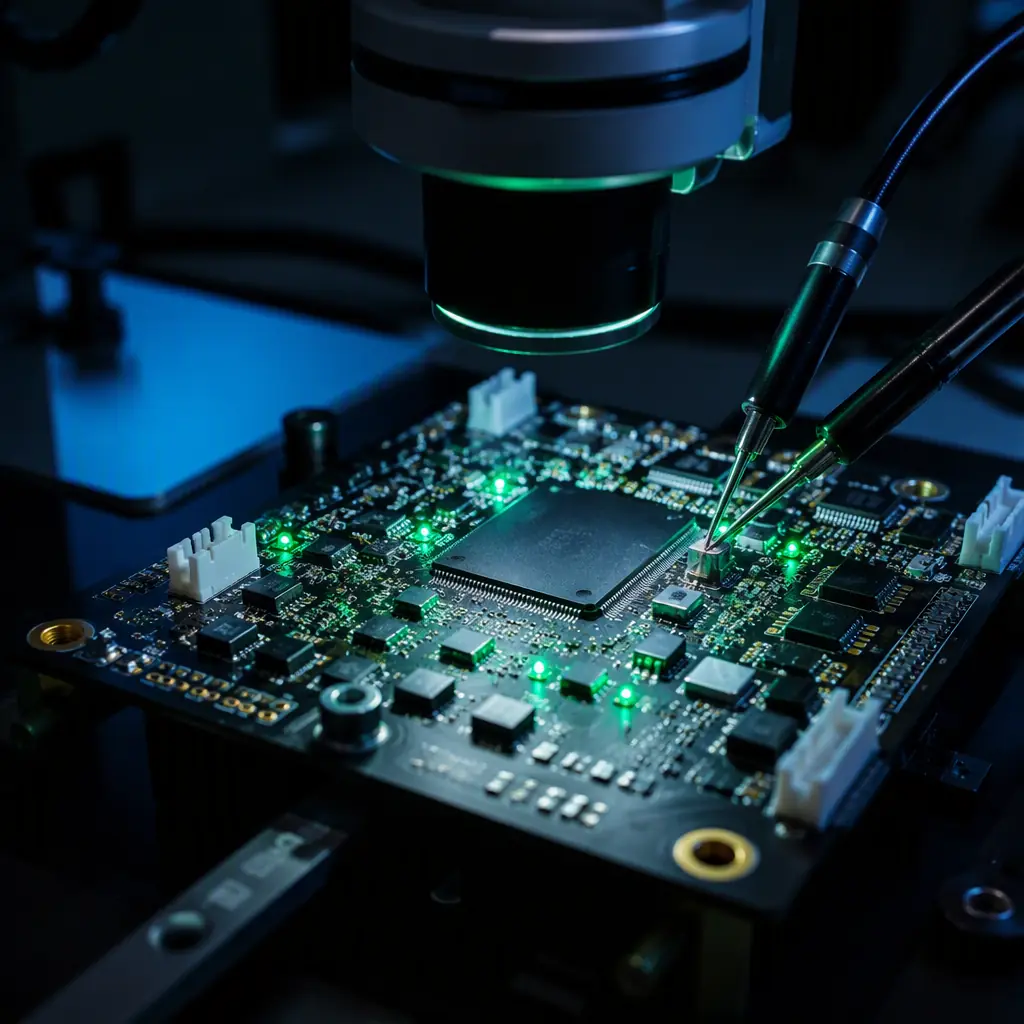
- Flight controllers. Power-on and current draw at idle (a healthy FC typically draws 150-400 mA at 5 V depending on peripherals); firmware version and boot log check; IMU calibration and bias stability across a warm-up cycle; barometer and magnetometer sanity; PWM, DShot and CAN output presence on every channel; servo rail voltage; and a controlled reboot test to confirm the failsafe defaults load.
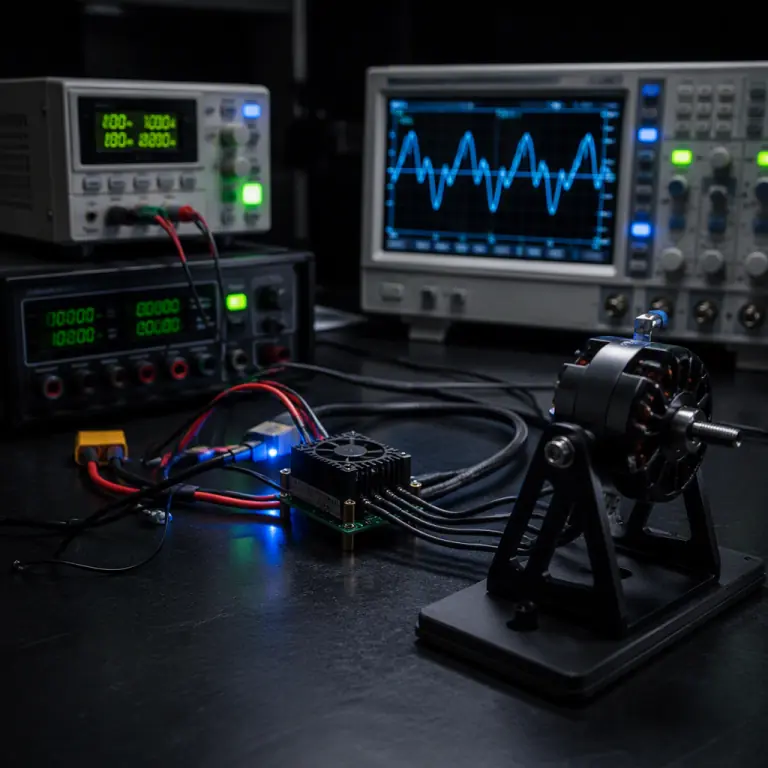
- ESCs. Firmware version and protocol negotiation (DShot 300/600/1200 or CAN FD); power-on without signal, the unit must stay disarmed; bidirectional commutation test on a real motor at 25/50/75/100% throttle with current and temperature logged; BEC output voltage under load; and signal-loss behavior, the ESC must command motor stop within the specified time when the signal disappears. This is the test that catches the "100% tested" units that fail on your bench: many factory test jigs only spin the motor unloaded and never check thermal behavior under a propeller load.
- Motors. KV measurement (no-load RPM per volt against the datasheet, typically within ±5%); resistance balance across the three phases (a healthy motor reads within 1-2% between phases; a larger spread indicates a winding fault); rotation direction and sensor (if sensored) alignment; bell runout and bearing noise check; and a brief full-throttle run to confirm current draw matches the spec curve. The motor KV selection guide explains what the KV number should be; inspection confirms the unit delivers it.
- GNSS modules. Cold-start time-to-first-fix against the datasheet (a modern multi-band module should reach a fix in under 35-40 s in open sky); fix quality and number of satellites; RTK float-to-fixed convergence if the module supports it; and an interference check. The module should hold a fix with the aircraft's own video transmitter powered on, since onboard EMI is the most common GNSS killer in real builds. The GNSS module selection guide covers the specs; the pre-shipment test confirms the unit meets them in an RF environment similar to your airframe.
- Radios and telemetry. Output power and frequency accuracy against the datasheet; RSSI at a fixed distance as a repeatability check; protocol handshake and encryption pairing; and a range smoke test if the factory has space. Log the firmware version. Radio firmware is the most frequently silently-changed attribute in UAV supply, and a "same part number, different software" swap is a classic lot defect.
- Batteries and power systems. Per-cell voltage and internal resistance (cells in a matched pack should read within a few milliohms of each other); capacity check at a 0.2-0.5C discharge; balance connector function; and charge/discharge temperature. The battery and power management guide details the pack-level requirements that inspection verifies at the cell level.
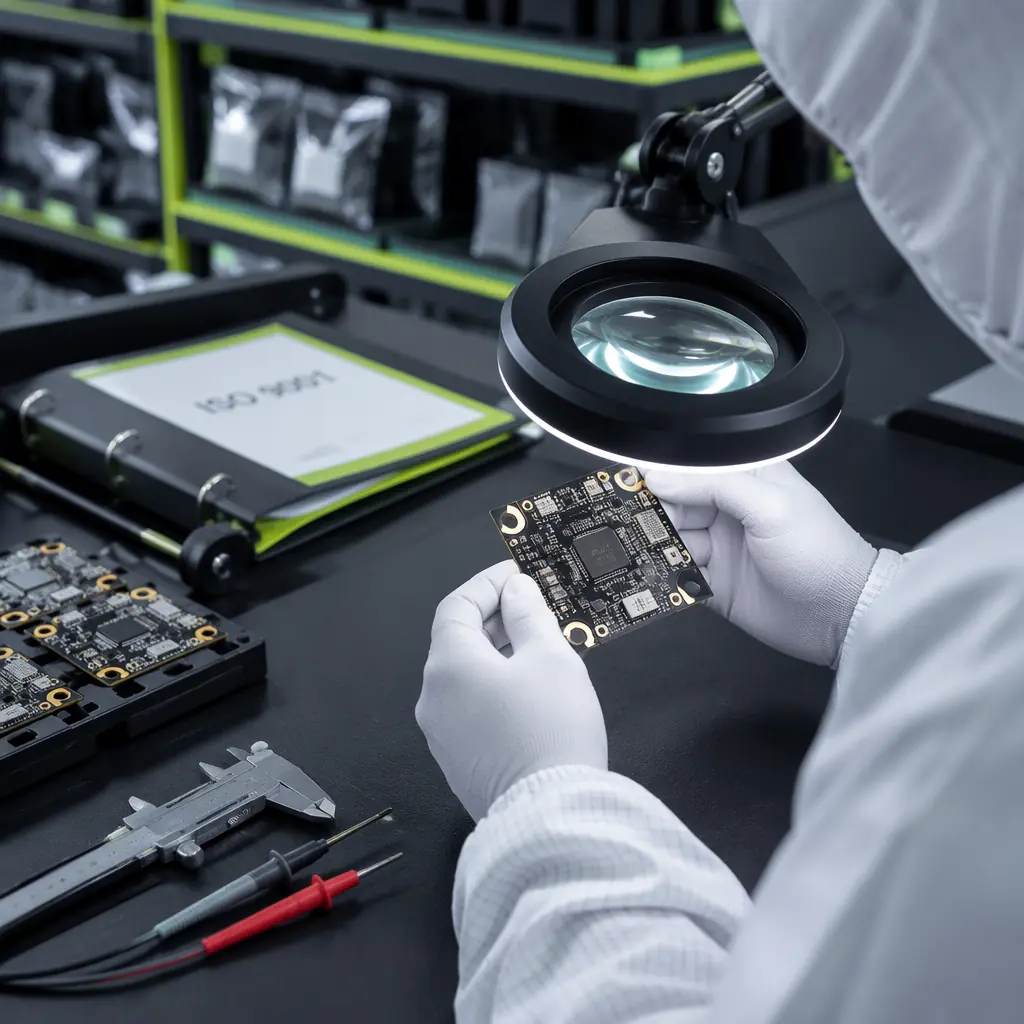
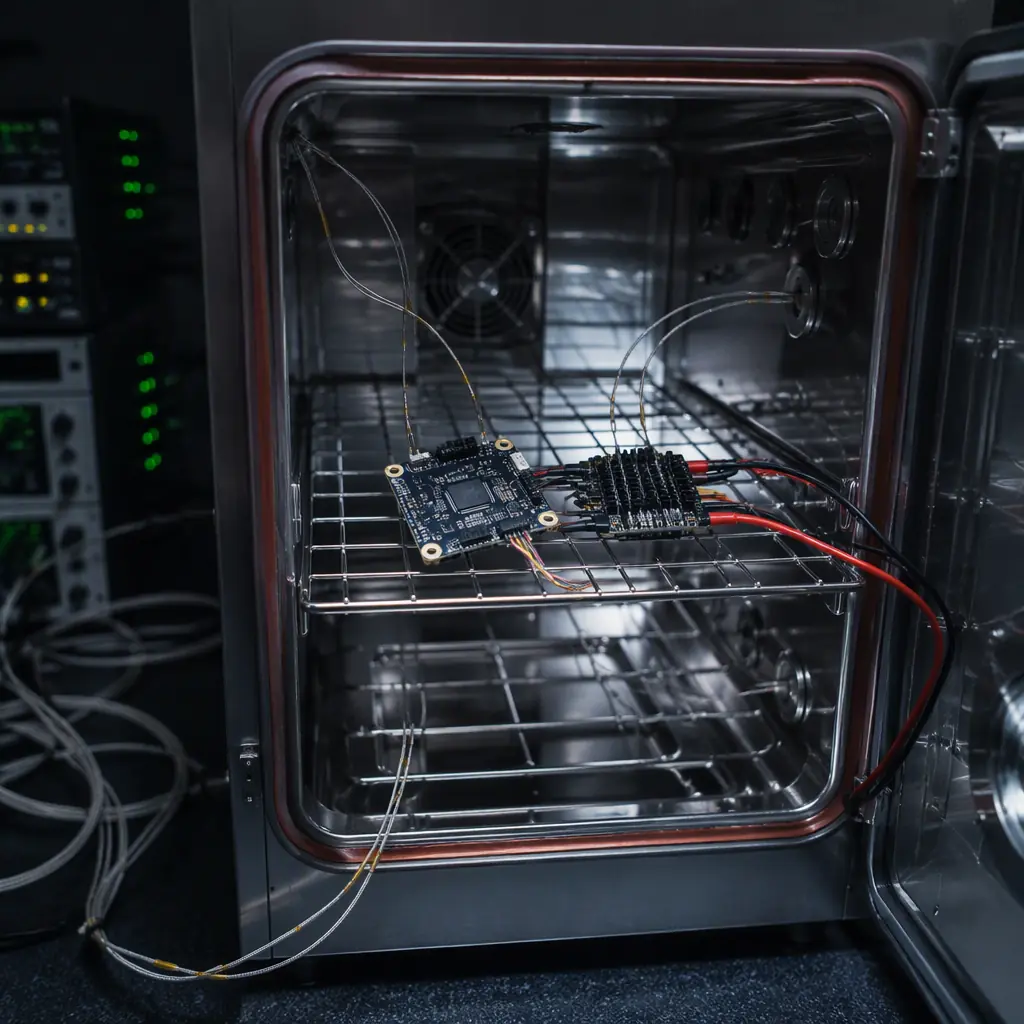
 Functional test bench
The common thread: every functional test needs a written pass criterion and a recorded number, not a subjective "works fine." If the supplier cannot produce per-serial test data with the actual measured values, the inspection has not happened, someone clicked a checkbox. The propulsion testing and validation guide shows how deep the test chain goes for propulsion components, and the environmental qualification guide covers the MIL-STD-810 and DO-160 tests that apply when your operating environment demands more than a bench check.
Auditing the test report: real data versus a rubber stamp
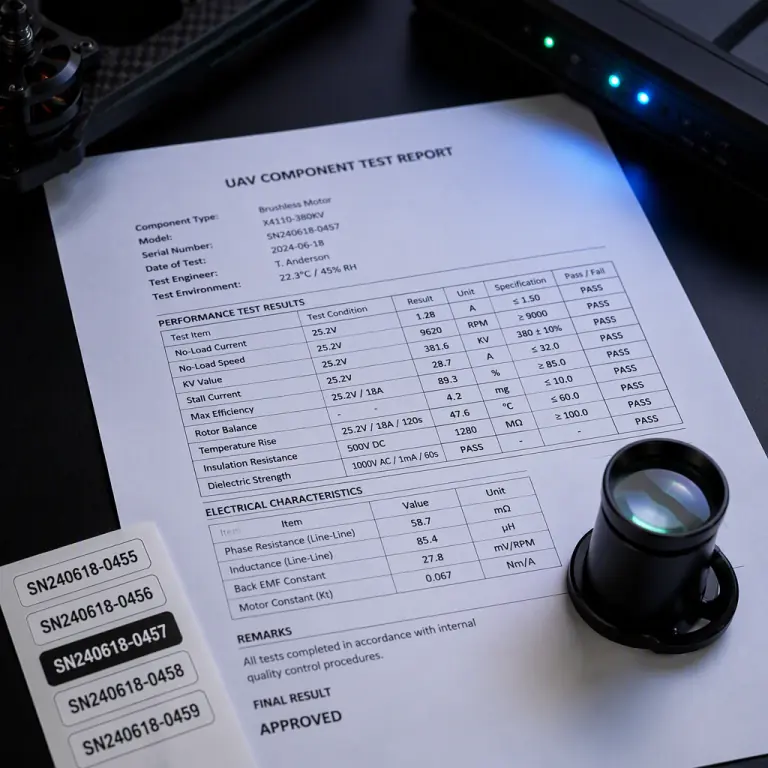
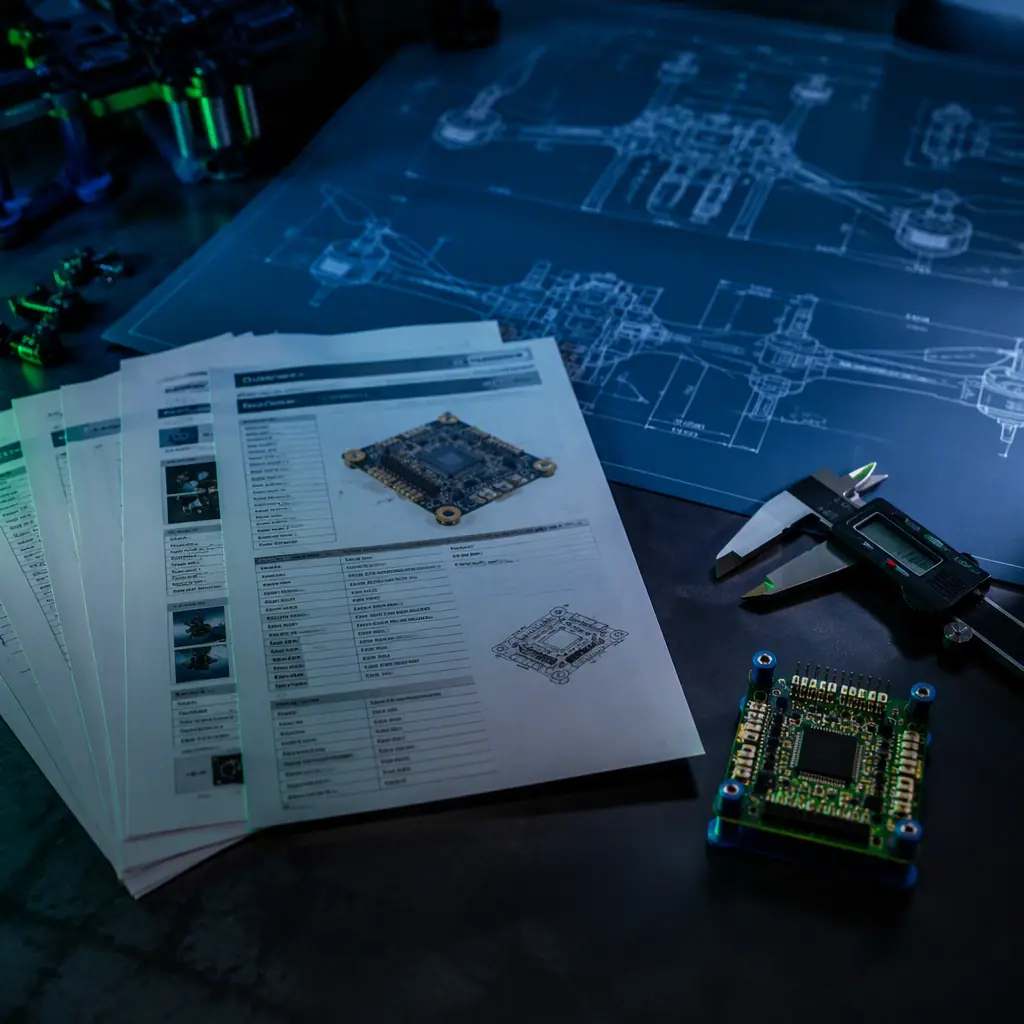
Most UAV component suppliers will send you a test report with the lot. Treat it as evidence to be examined, not a conclusion to be accepted. A report that actually protects you has five attributes: it is per-serial-number (every unit listed with its measured values, not a lot-level summary); it names the test equipment and its calibration dates; it records the environmental conditions (a current test run at 22 °C tells you little about performance at 40 °C); it includes the pass/fail criteria next to each measurement; and it shows the actual numbers. Not "PASS" in a green cell where a current reading should be. The absence of any of these is a finding, and several absences together are grounds to push the inspection to the factory floor or a third party.
 Test report audit
Three patterns flag a report as fabricated or copied. First, implausible consistency: if forty ESCs all report exactly 0.987 A at full throttle to three decimals, the data was pasted, not measured, real units vary by 1-3%. Second, date and serial anomalies: test dates before the production date, serial ranges that skip numbers, or reports whose format changes between lots. Third, missing failure context: a report that shows only passes, on a product line where any factory engineer will tell you 1-3% of units fail first test and get reworked, is either hiding its rework or hiding its scrap. Reworked units are not inherently bad. The question is whether they were retested after repair and whether the report tells you which units those were. The warranty and RMA guide covers what happens after a defect escapes; the report audit is where you prevent the escape in the first place.
Third-party inspection: when it earns its fee
Independent inspection agencies (SGS, Bureau Veritas, TÜV and regional firms) offer pre-shipment inspection as a standard service, and for many buyers it is worth the money on the first order from a new supplier, on high-value lots, or whenever the buyer cannot travel. The economics are straightforward: a typical third-party PSI engagement runs on a per-man-day basis with a day rate that reflects travel and the inspector's seniority, and for a UAV component lot the practical engagement is usually one inspection day covering document review, AQL sampling, visual checks and witness testing. Against that cost, weigh the alternative. Discovering the defect after the lot lands, when the fix is a return shipment, a production delay, or an airfreight charge that dwarfs the inspection fee.
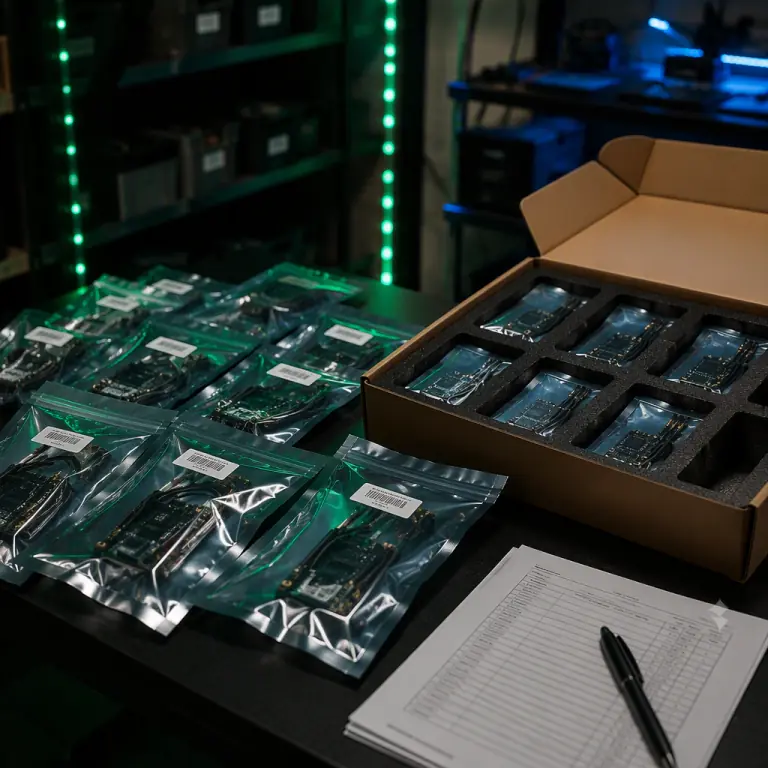
Third-party inspection has a ceiling, and UAV buyers hit it fast: an agency inspector is a generalist who will check dimensions, workmanship, packaging and count with professional rigor, but they will not know your ESC's expected current curve or your flight controller's IMU bias limits. If your acceptance criteria are deep functional tests, hand the agency a written test protocol with pass/fail numbers, provide the test fixtures if the supplier does not have them, and require the agency to attach raw measured data to their report. Otherwise you have paid for a very thorough box check. An alternative that many component buyers use for repeat orders is a witnessed test: the supplier runs your protocol live on video with per-serial data shared in real time, at zero travel cost and with the supplier's own engineers doing the work. The obsolescence management guide touches on why documented, per-lot test data also becomes your defense when a supplier changes a component years later and claims it is "the same part."
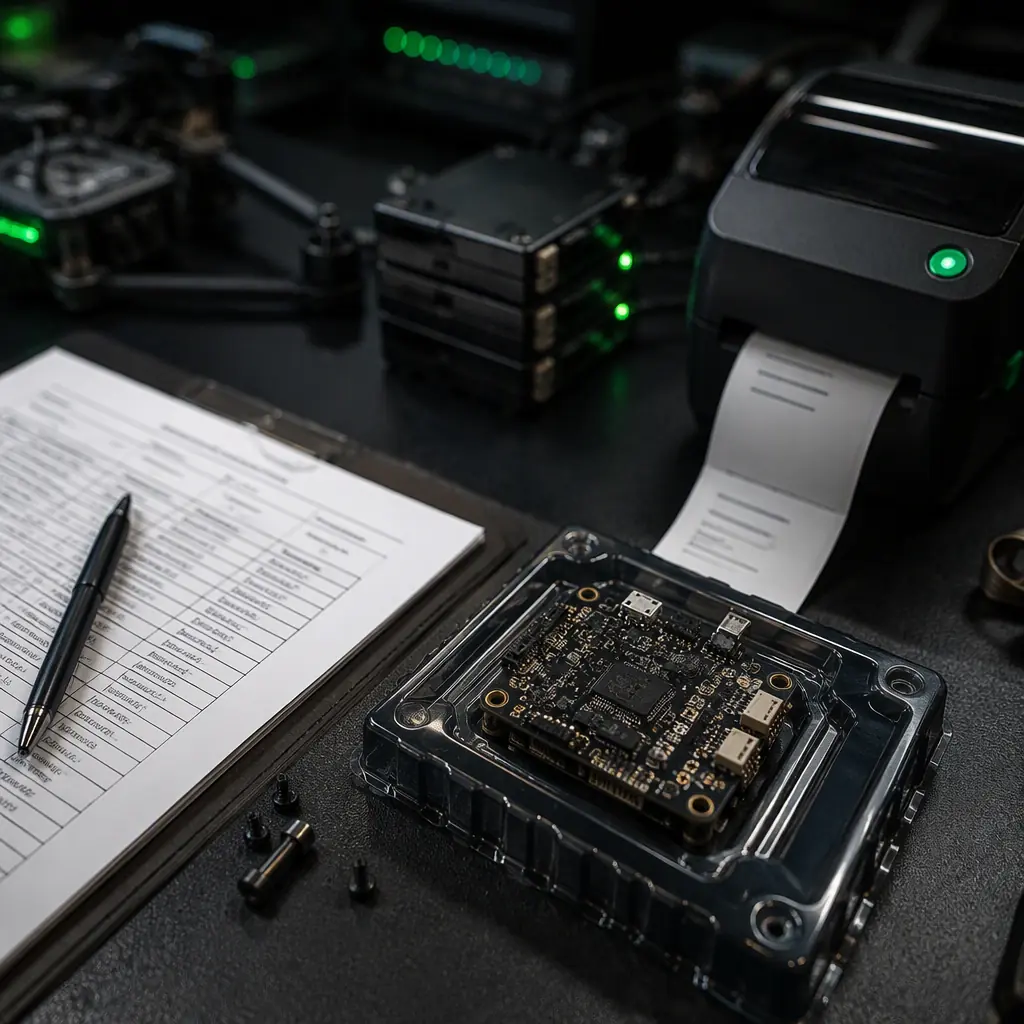
 Lot packaging check
The purchase-order clauses that make inspection enforceable
Inspection is only as strong as the contract behind it. If the purchase order is silent, the supplier's "we tested everything" email wins every argument. Six clauses turn inspection from a request into a right:
- Inspection scope and standard. Reference the specification, the AQL plan (or c=0 / 100% test requirement) and the defect class definitions, the same acceptance criteria drafted in the RFP.
- Balance payment condition. State explicitly that the balance is payable only after pre-shipment inspection passes and the inspection report is delivered. This single sentence is why the supplier's QC suddenly finds time for your lot.
- Right of access. Your representative or a named third party may attend the inspection at the factory during normal working hours with reasonable notice.
- Per-serial data requirement. The supplier must deliver per-unit measured data for the tested attributes, with test equipment and calibration recorded, before shipment.
- Non-conformance procedure. Define what happens on failure: buyer's options to reject the lot, require 100% screening at supplier cost, or accept with a documented concession and price adjustment. And the deadline by which the supplier must respond.
- Shipment hold. No shipment without a signed inspection release; if the supplier ships early, risk and freight pass to them.
Write these into the PO before production, not after the carton is on the truck. The export logistics guide covers the documentation that travels with the lot, and the spares and lifecycle planning guide explains why the inspection records you collect now become the baseline data for fleet reliability decisions years later.
The bottom line: pre-shipment inspection is the one point in a UAV component purchase where you can still say no without lawyers, freight returns or production delays. Sample honestly with a written AQL plan, test functionally against per-serial pass criteria, audit the supplier's report as evidence rather than accepting it as a conclusion, and put the inspection terms in the purchase order so the balance payment does the enforcing. EMS Drone operates a four-stage quality chain, incoming, in-process, final and outgoing QC, with 100% powered functional testing on flight controllers, ESCs and communication modules before any lot is released, per-serial test data included with every shipment, and customer or third-party witnessed testing available on request. Send your component specification and lot size, and we will respond with the inspection plan, sample test reports and a delivery schedule that puts the data in your hands before the freight does.
EMS Drone manufactures manufacturing and QA under one roof, from component sourcing through production test. If you are specifying for a build, see the full capability set and the tolerances we hold.
Continue Reading
Supplier Evaluation
Qualify the factory before you order, the seven-item audit checklist.
Manufacturing Quality
IPC-A-610 classes, AOI, X-ray and the in-process inspection layers.
Component RFP
Drafting acceptance criteria and test clauses that survive contact.
Warranty & RMA
What happens after a defect escapes, and who pays for freight.
Env. Qualification
MIL-STD-810 and DO-160 test methods for components that fly hard.