
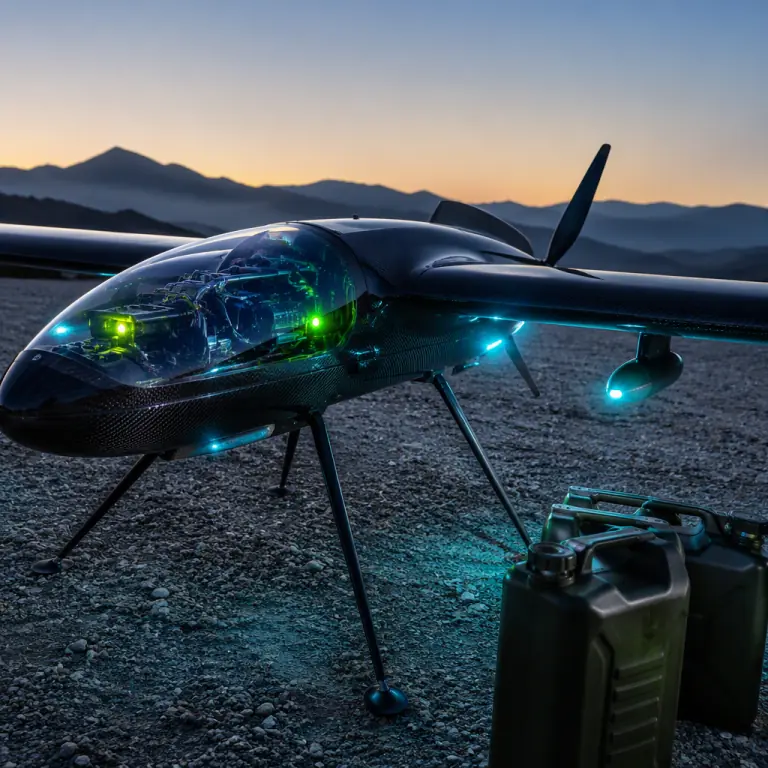
When a customer asks for a 4-hour flight time, the conversation usually starts with batteries and ends with a combustion engine. That is not a technology preference, it is arithmetic. This guide is written for the procurement engineer who needs to specify a gasoline or hybrid-electric propulsion system and wants the numbers, the failure modes and the decision framework before talking to suppliers. The solar and hybrid power guide and the hydrogen fuel cell guide cover the other two long-endurance paths; this one is about liquid fuel, where the energy is dense, the logistics are simple and the engineering is unforgiving.
The energy-density reality that drives the engine decision
Start with the system-level numbers, because every architecture choice below follows from them:
| Power source | Stored energy density | System conversion efficiency | Delivered to propulsion |
|---|---|---|---|
| High-discharge LiPo | 150-200 Wh/kg | ~90% (ESC + motor) | 135-180 Wh/kg |
| High-energy Li-Ion | 240-300 Wh/kg | ~90% | 215-270 Wh/kg |
| Compressed hydrogen + fuel cell | ~1,200-1,600 Wh/kg system | ~50% (cell + balance of plant) | 600-800 Wh/kg |
| Gasoline + engine + generator | ~12,000 Wh/kg chemical | 20-30% engine × ~90% generator | 2,200-3,200 Wh/kg |
The delivered column is the one that matters: a gasoline hybrid puts roughly 10-15× more usable energy per kilogram on the aircraft than the best lithium pack. The trade is mechanical complexity, vibration, fuel handling and maintenance, the price of the fourth hour of flight. If your mission fits inside 60-90 minutes, the battery and power management guide is the cheaper answer; if it needs 2-10 hours, an engine is the honest engineering solution. The flight time estimation guide gives the calculation method that tells you which side of the line you are on.
Two-stroke vs four-stroke engines for UAVs
UAV-scale engines cluster in the 0.5-10 kW class, and the two-stroke/four-stroke split is the first decision. Two-stroke engines (the classic model-aircraft and small-drone engines, 26-120 cc) dominate hybrid UAVs because of power-to-weight: a 60 cc two-stroke typically delivers 3-5 kW from roughly 1.5-2.5 kg with its exhaust, and the design is mechanically simple, no valve train, no oil sump, lubricated by oil mixed into the fuel. The costs are lower thermal efficiency (about 15-25% versus 25-35% for a four-stroke), higher specific fuel consumption (typically 400-550 g/kWh versus 250-350 g/kWh), more exhaust noise and more unburned-oil residue in the intake and exhaust system.
Four-stroke engines are heavier per kilowatt (roughly 1.5-2× for the same output) but run cleaner, quieter and more efficiently, and the newer EFI-equipped small four-strokes hold a consistent mixture across altitude changes, a real advantage for an aircraft that climbs from sea level to 3,000 m on a single sortie. For a series-hybrid where the engine runs at a fixed optimum speed, efficiency is worth more than weight, which is why most commercial long-endurance hybrid UAVs use two-stroke engines with tuned exhausts, while research and high-endurance platforms increasingly evaluate EFI four-strokes. The motor topology guide covers the electric side of the same power train, and the heavy-lift propulsion guide shows how the combined system is sized.
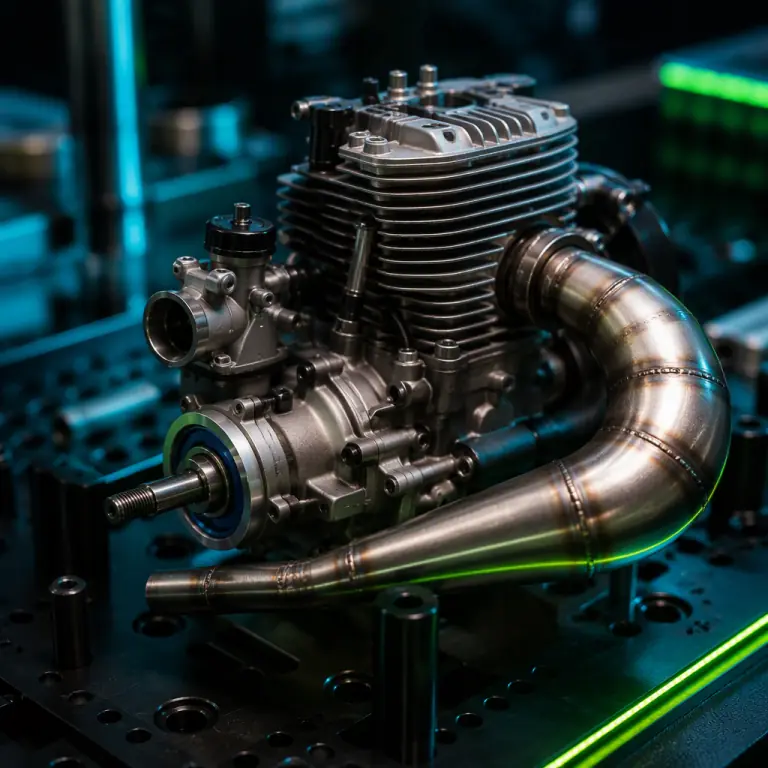 UAV two-stroke engine
Hybrid-electric architectures, series vs parallel
Rarely does a UAV engine drive a propeller directly. The dominant architecture is the series hybrid: the engine spins a permanent-magnet generator, the generator feeds a rectifier and DC bus, and a battery buffer absorbs the transients while the motors draw from the bus. The engine runs at one fixed, fuel-optimal speed regardless of flight condition, this is why a two-stroke's efficiency penalty shrinks in practice, and the battery supplies the peaks: climb, wind gusts, payload surges. The buffer also covers the engine-out case: if the engine dies, the battery carries the aircraft for a controlled descent or a glide to a landing point, typically 3-10 minutes depending on buffer sizing.
Parallel hybrids, where the engine mechanically drives the main propeller and an electric motor adds assist, exist mainly on fixed-wing platforms and are rarer in the commercial catalog because the mechanical coupling, clutch and variable-speed control add failure modes without much benefit at UAV scale. For most procurement decisions, specify a series hybrid: one generator, one rectifier, one DC bus, one battery buffer. The bus voltage should match the motor stack: a 12S Li-Ion nominal bus is 44.4 V (50.4 V fully charged), and the payload power budgeting guide covers the regulator and sequencing rules for everything downstream of the bus.
The generator and power-conditioning stack
The components between the engine crankshaft and the DC bus decide whether the system delivers its rated endurance. The stack, in order:
- Permanent-magnet generator. A radial-flux PM generator rated for the cruise power plus margin: typically 1.2-1.5× the continuous cruise draw so the engine never runs at full load continuously. Generator efficiency in the 90-95% range is normal at UAV scale; the coupling (direct or belt) must tolerate the engine's torsional vibration.
- Rectifier and bus capacitors. Three-phase rectification to the DC bus with enough capacitance to ride through ignition-induced voltage dips. This is a fatigue-prone area: every ignition pulse disturbs the bus, and undersized capacitors show up as unexplained ESC resets.
- Battery buffer and BMS. The buffer (typically 10-20% of total system energy, Li-Ion or LiPo depending on discharge rate) with a BMS that handles charge acceptance from the generator and discharge to the motors simultaneously. A bidirectional requirement that consumer BMS boards do not meet.
- Power management unit. The controller that sets generator current, protects the bus voltage and sequences startup: battery first, then engine start, then generator online, the sequencing rules in the payload power guide applied to the propulsion bus itself.
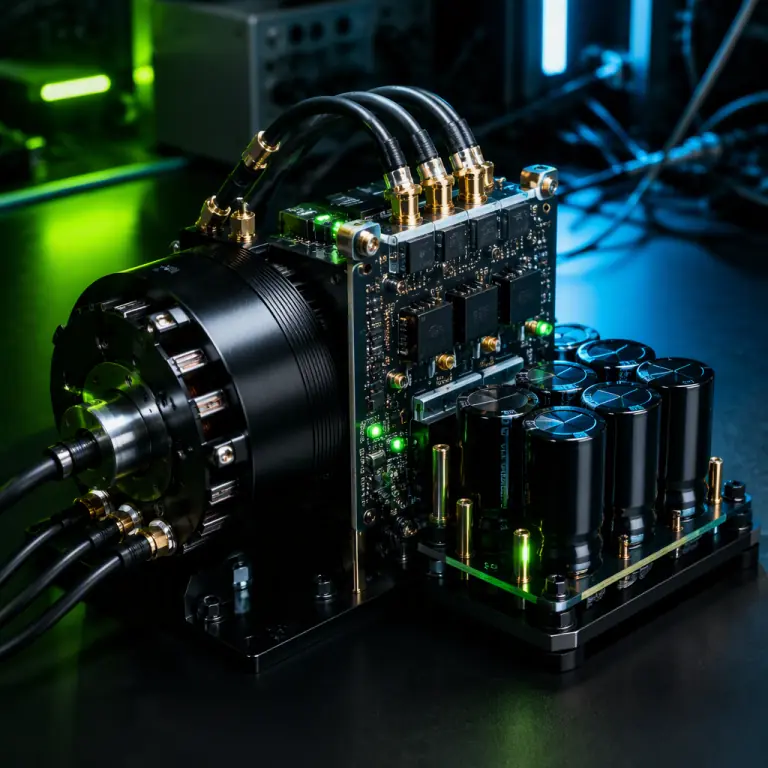 Generator + rectifier module
Fuel systems, ignition and engine reliability
Fuel is where the endurance is stored, and fuel systems fail in characteristic ways. The practical specification:
- Carburetor vs EFI. Carbureted two-strokes are the proven baseline. Simple, field-repairable, and they run fine when the aircraft stays near one altitude. EFI adds altitude compensation, cleaner idle and 10-20% better fuel economy at cruise, at the cost of a more complex ECU and more sensors to fail. For a fixed-altitude corridor mission, carburetor; for climbing missions, EFI.
- Tank and fuel delivery. A clunk-style tank with a filtered pickup, a header tank or in-tank pump for injection systems, and enough fuel capacity for the design endurance plus 20-30% reserve. The tank must be positioned so the center of gravity shift between full and empty stays inside the airframe's envelope. A 5 kg fuel load moving 100 mm is a real trim problem.
- Ignition. CDI (capacitor discharge ignition) with a shielded plug lead. The shielding matters because the ignition pulse is a broadband RF emitter sitting centimeters from the flight controller, and the EMC/EMI design guide treats it as a noise source to be managed, not ignored.
- Cold start and altitude. A choked cold-start routine that works below 0 °C, and a jetting or EFI map validated at the operating altitude band. Nothing grounds a 4-hour mission faster than an engine that will not restart after a 20-minute photo stop at 3,500 m.
Reliability expectations must be written down before purchase: a typical small two-stroke in continuous cruise service has a time-between-overhauls (TBO) in the 50-200 hour range depending on quality and maintenance, and a hybrid UAV operator should plan on top-end inspection at the interval the manufacturer states. Then buy the spares kit that makes it real. The warranty and RMA guide explains what to ask about engine coverage (hours-based, not just calendar-based), and the spares and lifecycle guide covers the piston, ring, gasket and plug inventory that keeps a fleet airborne.
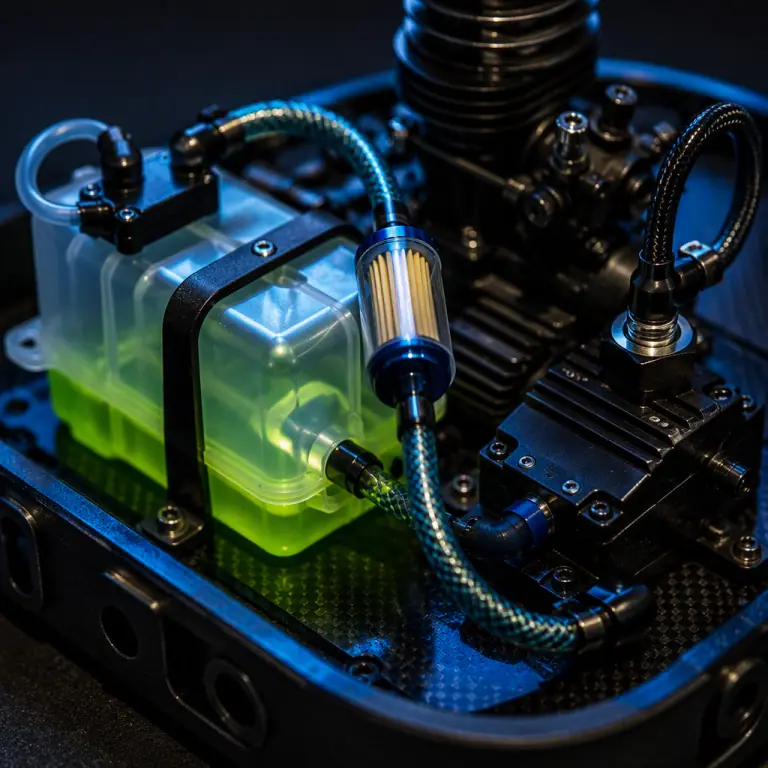 Fuel system components
Vibration, cooling and airframe integration
The engine that gives you endurance also tries to shake the aircraft apart. A two-stroke at cruise is a single-cylinder thumper producing strong fundamental vibration plus harmonics that walk through the airframe into the flight controller, the IMU and the payload gimbal. The integration rules:
- Engine isolation. The engine-generator unit mounts on elastomer isolators tuned below the engine's idle frequency; the exhaust mounts separately so it does not couple into the airframe.
- Avionics isolation. The flight controller and IMU get their own damped mount, and the safety and redundancy guide's dual-IMU baseline is strongly recommended here. One IMU will eventually disagree with the other on a vibrating airframe, and the autopilot needs a vote, not a guess.
- Thermal management. The engine rejects roughly 2-3× its shaft power as heat, and the cylinder, exhaust and generator all need airflow in a fuselage that is otherwise a sealed pod. The thermal management guide covers the ducting, baffles and sensor placement that keep the engine below its head-temperature limit while the electronics stay below theirs, two different thermal problems in one airframe.
Weight and CG planning is the last integration item: engine, generator, tank, fuel and exhaust typically land at 25-40% of the aircraft's total weight, and that mass sits near the center of the airframe. The heavy-lift propulsion design guide shows how the structure, motor sizing and CG envelope are worked together, the same math, with the engine replacing part of the battery block.
Gasoline vs hydrogen vs solar vs battery, how to choose
Four technologies deliver long endurance, and the right one depends on mission, logistics and risk tolerance:
| Requirement | Battery | Gasoline hybrid | Hydrogen fuel cell | Solar hybrid |
|---|---|---|---|---|
| Endurance class | 30-90 min | 2-10 hours | 4-12 hours | 8-24+ hours (daylight) |
| Fuel logistics | Charging grid or generators | Gasoline available anywhere | Pressurized H2 supply, refill stations | None |
| Vibration / noise | None | High vibration, audible noise | Low vibration, near silent | None |
| Field maintenance | Simple | Moderate, filters, plugs, TBO | Specialist service | Minimal |
| Best for | Urban, short sorties | Remote ops, dense fuel, proven logistics | Long, quiet, zero-emission missions | Persistent daylight coverage |
The hydrogen fuel cell guide is the right read when the mission needs silence and 4+ hours; the solar and hybrid guide covers the persistent-coverage case; and the field charging guide shows how a battery fleet with generators competes economically at the 2-4 hour end. Gasoline wins when fuel must be available anywhere, the team already maintains combustion equipment, and the mission profile is 2-10 hours with realistic vibration tolerance.
Procurement checklist for gasoline hybrid propulsion
- Endurance math first. Mission duration, payload draw and reserve margin, calculated per the flight time guide, before any engine is selected.
- Engine and generator. Power class matched to cruise + 30% margin, two-stroke or four-stroke with the efficiency/weight trade documented, generator rated 1.2-1.5× cruise, and a stated TBO with hours-based warranty.
- Power-conditioning stack. Rectifier, bus capacitance, battery buffer sized for the peak/transient load, and a BMS that handles bidirectional charge, specified as a unit, not as separate parts.
- Fuel system. Tank capacity for endurance + 20-30% reserve, CG travel documented, filtered delivery, CDI with shielded ignition, and cold-start/altitude behavior validated in the operating envelope.
- Integration. Engine and avionics isolation mounts, exhaust coupling isolation, thermal management for both engine and electronics, and a dual-IMU autopilot architecture.
- Spares and support. Piston, ring, gasket, plug and fuel-filter kits per the spares guide, plus a maintenance schedule with hours-based intervals. An engine is a consumable with a calendar, and the procurement plan must include it.
The bottom line: gasoline and hybrid-electric propulsion is how a UAV buys the fourth, sixth and tenth hour of flight. Specify the energy math first, choose the engine class on efficiency-versus-weight for the mission, buy the generator and power-conditioning stack as one engineered unit, and treat vibration, fuel and maintenance as design requirements, not field surprises. EMS Drone builds and integrates hybrid UAV propulsion systems: matched two-stroke and EFI engine packages, PM generators and power-conditioning stacks, battery buffers, fuel systems and the vibration-isolated airframe integration that makes them reliable. Send your endurance target, payload draw and operating profile, and we will respond with the propulsion architecture, weight budget and fuel plan.
Explore Propulsion Back to Blog
Continue Reading
Solar & Hybrid
The other long-endurance path, persistent daylight coverage.
Hydrogen Fuel Cells
Silent 4-12 hour endurance with zero emissions.
Battery & Power
When the battery answer is the right one, under 90 minutes.
Heavy-Lift Propulsion
Motor, ESC and structure sizing for big payloads and long legs.
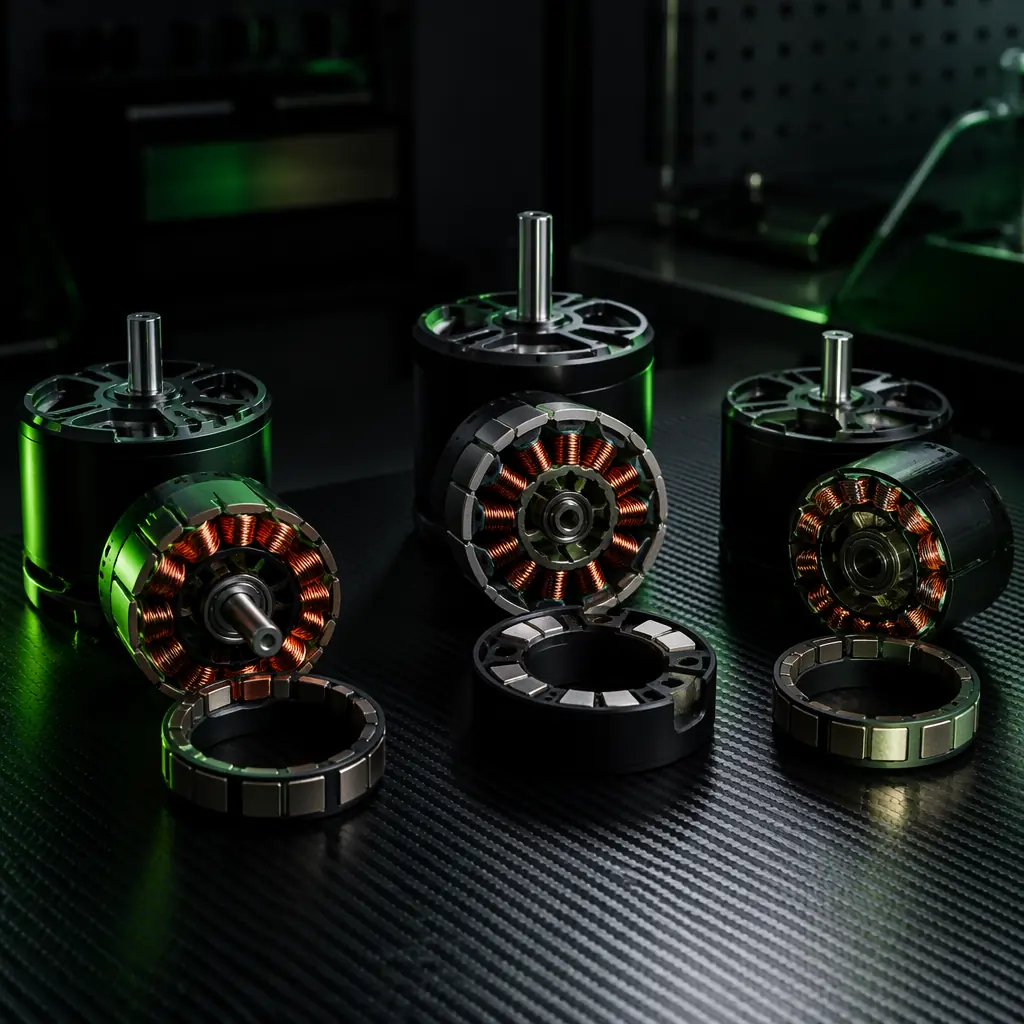
Motor Topology
The electric side of the hybrid power train, BLDC to PMAC.