
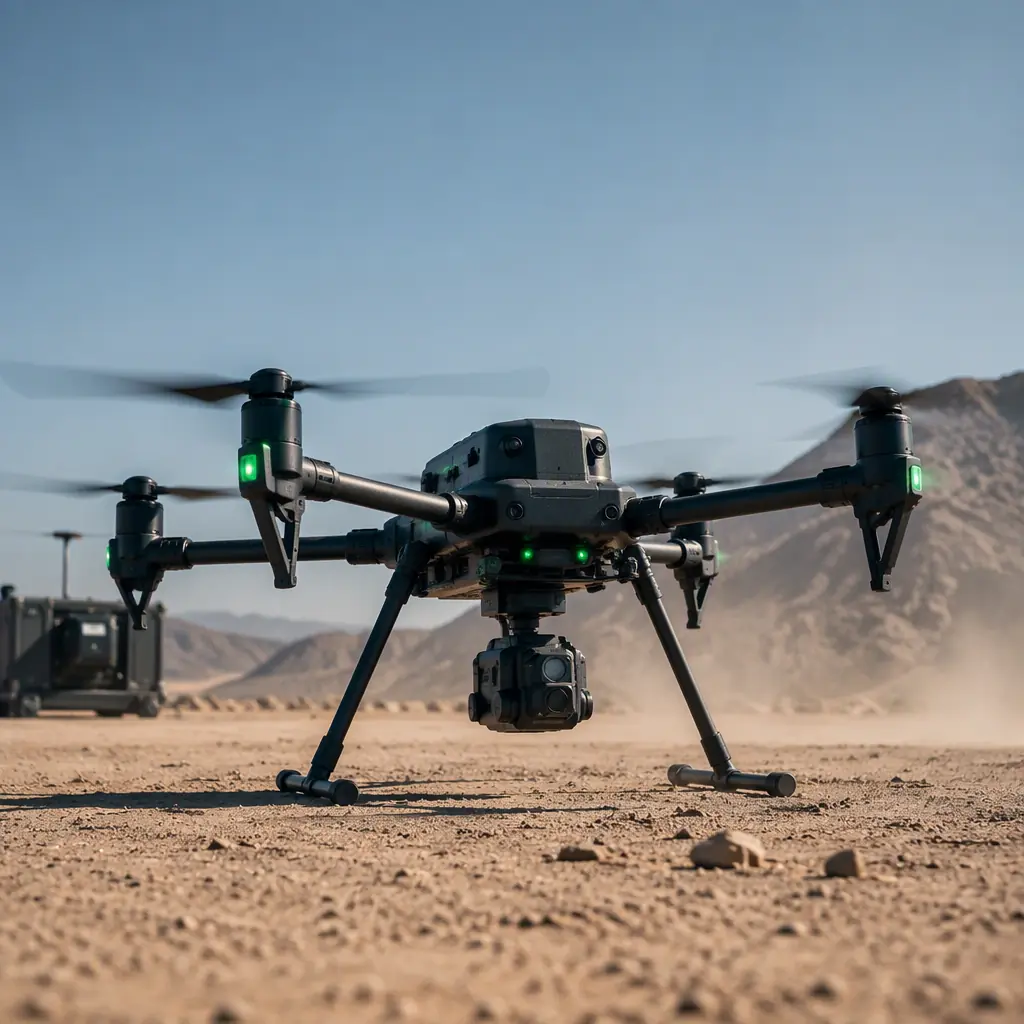
Hot weather is the mirror image of the cold-weather problem: where cold slows the battery and stiffens the mechanics, heat degrades the battery faster, reduces the air density the propeller pushes against, and pulls the current limits of the electronics down exactly when the mission needs them up. The flight time estimation guide treats temperature as a derating factor on endurance; here the focus is the component chain that decides how much heat the aircraft can absorb at all.
What heat actually does to a UAV, subsystem by subsystem
Heat degrades every subsystem, but the failure modes are different and need different mitigations:
| Subsystem | Effect above 35°C | Typical threshold |
|---|---|---|
| LiPo / Li-Ion battery | Capacity loss accelerates, internal pressure rises, thermal runaway risk climbs | Above 40°C sustained: cycle life drops sharply; above 60°C storage: permanent damage |
| Motor | Winding temperature rises faster, demagnetization risk at the hot end, output derates | Winding above 120-150°C sustained (class H insulation limit 180°C) |
| ESC | FET junction temperature limits current, thermal shutdown pulls power mid-flight | Junction above 125°C typical derate threshold; shutdown above 150°C |
| Propeller | Lower air density means less thrust per rpm; hot air also softens some composites | Density altitude effect visible from 35°C; ~3% thrust loss per 10°C rise |
| Electronics | Component lifetimes halve for every 10°C above rating; dark enclosures amplify ambient | Industrial parts rated to 70-85°C junction; enclosure internal can exceed ambient by 20-30°C |
| Payloads and optics | Sensor noise rises, thermal cameras need recalibration, lubricants thin | Optical payloads typically rated to 50°C operating |
The pattern to notice: heat attacks from two directions at once. It reduces what the components can deliver (current limits, air density, battery chemistry) while the environment demands more (thrust to climb through thinner air, current to hold position in thermals). The two effects compound. A hot day is not a derating, it is a double derating.
Batteries in the heat: derating, storage limits and thermal runaway
The battery is the most temperature-sensitive subsystem on the aircraft. Above 40°C, LiPo and Li-Ion packs lose cycle life at an accelerating rate, and above 60°C the risk of thermal runaway becomes a real safety planning factor. One cell heating internally can cascade through the pack in seconds. The component-level mitigations:
- Storage temperature discipline. The single biggest hot-weather battery decision is where the packs live when they are not flying. Storage above 45°C permanently damages capacity; storing packs in a shaded, insulated container or an air-conditioned vehicle is a procurement decision, not a logistics afterthought. The field charging guide covers generator, solar and temperature control at remote sites.
- In-flight cooling. A pack discharging hard generates its own heat on top of the ambient. Battery temperature monitoring with a hard ceiling (typically 55-60°C cell temperature) lets the autopilot derate or land before the pack enters the dangerous zone. Packs with integrated thermistor outputs are standard on industrial aircraft; the battery and power management guide covers chemistry behavior and monitoring.
- Charging in heat. Charging a hot pack accelerates aging and raises runaway risk. Charging should happen after the pack cools, or at reduced current in hot conditions, the battery charger selection guide covers charge current decisions and fleet charging bays.
- Li-Ion vs LiPo. Li-Ion cells generally tolerate higher storage temperatures better than high-C LiPo cells and run cooler under moderate loads, at the cost of peak current. For hot-climate long-endurance missions the trade-off often lands on Li-Ion; the chemistry comparison is in the battery guide.
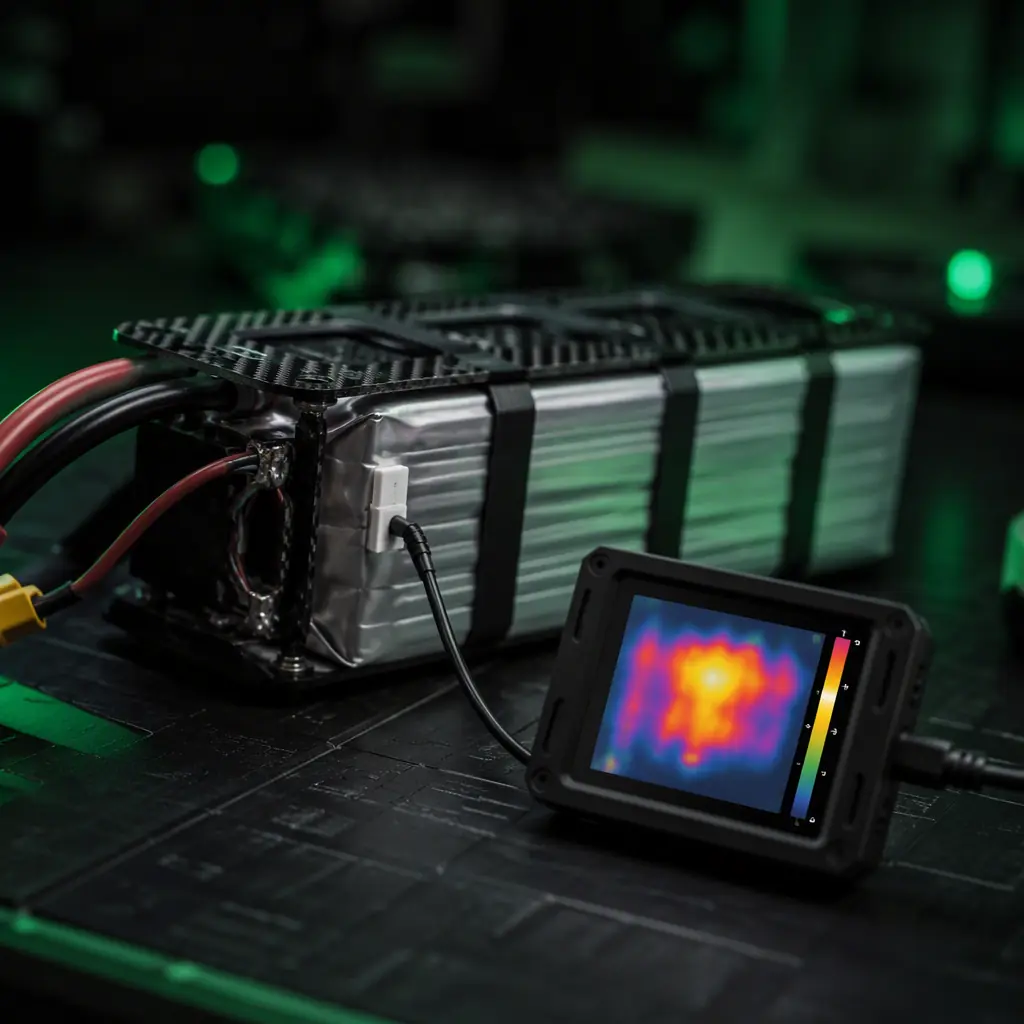 Battery thermal monitoring
Motors, ESCs and servos: current derating and thermal protection
The propulsion electronics have their own hot envelope, and it interacts with the air density problem:
- ESC current derating. FET junction temperature is the limit, and it rises faster in hot air. An ESC rated for 60 A continuous at 25°C may derate to 45 A at 45°C ambient. And the aircraft in hot thin air is asking for more current, not less. Specify ESCs with the derating curve in the datasheet and enough headroom for the hottest operating day. The thermal management guide covers heat sink, airflow and enclosure decisions that keep the junction in its band.
- Motor winding temperature. Copper losses rise with the square of current, and hot ambient removes the heat slower. Motors with temperature sensors and controllers that monitor winding temperature can derate gracefully instead of demagnetizing. The motor topology guide covers how BLDC, PMSM and PMAC designs differ in heat tolerance.
- Servo and actuator lubrication. Heat thins grease, which changes servo damping and can increase current draw in high-load surfaces. The servo and actuator selection guide covers operating temperature ratings; for hot fleets, add the high-temperature grease option at specification time.
- Thermal protection logic. The difference between a component that protects itself and one that fails is the protection logic: current limiting, temperature-based throttle-back, and a clean landing trigger. Ask for the derating behavior in writing. What does the ESC do at 130°C junction, and does the aircraft get a warning before the limit?
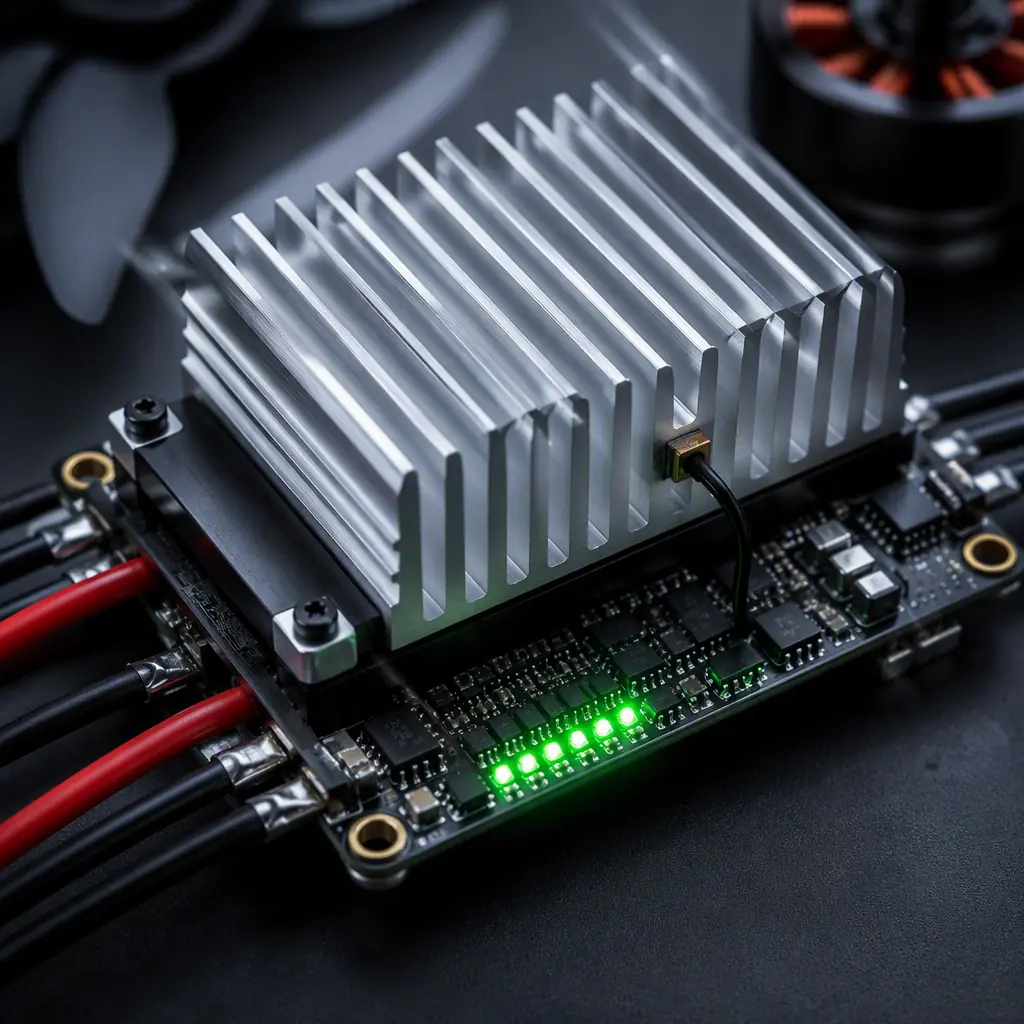 ESC thermal derating
Propellers in hot thin air: thrust and density altitude
Hot air is thin air. Air density at 45°C is roughly 8-10% lower than at 15°C, which means the propeller moves less air mass per revolution and produces less thrust at the same rpm. The effect is the same as flying at altitude, a 45°C day at sea level behaves like a density altitude of roughly 1,800-2,000 m. The consequences:
- More rpm for the same thrust. The motor draws more current to spin faster, which heats the motor and ESC, the double derating in action. The propeller selection guide covers blade geometry; for hot fleets, a larger-diameter or higher-pitch prop can recover some of the lost thrust at the cost of current draw.
- Hover ceiling drops. The aircraft's hover ceiling and payload capacity shrink with density altitude. A hot-day payload plan needs the density-altitude calculation, not the sea-level one, the flight time estimation guide includes the temperature derating in its endurance equation.
- Composite softening. High ambient temperature reduces the stiffness margin of some thermoplastic blades. Carbon blades hold their geometry better in heat; the material comparison is in the airframe materials guide.
Electronics and payloads: operating temperature ratings
Inside a dark enclosure, the electronics see ambient plus the heat they generate themselves: often 20-30°C above outside air temperature. A flight controller rated to 70°C junction can be at 60% of its margin before the rotors spin. The specification questions:
- Component ratings. Every electronic component should be specified with its operating temperature range, and the stack should be budgeted at the worst-case internal temperature, not the ambient. The thermal management guide is the reference for the enclosure, venting and airflow design.
- Payload optics. Thermal cameras drift with temperature and need periodic recalibration in hot climates; optical sensors see increased noise. Radiometric accuracy requirements for inspection missions are covered in the thermal imaging payload guide.
- Air data in heat. The pitot-static system and sensors face the same dust and heat exposure as everything else, plus thermals that can rattle the airframe. Sensor redundancy and estimation quality under turbulence are covered in the sensor fusion guide.
Dust and desert: heat plus particulates
The desert is not just hot, it is hot and abrasive. Dust is the second failure mode that hot-climate fleets must design for:
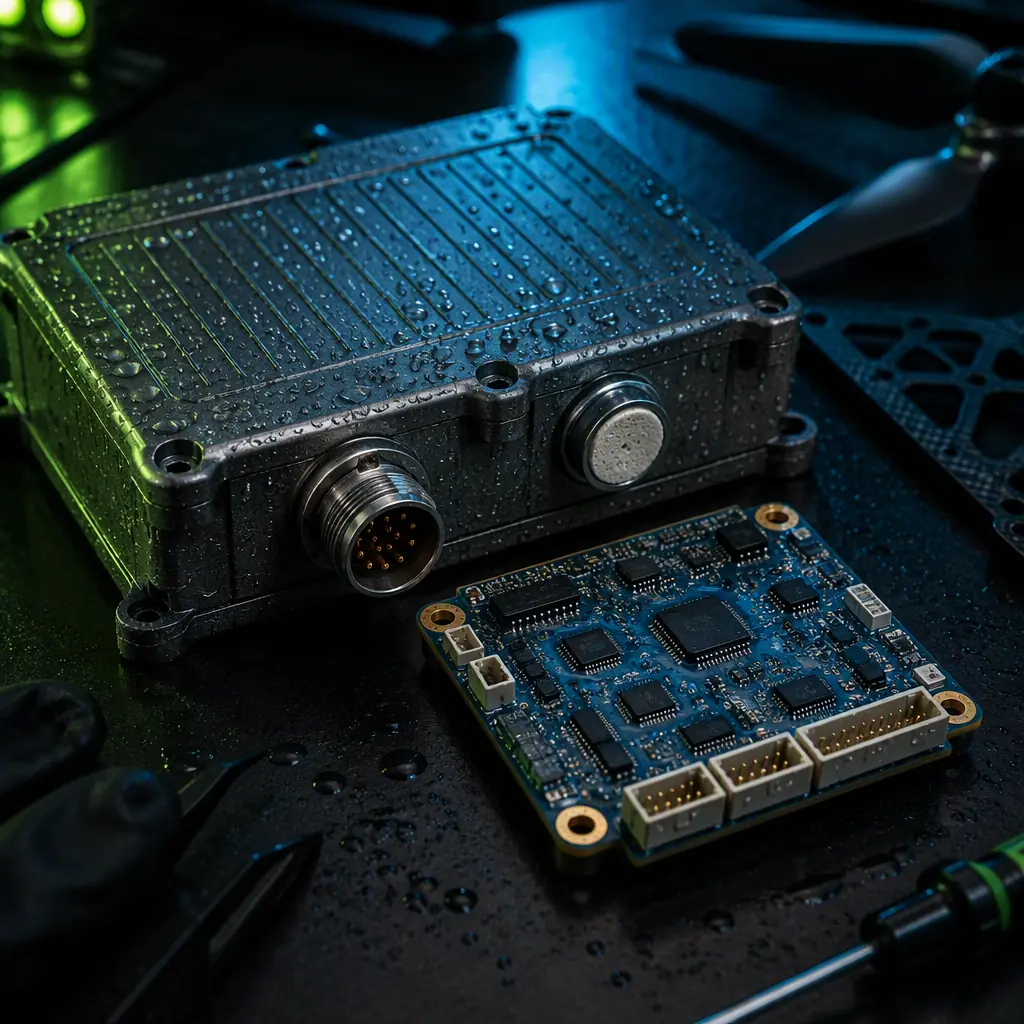
- Ingress protection. Dust finds every seam. Rotors, gimbal joints and connectors need IP-rated sealing; the waterproofing and IP ratings guide covers the sealing hierarchy that applies equally to dust. And the pressure-equalizing vent trade-off that matters when the enclosure must breathe.
- Air intake and cooling. Active cooling that pulls dust into the electronics is worse than passive cooling that keeps the dust out. Filtered intakes and positive-pressure enclosures are the desert standard.
- Wear surfaces. Bearing and gear life drops in abrasive environments. Sealed bearings and shielded actuators are the difference between a 100-flight servo and a 20-flight servo in blown sand; the servo selection guide covers sealed options.
- Post-flight maintenance. Dust accumulates on props and in motor bells, unbalancing rotors. The propeller balancing guide covers the vibration checks that desert fleets need on a shorter interval.
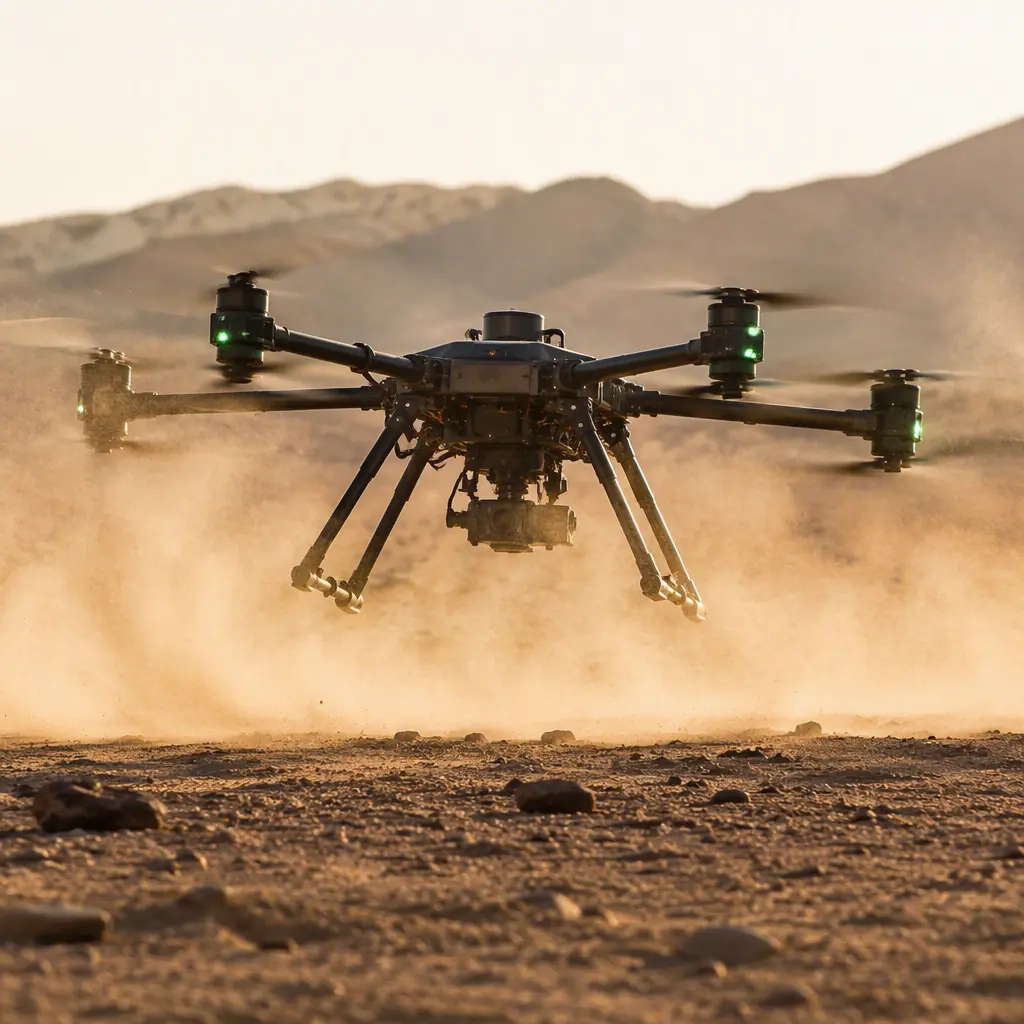 Desert operations
Test standards: what hot-rated actually means
"Hot-rated" is a claim until it is attached to a standard. The two test frameworks that matter for UAV components:
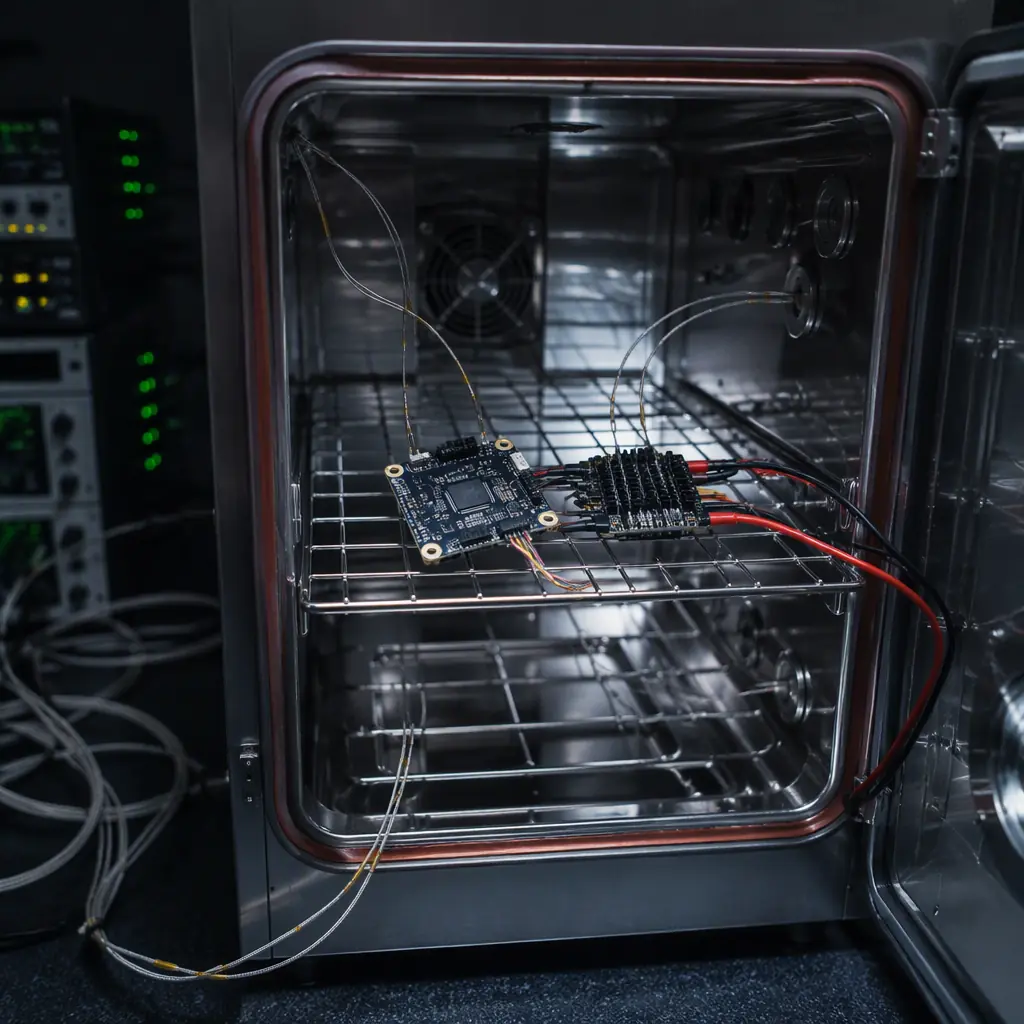
- MIL-STD-810H Method 501 (High Temperature). Defines storage and operating hot tests: for example, 48 hours at the specified storage temperature followed by an operating test, plus solar-radiation exposure in Method 505 for direct-sun environments. A component that passes Method 501 has evidence behind its rating; the environmental qualification guide walks the full MIL-STD-810H program.
- DO-160 Section 4 (Temperature and Altitude). The avionics standard, with categories covering operating envelopes, including the combined temperature-plus-altitude cases that replicate hot thin air. DO-160 categories are a strong procurement signal for aviation-derived components.
When a supplier says "operates to 50°C," ask which standard, which category, and whether the test included solar load and payload installed. The difference between a tested rating and a marketing number is exactly the difference between a component that works at 45°C and one that shuts down at 42°C.
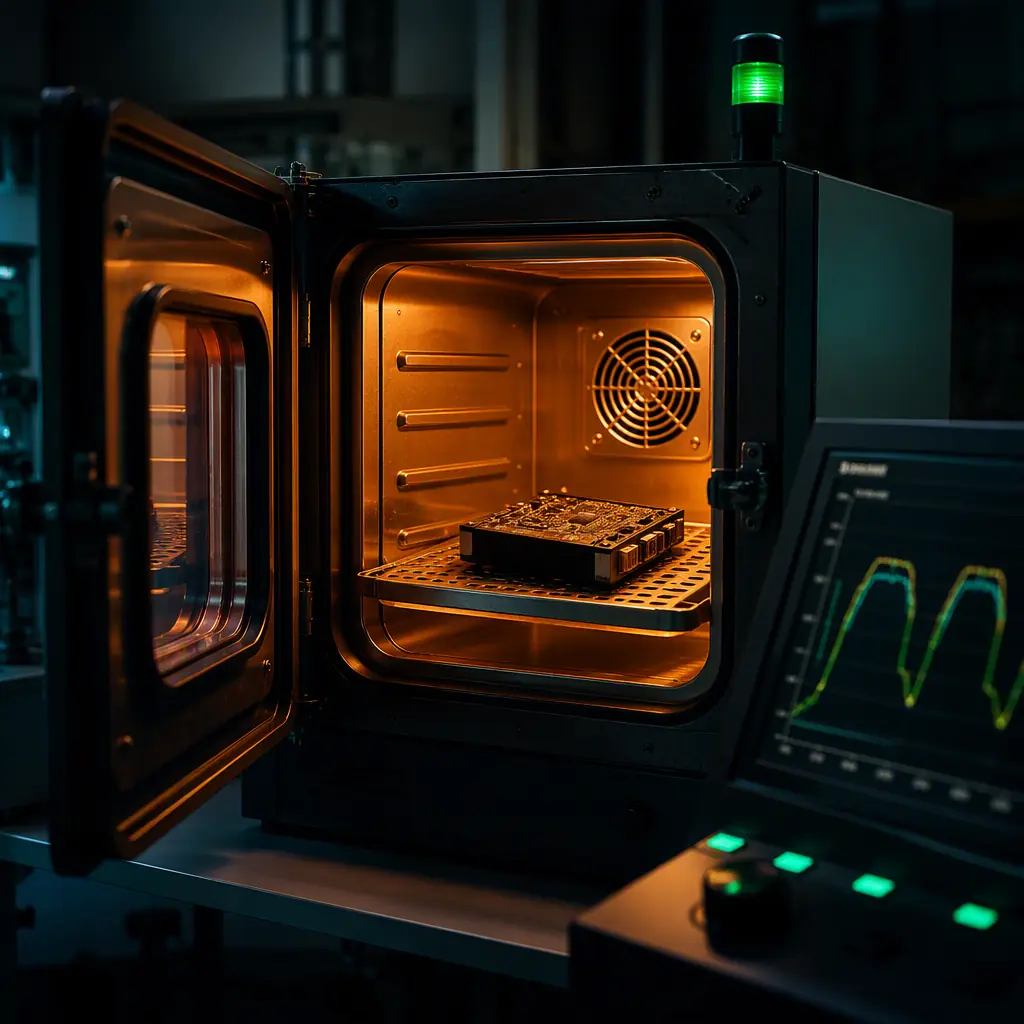 High-temp test
Hot-weather operating procedure: the flight plan half of the solution
Hardware gets the aircraft most of the way; procedure closes the gap. The hot-weather preflight that separates a dispatchable fleet from a grounded one:
- Fly the cool hours. The first flights of the day and the last flights of the evening are worth 10-15% of endurance and a large margin of safety. Mission planning software with temperature-aware scheduling, covered in the mission planning guide . Can encode this automatically.
- Battery rotation. Packs fly, cool, charge, cool. A pack that goes straight from a hot flight onto a fast charger is the highest-risk battery operation in the fleet. Enforce the cool-before-charge rule in the field charging procedure.
- Payload calibration schedule. Thermal and optical payloads need recalibration on a shorter interval in hot climates; log the calibration dates and the ambient at calibration.
- Thermal preflight. Check component temperatures after landing, motor bells, ESC heat sinks and battery cells, and log them. A rising trend is the earliest warning of a failing bearing or a derating problem.
- Dust management. Post-flight inspection includes prop balancing and intake cleaning; the interval is shorter in desert environments, as covered in the propeller balancing guide.
Hot-weather procurement checklist
- Battery strategy. Storage temperature control (shade, insulation or conditioned vehicle), cell-temperature monitoring with a hard ceiling, and Li-Ion consideration for hot-climate endurance missions.
- Propulsion derating. ESC and motor specifications with derating curves to the worst-case operating day, and thermal protection logic that derates gracefully instead of shutting down.
- Air density plan. Density-altitude calculations in the payload and endurance plan, and propeller geometry chosen for the hot-day thrust requirement.
- Electronics. Components specified to worst-case internal temperature, with the thermal management design done for the enclosure, not the ambient.
- Dust protection. IP-rated sealing, filtered or passive cooling, and sealed bearings and actuators for desert environments.
- Test evidence. MIL-STD-810H Method 501 (and Method 505 solar load where relevant) or DO-160 temperature-altitude test reports behind every "hot-rated" claim.
- Procedure. Written preflight for battery rotation, cool-hour scheduling, payload calibration and thermal logging.
The bottom line: heat does not break UAVs randomly. It breaks the components that were never specified for it. Control the battery temperature, budget the derating curves, protect the electronics from dust, and demand test evidence for every high-temperature claim. EMS Drone specifies hot-climate packages, temperature-monitored battery systems, derating-curve ESCs and motors, dust-sealed enclosures, and the test standards to prove them. Send your operating temperatures and mission profile, and we will respond with the component specification and the hot-weather operating procedure.
Explore ESC & Power Back to Blog
Continue Reading
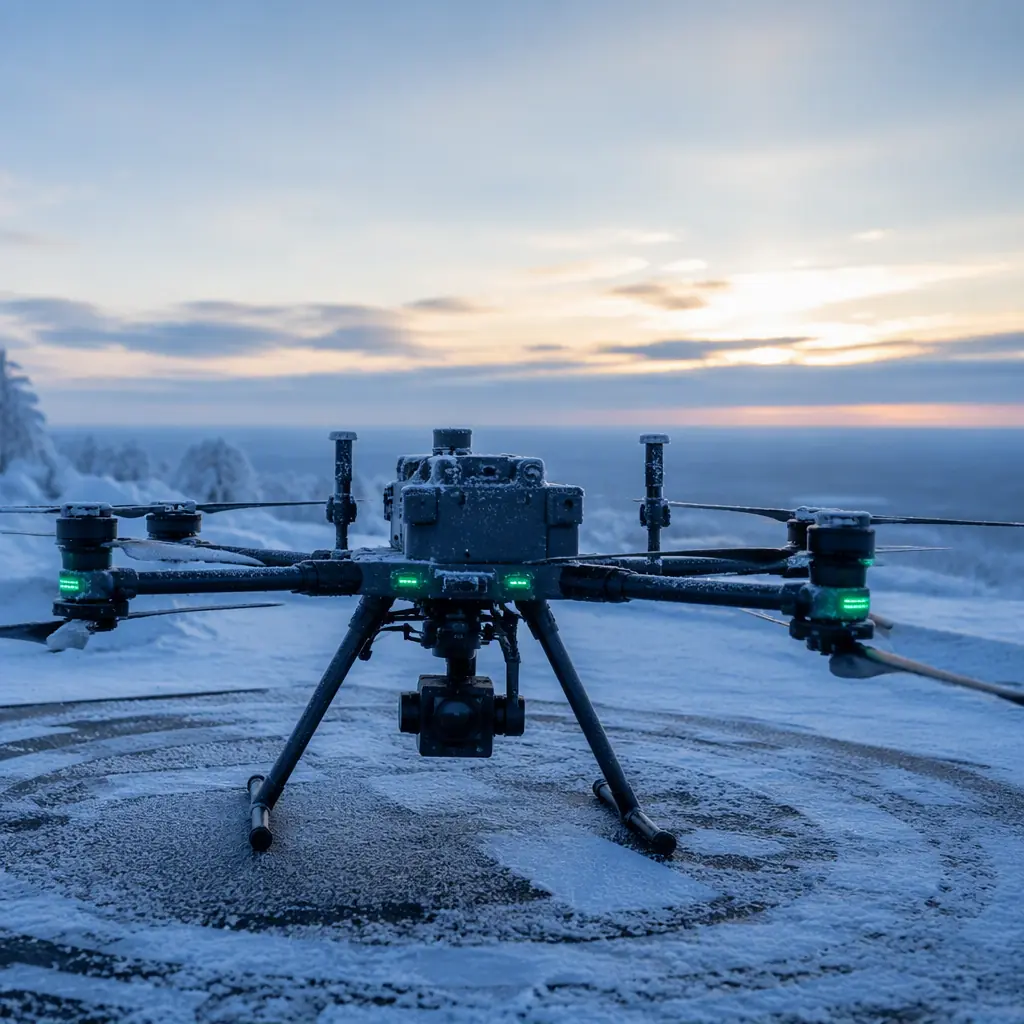
Cold-Weather Components
The mirror problem, how low temperatures degrade the same subsystems.
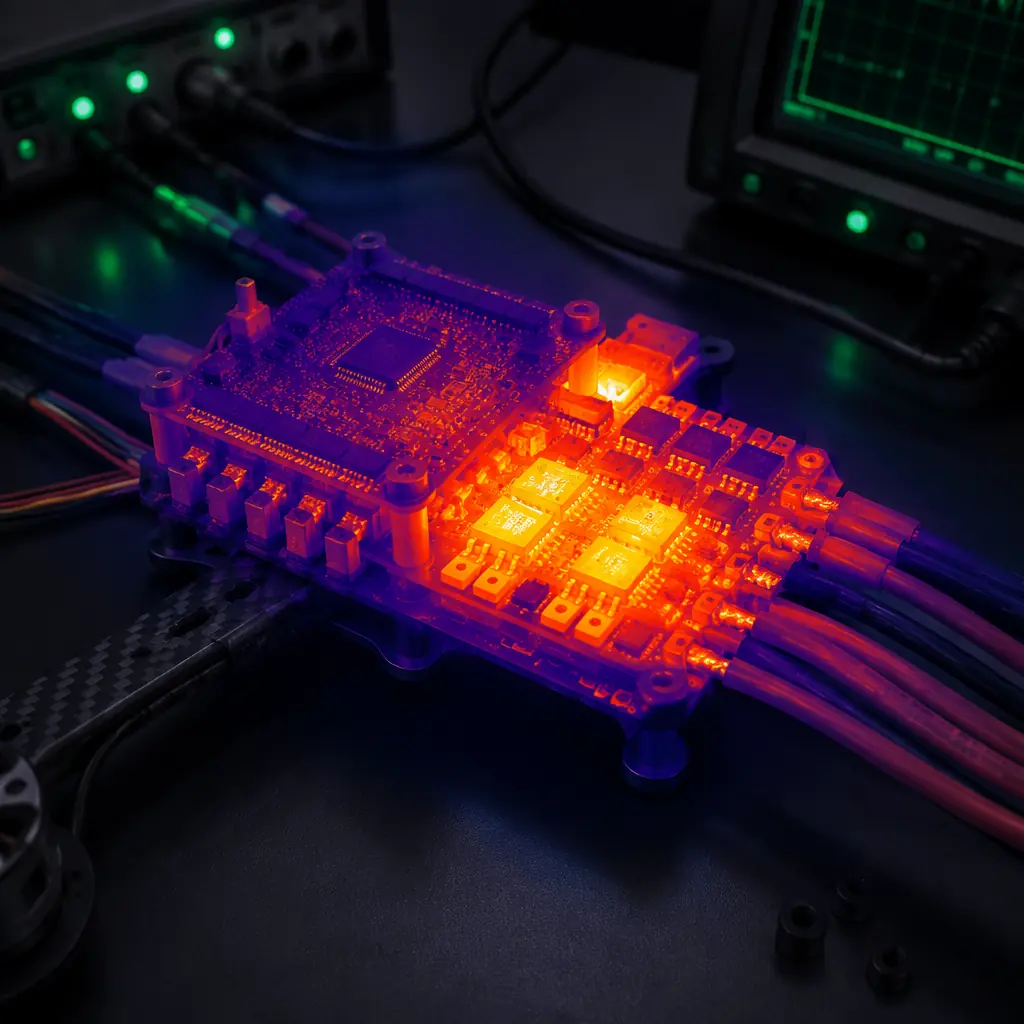
Thermal Management
Heat sinks, airflow and enclosure design for flight electronics.
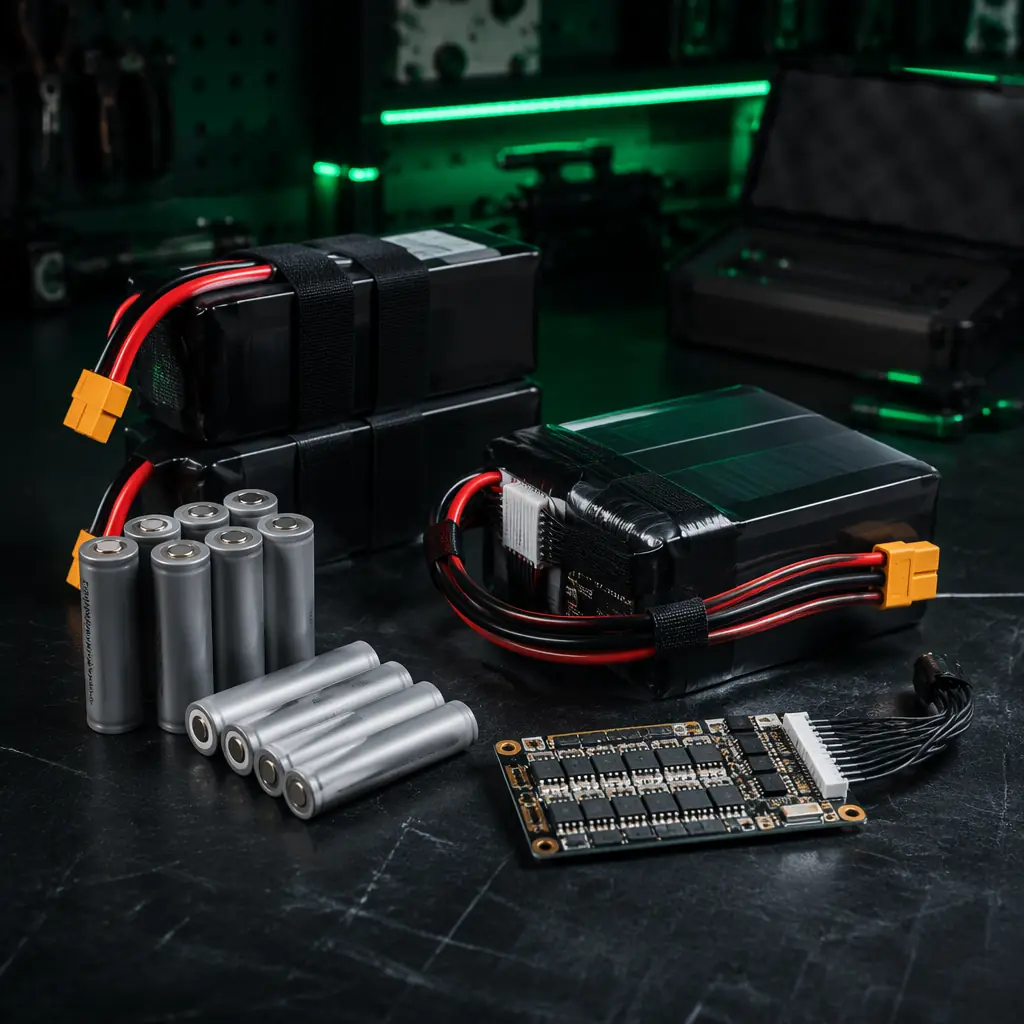
Battery & Power Management
LiPo vs Li-Ion chemistry behavior: including how heat shifts the trade-offs.
Environmental Qualification
MIL-STD-810H and DO-160 hot test methods, step by step.
Waterproofing & IP Ratings
Sealing and dust protection, the desert half of the heat problem.